Lor Mai Gai
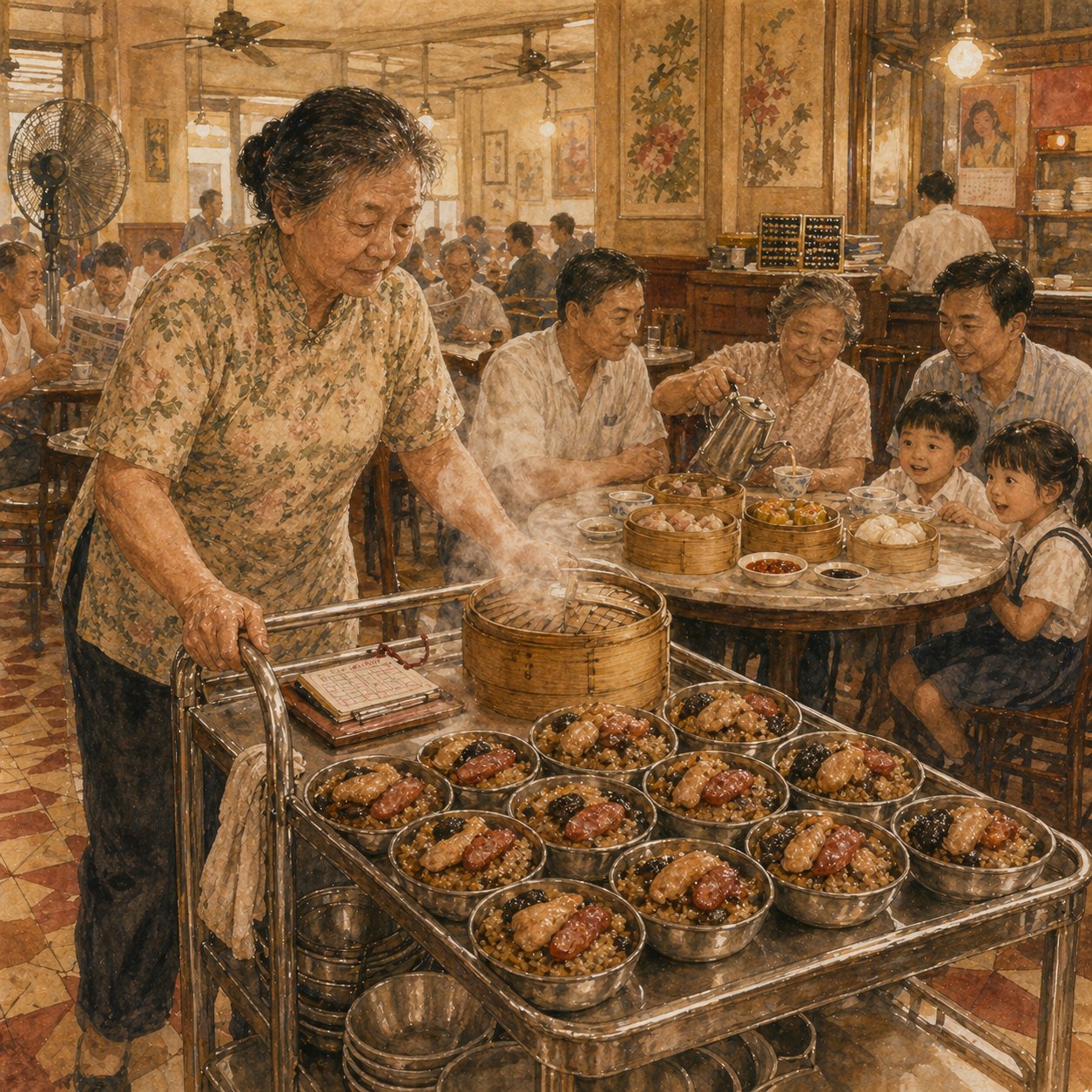
Lor mai gai is the dim sum that came home with the Cantonese diaspora.
In Hong Kong dim sum tradition, lor mai gai (糯米鸡, glutinous rice chicken) is wrapped in lotus leaves — large parcels of glutinous rice with chicken, mushroom, lap cheong (Chinese sausage), salted egg yolk, and sometimes dried shrimp, all steamed together until the rice absorbs every flavour. The lotus leaf adds an earthy, herbal aroma that's the signature of the dish.
In Singapore and Malaysia, the lotus-leaf version exists at proper dim sum restaurants (Yum Cha, Crystal Jade, Tim Ho Wan), but the everyday version uses small stainless steel bowls — you'll see them at every dim sum stall in any Singapore food court. The bowl version is faster and cheaper to produce. Both are correct.
I'll teach you the bowl version because it scales better for hawker service. The lotus-leaf method is in the notes.
The dish came to Southeast Asia with Cantonese migrants who set up dim sum teahouses in the early 1900s, particularly along Smith Street and South Bridge Road. Today, well-regarded heritage versions are served at Mongkok Dim Sum, Swee Choon Tim Sum, and Victor's Kitchen.
🛒Ingredients
Soak everything in advance. The rice carries every flavour you put into it.
For the Glutinous Rice
| Glutinous rice (sticky rice) | 2 cups (~400 g) | Soak overnight or at least 6 hours. Non-glutinous rice will not work. |
| Reserved mushroom soaking liquid | 250 ml | |
| Water | ~250 ml | Adjust based on rice cooker. |
| Light soy sauce | 1 tbsp | |
| Dark soy sauce | 1 tsp | For colour. |
| Sesame oil | 1 tbsp | |
| Pork lard or neutral oil | 2 tbsp | |
| Garlic | 4 cloves | Minced. |
| Shallots | 3 | Finely sliced. |
| Salt | ½ tsp | |
| White pepper | ¼ tsp |
For the Chicken
| Boneless chicken thigh meat | 400 g | Cut into bite-size. |
| Light soy sauce | 1 tbsp | |
| Dark soy sauce | 1 tsp | |
| Oyster sauce | 1 tbsp | |
| Shaoxing wine | 1 tbsp | |
| Sesame oil | 1 tsp | |
| Sugar | 1 tsp | |
| Five-spice powder | ¼ tsp | |
| Ginger juice | 1 tsp | Grate ginger and squeeze. |
| White pepper | ¼ tsp | |
| Cornflour | 1 tsp |
Filling Layers
| Lap cheong (Chinese sausage) | 2 | Sliced diagonally. |
| Dried shiitake mushrooms | 6 large | Soaked, sliced. Reserve soaking water. |
| Dried shrimp | 20 g | Soaked 10 min, finely chopped. Reserve liquid. |
| Salted egg yolk | 3, halved | Optional, traditional. |
Final Drizzle Sauce
| Reserved chicken sauce | 2 tbsp | After cooking the chicken. |
| Dark soy | 1 tsp | |
| Light soy | 1 tsp | |
| Sugar | 1 tsp | |
| Cornflour slurry | ½ tsp + 2 tbsp water |
🌶️Shifu's Lift
choose one path — see "Shifu's Secret" chapter for the philosophy- Old-school path: ¼ tsp MSG in chicken marinade
- Modern hawker path: ½ tsp chicken stock powder
- Heritage purist path: Already covered with mushroom + dried shrimp soaking liquids
👨🍳Method
Seven stages. The chicken sauce should taste saltier than you think — the rice will absorb it.
Soak Everything
- Soak glutinous rice in cold water for 6 hours minimum, overnight ideal
- Soak dried mushrooms in warm water for 6 hours, then trim stems and slice. Reserve soaking liquid.
- Soak dried shrimp in 100 ml hot water 10 minutes. Drain and chop. Reserve liquid.
Marinate the Chicken
Combine all chicken marinade ingredients with the cubed chicken thigh. Add half the sliced mushrooms (reserve the other half for the topping layer). Massage gently. Refrigerate 30 minutes minimum, ideally 2 hours.
Cook the Chicken
Heat 1 tbsp oil in a wok over medium heat. Pan-fry the lap cheong slices until lightly browned and oils release (no extra oil needed) — about 90 seconds. Remove and set aside.
In the same wok, add another 1 tbsp oil. Stir-fry the chopped dried shrimp 30 seconds. Add minced garlic, stir 10 seconds.
Add the marinated chicken (with its mushrooms) to the wok. Stir-fry 3 minutes until chicken just turns opaque. Pour in 100 ml of mushroom soaking liquid and 50 ml dried shrimp liquid.
Bring to a simmer. Cover and cook 5 minutes. Adjust seasoning — should taste slightly saltier than your normal preference (the rice will absorb it).
Mix the sauce slurry. Stir into the wok. Cook 1 more minute until thickened.
Reserve 4 tbsp of the sauce separately for the final drizzle. Remove chicken to a plate.

Prep the Rice
Drain the soaked glutinous rice.
Heat 2 tbsp lard in a wok. Add minced garlic and sliced shallots — fry until golden. Add drained rice. Stir-fry 2 minutes to coat each grain in the lard-garlic mixture. Add soy sauces, sesame oil, salt, white pepper. Toss.
Transfer rice to a rice cooker pot. Add 250 ml mushroom water + 250 ml plain water (or follow your rice cooker's glutinous rice marking). Cook on glutinous rice / sweet rice / sticky rice setting if available, otherwise standard rice setting for 30 minutes.
Assemble Each Bowl
You'll need 6 small heatproof bowls (~150 ml each) — stainless steel or ceramic ramekins.
Lightly grease each bowl with sesame oil.
In each bowl, layer in this order bottom-up (because we'll invert them later):
- First (will be the top after inverting): 2–3 mushroom slices, cap-side down, in a pretty pattern; 2 slices lap cheong; 1 piece chicken; ½ salted egg yolk if using
- Second: the cooked glutinous rice, packed firmly to the rim
- Spoon 1 tbsp of reserved sauce over the rice

Steam
Set up a steamer with rapid boiling water. Cover bowls with foil to prevent condensation dripping in.
Steam for 30 minutes on medium heat.

Serve
Run a thin knife around the inside edge of each bowl. Invert onto a plate — the bowl lifts off and the layered pattern is now beautifully on top.
Drizzle a final tablespoon of reserved sauce. Garnish with chopped spring onion or coriander.
Serve hot. Eat by mixing the topping layer through the rice as you go.

🎯The Three Tips
Heritage. Master's. Mistake.
🏛 Heritage Note
Lotus Leaf Variation
For the lotus-leaf version (Hong Kong dim sum style):
- Soak 6 large dried lotus leaves in hot water for 1 hour until pliable.
- Cut each into 4 quarters, trim hard stem.
- Place a generous mound of cooked glutinous rice in the centre.
- Top with chicken, mushroom, lap cheong, salted egg yolk.
- Cover with another mound of rice.
- Fold the lotus leaf into a sealed parcel.
- Steam 30 minutes.
The lotus leaf adds an earthy, slightly herbal aroma that the bowl version cannot replicate. Lotus leaves are not edible — discard before eating.
👨🍳 Master's Tip
Saltier Than You Think
The single most common error in lor mai gai is under-seasoning the chicken. Glutinous rice is bland on its own — it absorbs flavour from everything around it.
Taste your cooked chicken sauce before bowling up. It should be noticeably saltier than you'd want to eat directly. Once it bleeds into the rice during steaming, the saltiness distributes and becomes balanced.
If the chicken tastes "perfectly seasoned" out of the wok, the final dish will taste flat.
⚠ Common Mistake
Mushy or Dry Rice
Two failure modes:
- Mushy rice = too much liquid, or didn't soak rice long enough (so it absorbs water during cooking). Fix: soak 6+ hours, drain well before adding to rice cooker. Use the glutinous rice setting if available.
- Dry rice = not enough sauce in the bowl, or steaming time too short. Fix: always add 1 tbsp sauce per bowl before steaming. Ensure 30 minutes of full steam — not 20.
📈 Scaling for Hawker Service
For a dim sum stall offering lor mai gai
- Batch prep: 50–80 bowls assembled in the morning, refrigerated. Steam batches of 10–15 throughout service (30 min each).
- Re-steam to order: Already-steamed bowls can be held warm and re-steamed 5 minutes before serving to refresh.
- Frozen storage: Assembled bowls can be frozen up to 1 month — steam directly from frozen for 45 minutes.
- Cost (Singapore 2026): Per bowl ~SGD 1.30 (rice 0.30 + chicken/sausage/mushroom 0.70 + aromatics 0.30). Sells SGD 4–7 standard at hawker, SGD 6–9 at dim sum restaurant. Margin: 65–80%.
Lor mai gai is the dim sum that travelled. From Hong Kong teahouses to Singapore food courts, it kept its soul. The sticky rice carries the memory of every flavour you put into it.