Five Recipes
The Peranakan Kitchen
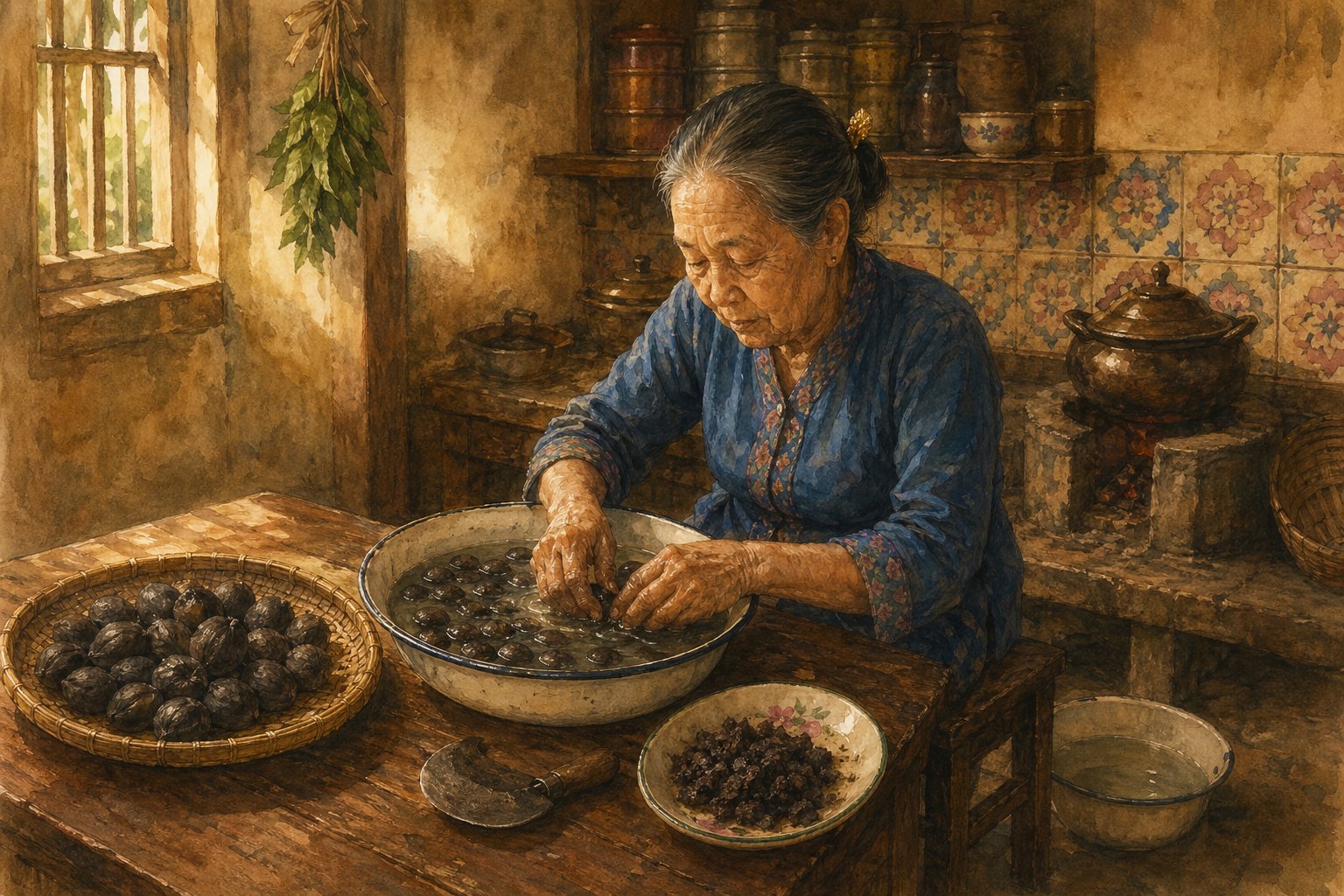
Ayam Buah Keluak
The Peranakan signature: chicken slow-braised in a dark rempah gravy with hand-stuffed black nuts. The 40-day fermented buah keluak is scraped, pounded, and stuffed back into its own shell — sucked from the wide end at the table.
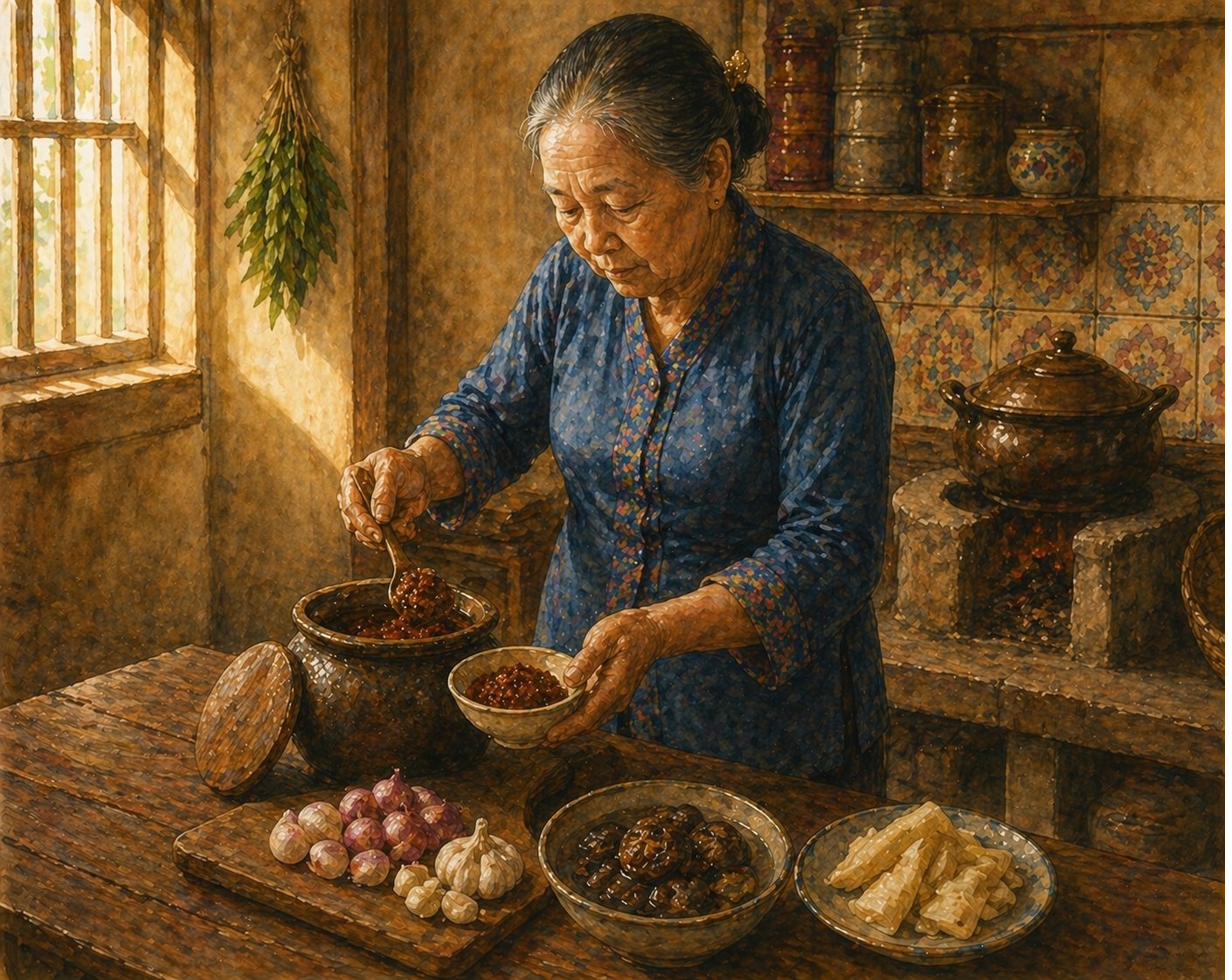
Babi Pongteh
Pork belly or trotter slow-braised in fermented soybean gravy with shallots, dried shiitake, gula melaka and bamboo shoots. The Malacca-original heritage form. The dish that judged a Peranakan girl's cooking before her future in-laws.
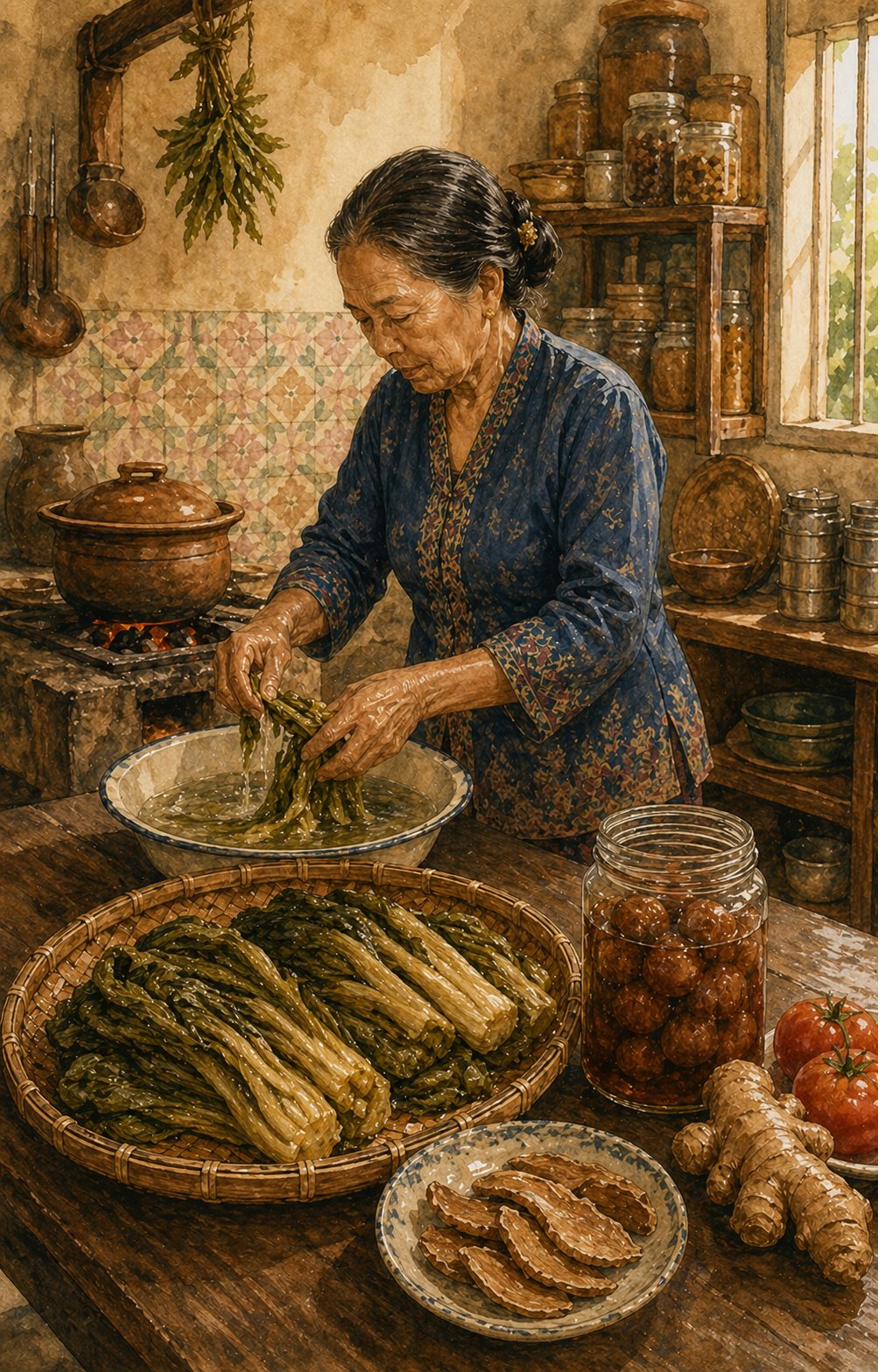
Itek Tim
Pearl-cream broth, salted mustard greens, dried Garcinia fruit-rind acid, salted plums, and a brandy finish. The third pillar of the Peranakan festive table — the soup that quiets the room after the rempah-rich dishes.
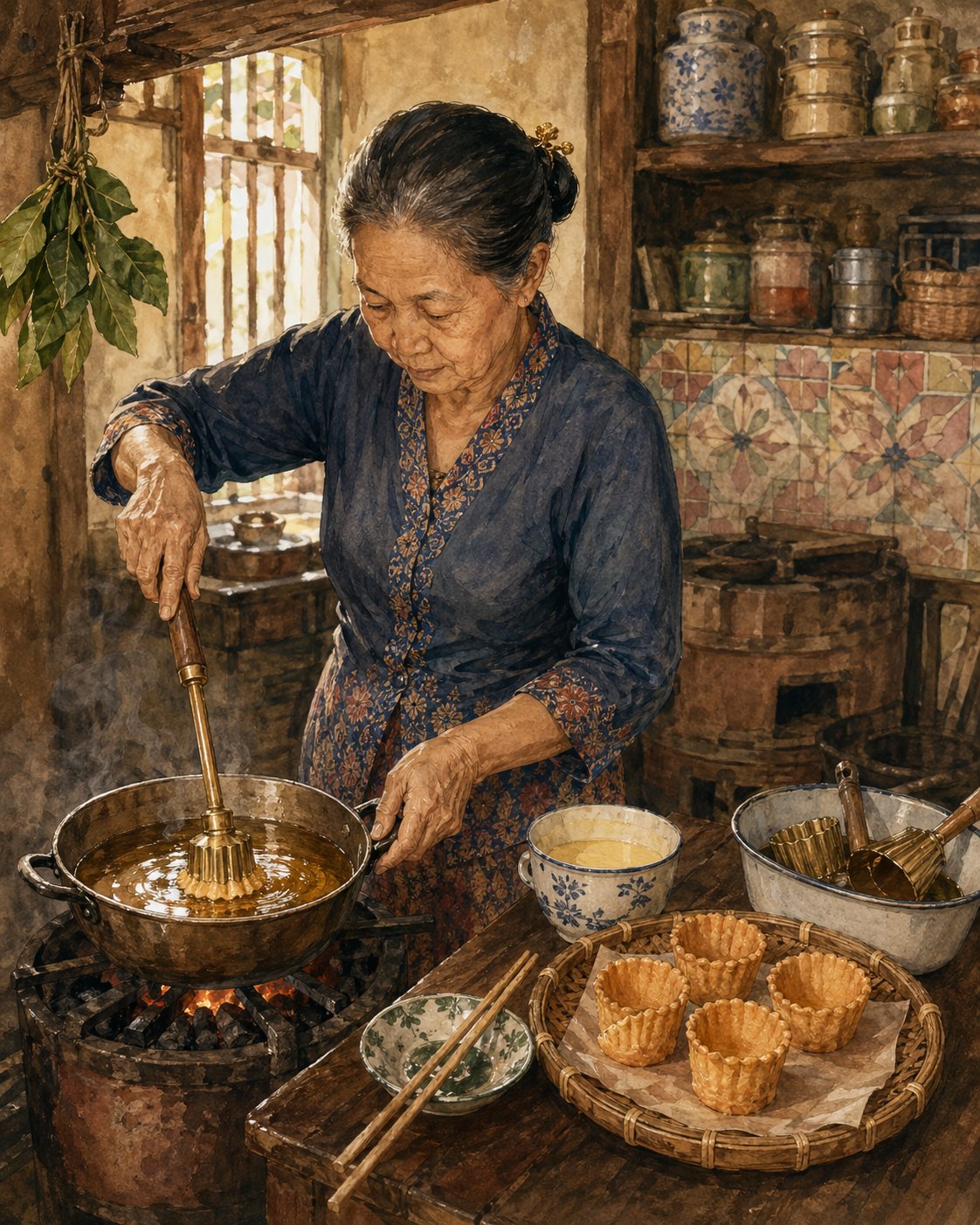
Kueh Pie Tee
Fluted brass-mould-fried top-hat shells filled at the table with shredded bangkuang, bamboo shoots, dried shrimp and french bean — topped with omelette, fried shallots, coriander and a dot of sweet chilli. The dish you bring out when there is something to celebrate.
Nyonya Laksa
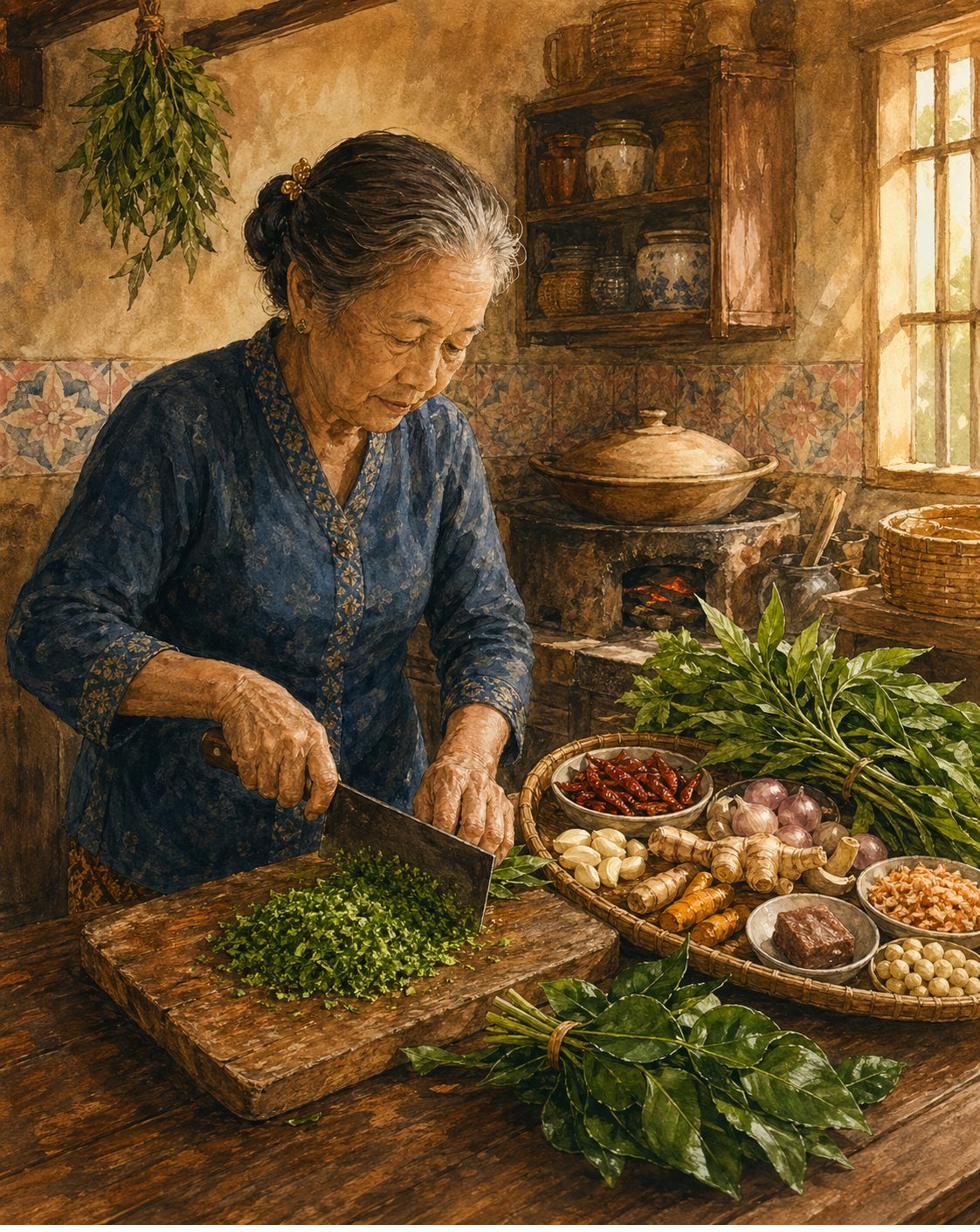
Coconut-milk gravy on a bloomed rempah, thick rice vermicelli, halved prawns, fish cake, taupok, hard-boiled egg, and the chapter's foreground-jade-green payoff: freshly-minced laksa leaves scattered across the surface. The chapter closes where Peranakan cooking went public — at the hawker centre.