Bak Kut Teh
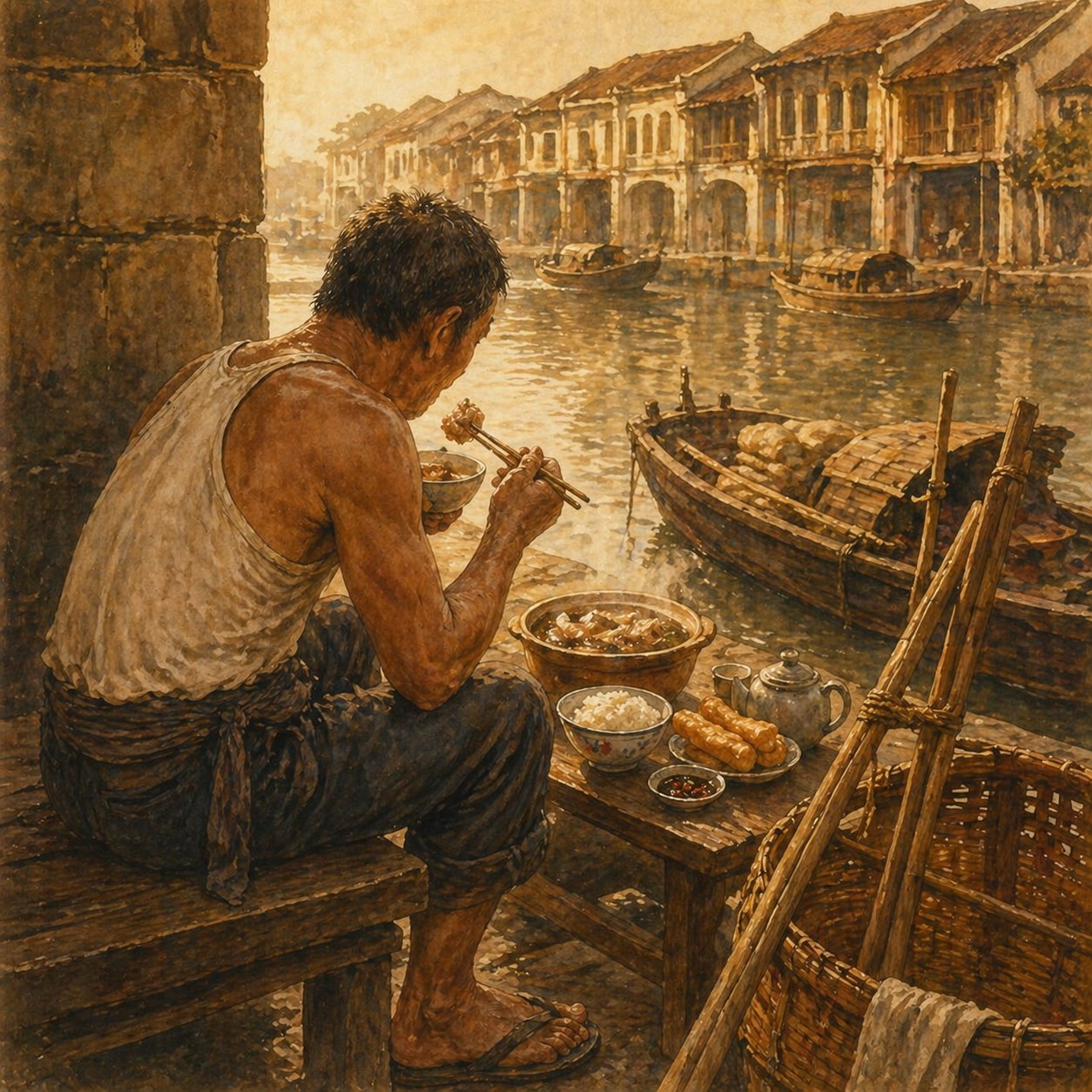
Aiyoh, this one is the soup of working men.
There are two stories about bak kut teh (literally 'meat bone tea'), and both are true in their own way. The Klang version (Malaysia) is dark, herbal, claypot-style — that's a different beast. The Singapore version we make is the Teochew style: clear amber broth, white-pepper-and-garlic forward, no heavy herbs.
It came alive on the banks of the Singapore River in the 1930s and 40s — Clarke Quay, River Valley, the streets where the coolies and stevedores worked at the godowns and bumboats. They needed something hot, peppery, restorative — something to start the day before lifting sacks for ten hours. The pepper warmed the body, the garlic gave strength, the pork ribs gave protein. Eat it with rice, you tiao (Chinese fried dough fritters) for soaking, a side of Tieguanyin tea to cut the grease.
Today, Song Fa is the most famous, and they earned their Michelin Bib Gourmand the proper way — with a recipe that has not changed for three generations. Other heritage names — Founder, Ng Ah Sio, Legendary, Rong Hua — each has their own pepper blend. Most use Sarawak peppercorns, which is the Singapore standard for pepper depth without burn.
This dish is what you eat when the rain comes down hard, when you've worked since 5am, when your bones are tired. It puts you back together.
🛒Ingredients
Pepper, garlic, pork bones. The Singapore-Teochew trinity. Everything else gets out of the way.
The Soup serves 4–6
| Pork ribs (prime ribs / loin ribs) | 1.2 kg | Ask the wet market butcher for pai gu (meaty pork rib cuts). Long-bone cuts are traditional. |
| White peppercorns | 30 g (~3 tbsp) | Sarawak white pepper preferred — the Singapore hawker standard. |
| Black peppercorns | 1 tbsp | Adds depth without sharp burn. |
| Whole garlic bulbs | 3 bulbs | Unpeeled, root trimmed. Use old garlic — large individual cloves, not young garlic. Stronger flavour. |
| Star anise | 1 piece | |
| Cinnamon stick | 3 cm | Small piece only. |
| Light soy sauce | 2 tbsp | |
| Dark soy sauce | 1 tsp | For colour, very small amount. |
| Salt | 1.5 tsp | To taste. |
| Water | 2.5 L |
To Serve
| Steamed white rice | to taste | |
| You tiao (Chinese fried dough fritters) | to taste | Buy fresh from any soy milk stall in the morning. |
| Bird's-eye chilli, sliced, in dark soy | to taste | With minced garlic. |
| Tieguanyin or Iron Buddha tea | a pot |
🌶️Shifu's Lift
choose one path — see "Shifu's Secret" chapter for the philosophy- Old-school path: ¼ tsp MSG (added in last 10 minutes)
- Modern hawker path: ½ tsp chicken stock powder
- Heritage purist path: Add 200 g extra pork bones to base + simmer additional 30 minutes
👨🍳Method
Five stages, mostly hands-off simmering. The pepper does the heavy lifting.
Toast & Crack the Pepper
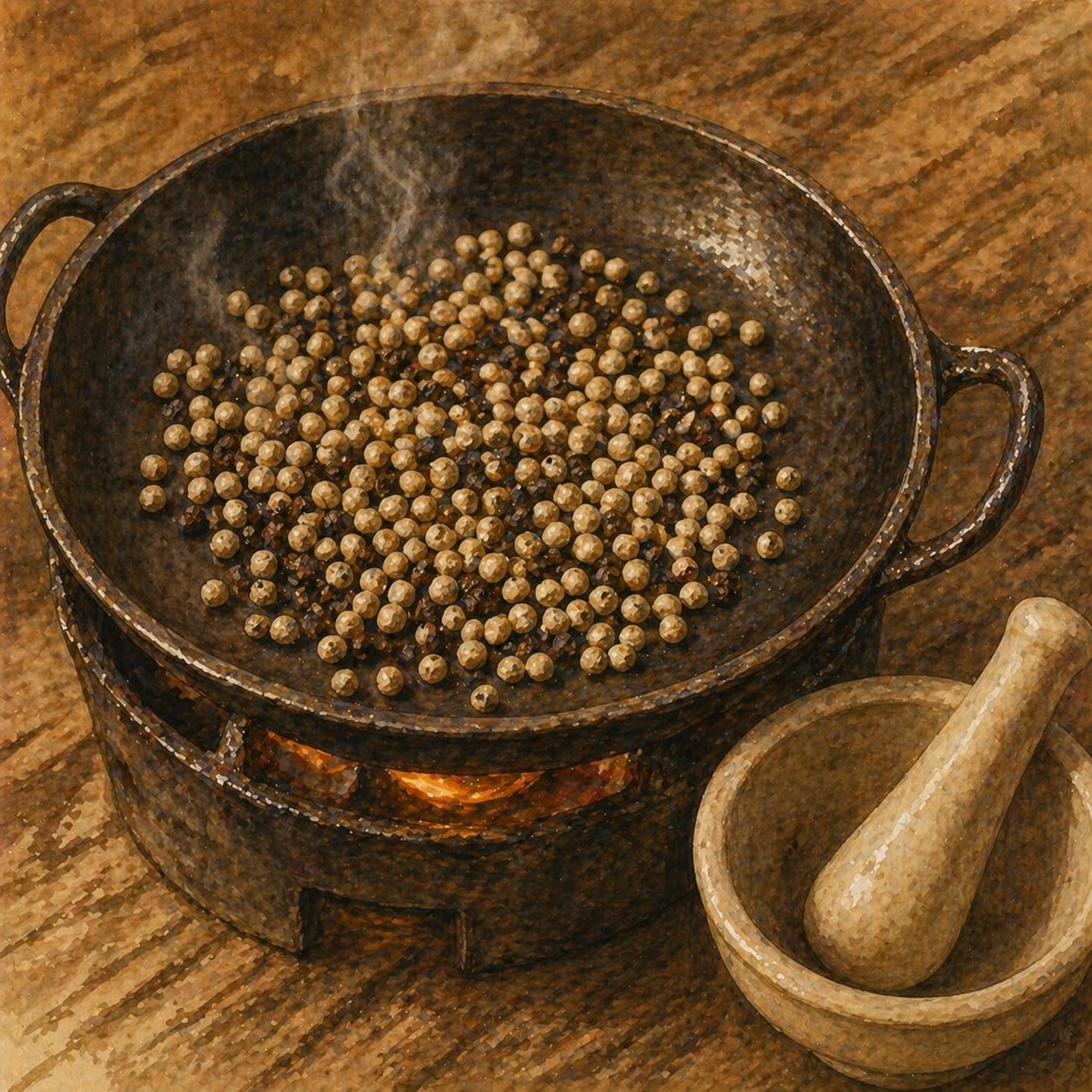
Place white peppercorns in a dry pan over low heat. Toast for 2 minutes, shaking the pan. You want fragrance, not burn. Add black peppercorns, toast another 30 seconds.
Transfer to a mortar (or zip-lock bag with a rolling pin). Crack lightly — do not pulverise. You want broken peppercorns, not powder. The Song Fa method: about 70% intact, 30% cracked. Wrap loosely in muslin or place in a stock pouch.
Toast the Garlic
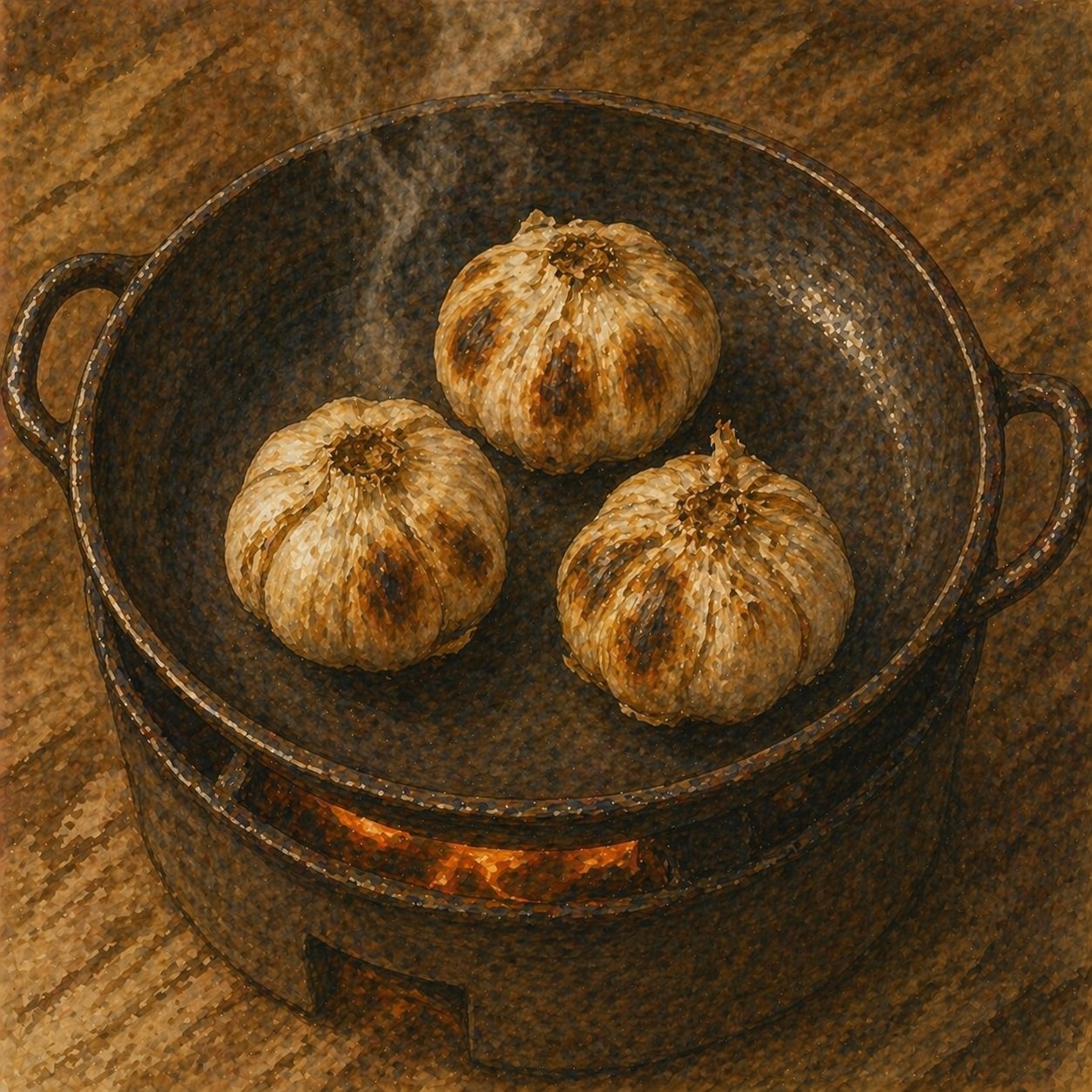
Same pan, low heat. Place whole garlic bulbs (root side down) and toast for 3–4 minutes until the outer skin lightly chars and you smell roasted garlic. Set aside.
Blanch the Ribs
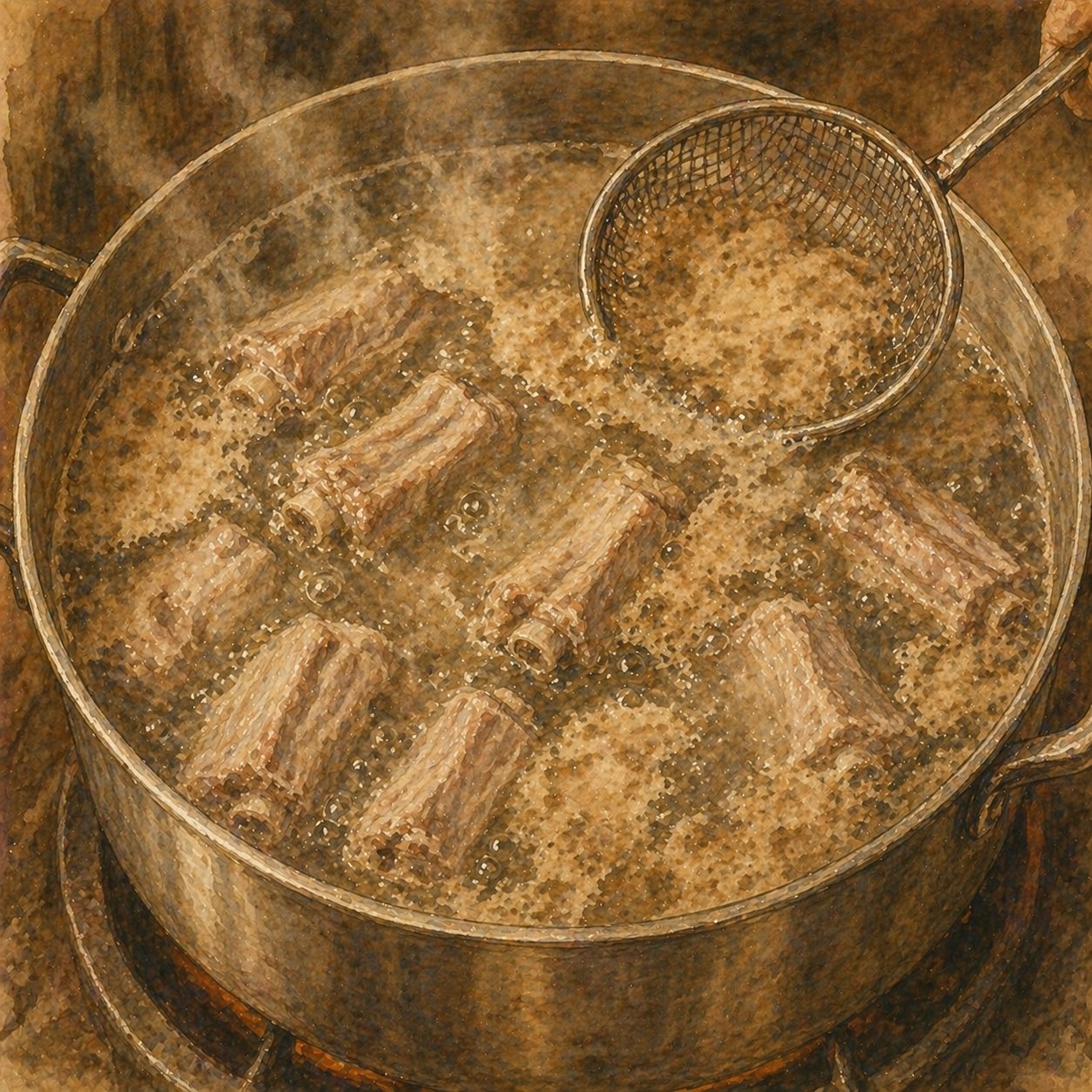
Bring a large pot of water to a rolling boil. Drop in the ribs. Boil for 3 minutes — you'll see brown scum and impurities rise. Drain. Rinse the ribs under cold water until clean. This step is not optional — without it, your soup will be muddy and smell of pork.
The Simmer
In a clean stockpot, place the rinsed ribs, garlic bulbs, peppercorn pouch, star anise, cinnamon. Pour in 2.5 litres of fresh water. Bring to boil, then lower to gentle simmer with the lid slightly askew. Simmer for 1.5 hours.
Do not boil hard. Hard boiling breaks the meat fibres and clouds the soup. You want the broth to whisper, not roar.
After 1.5 hours, the meat should pull cleanly from the bone with a chopstick but not fall off. Add light soy, dark soy, salt. Taste. Adjust. Simmer another 15 minutes.
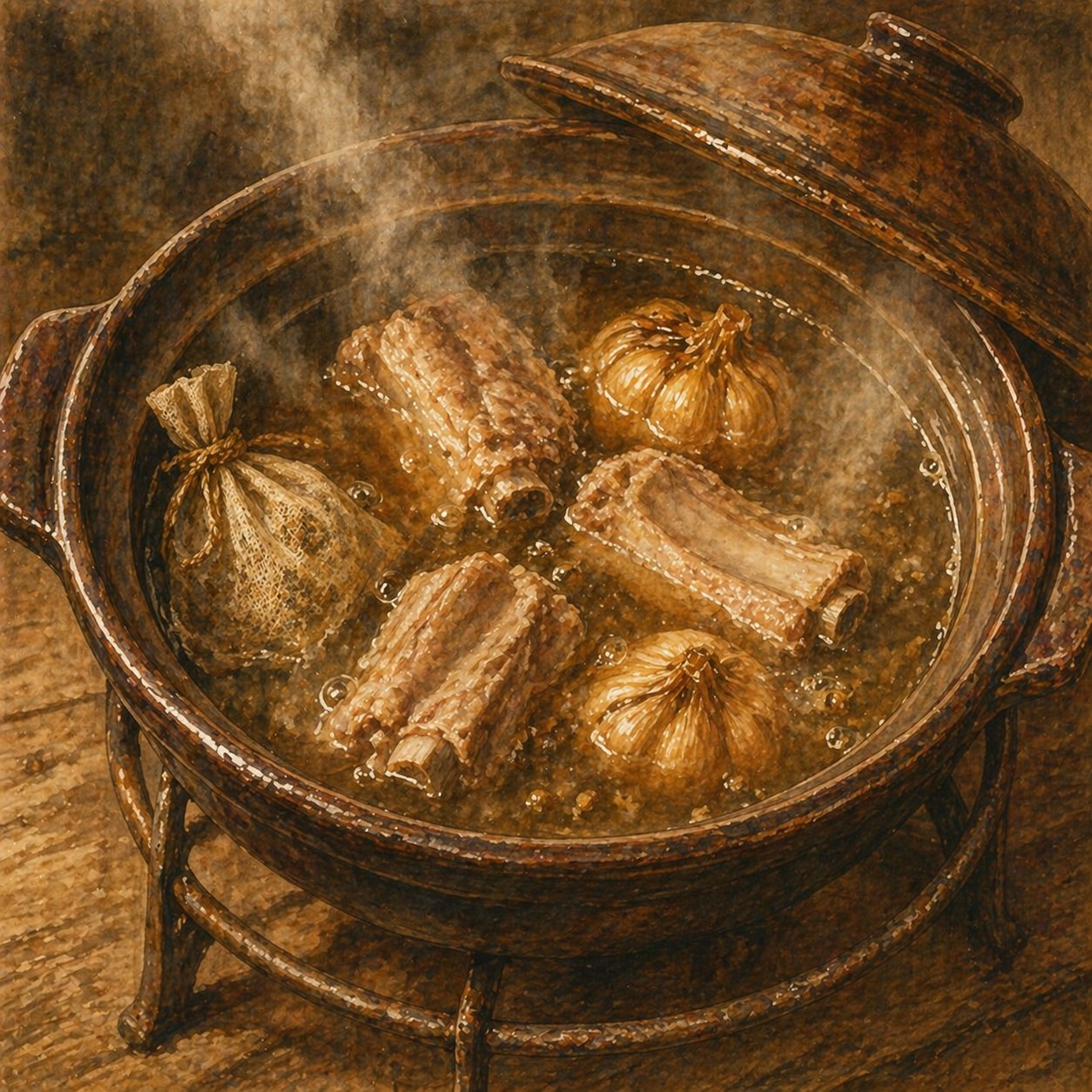
Serve
Ladle 3–4 ribs and broth into each bowl. Place a whole softened garlic bulb beside the ribs (eat it like a dip — squeeze the cloves into the soup). Serve with rice on the side, you tiao on a separate plate, the chilli-soy-garlic sauce in a tiny dish.
Drink Tieguanyin tea between mouthfuls — that's the proper rhythm.
🎯The Three Tips
Heritage. Master's. Mistake.
🏛 Heritage Note
The Apprentice Who Became a Master
The very first Singapore Bak Kut Teh — Nankin Street Bak Kut Teh at Maxwell — was opened by Teo Han Poh, who was the kitchen helper of Ong Say Bak Kut Teh in the 1930s. So the lineage we eat today goes back nearly a century, through a kitchen apprentice who became a master. Heritage is built like that — one apprentice at a time. That is why this book exists.
👨🍳 Master's Tip
The Pepper Balance
The single biggest decision in your bak kut teh is how much pepper, and how cracked. Here is the formula I teach:
- Less cracked, fewer broken → soup is fragrant, mild, lingering warmth
- More cracked, more broken → soup is sharp, spicy, hits the front of the tongue
- Powder → harsh, dusty, ruins the dish
Aim for the middle. Toast first, always — toasting awakens the oils. A peppercorn untoasted is a peppercorn asleep. Sarawak gives floral pepper warmth without harsh burn — every Singapore heritage stall uses it.
⚠ Common Mistake
Cloudy Soup, Murky Flavour
If your bak kut teh comes out cloudy or muddy-looking, you made one of three mistakes:
- You skipped the blanch — pork blood and impurities went into the stock.
- You boiled too hard — the meat broke down into the broth.
- You added too much dark soy — heavy hand on the dark soy turns Teochew style into accidental Hokkien style.
Fix: Strain the soup through a fine sieve into a clean pot. Add 100 ml ice water and let stand 5 minutes — fat will rise. Skim. Reheat gently.
📈 Scaling for Hawker Service
For 60–100 bowls a day
- Stock at scale: 12 litres of soup base in the morning, with 6 kg of ribs going through the day in batches of 2 kg every 2 hours. Fresh ribs = better texture; never simmer all day.
- Pepper bags: Pre-make 10 muslin pepper bags weekly. Replace bag every 4 hours of simmering — flavour fades.
- Refill technique: When customers ask for soup refill (free at most heritage stalls), use a fresh pot of pre-seasoned broth, not the heavily-used pot. The first ladle of refill should taste as bright as the original.
- Cost (Singapore 2026): Per bowl ~SGD 2.50 (ribs 1.80 + pepper/aromatics 0.30 + rice/sides 0.40). Sells SGD 8–14. Margin: 70–80%.
Bak kut teh is the dish of a man who has nothing left but his hands and his hunger. Make it well, and you feed not just the body but the spirit.