Five Recipes
The Hakka Kitchen
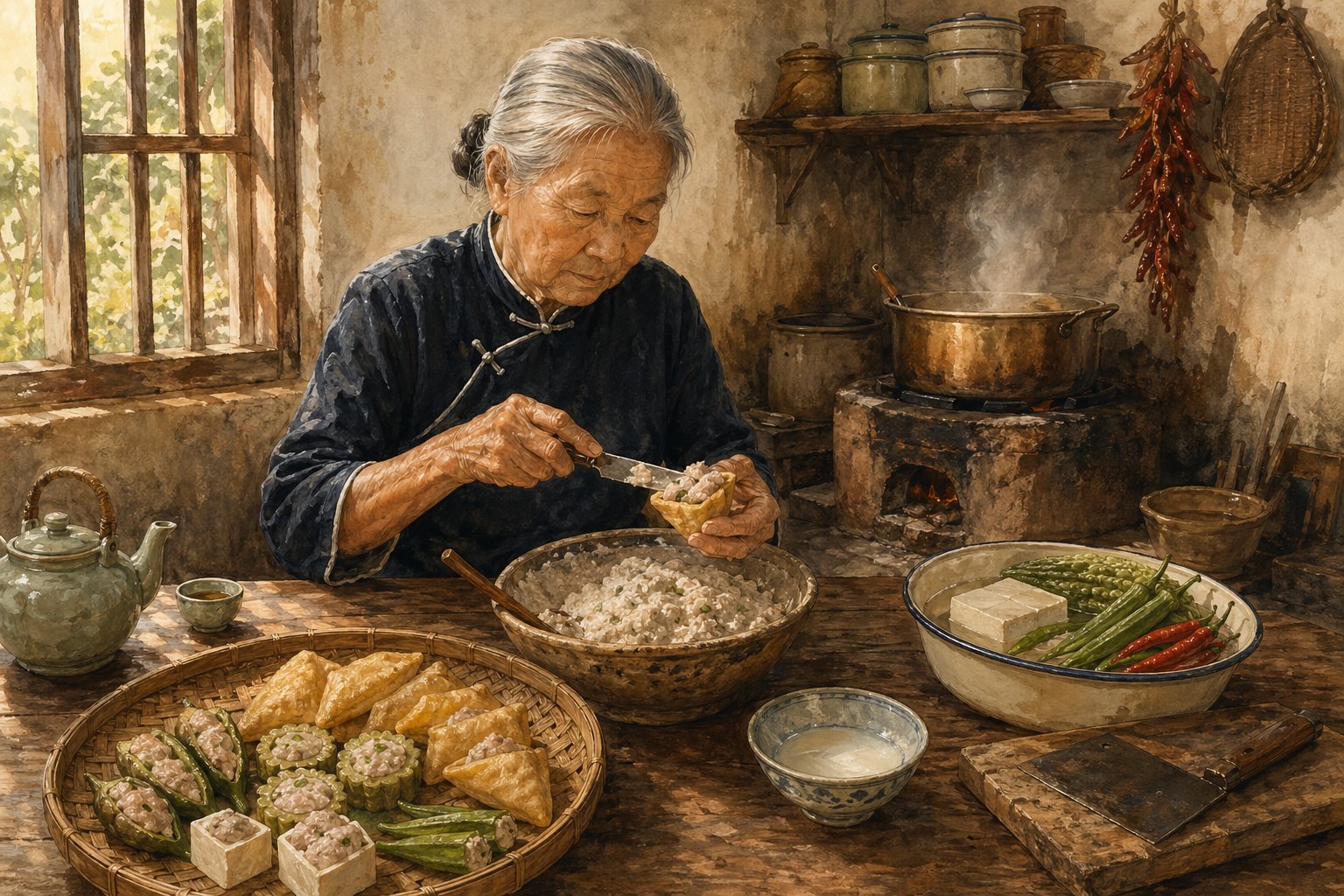
Hakka Yong Tau Foo
The migration dish — fish-and-pork paste stuffed into tau pok, chillies, bitter gourd, tofu and ladies fingers, poached gently in clear pork-and-ikan-bilis broth. The Hakka argument with the local pantry.
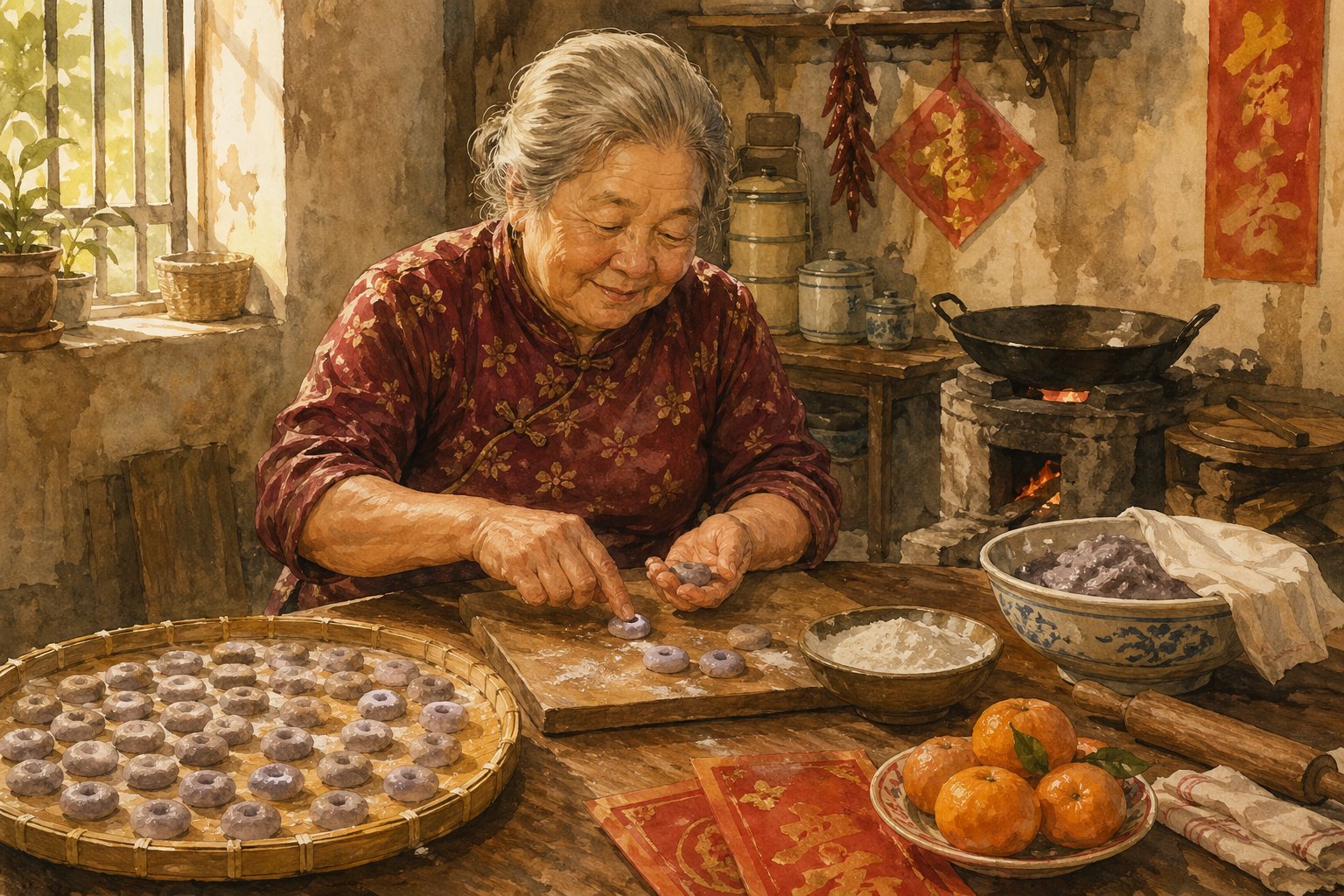
Hakka Abacus Seeds
Hand-rolled yam-and-tapioca beads, blanched and wok-tossed with minced pork, soy-glossed black fungus, dried shrimp and chye poh. The Hakka Lunar New Year prosperity dish — one bead, one blessing.
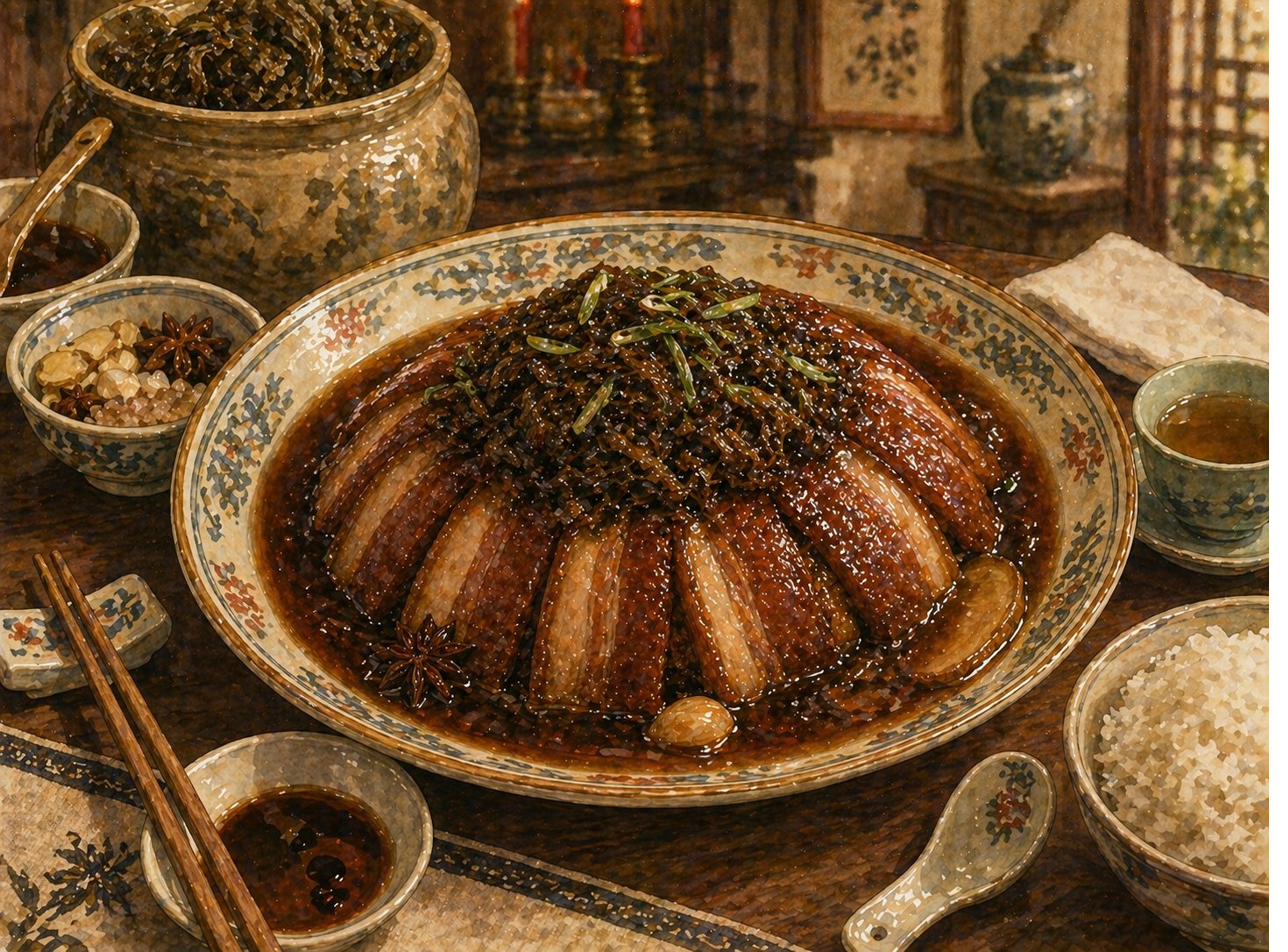
Hakka Mei Cai Kou Rou
The banquet centrepiece. Pork belly braised with sun-dried mustard greens, layered into a deep bowl, steamed for hours, flipped onto a plate in five seconds of judgement. The flip is the dish.
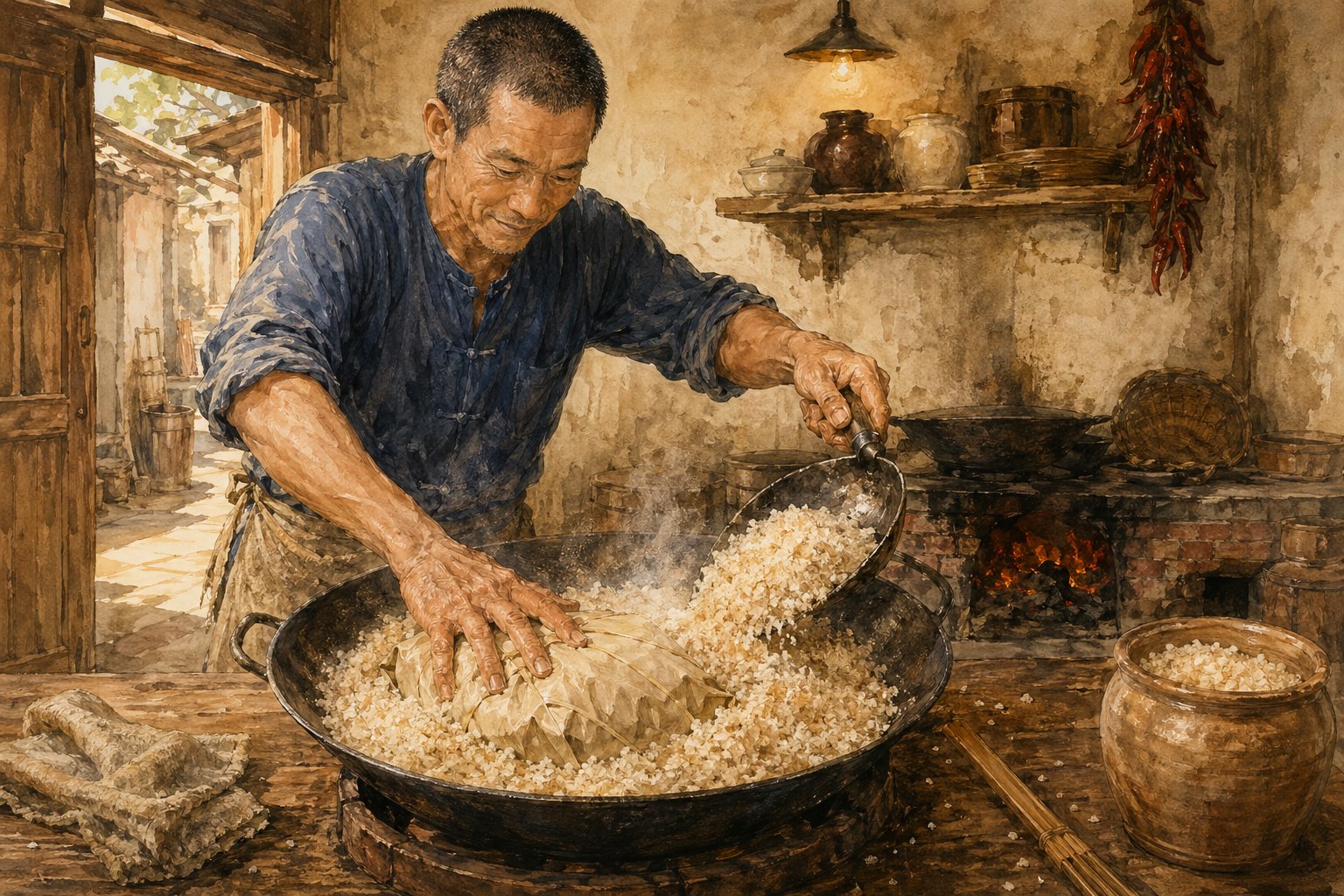
Hakka Salt-Baked Chicken
A whole chicken rubbed with sand-ginger and Shaoxing, wrapped in lotus leaf and parchment, buried in pre-toasted hot rock salt. Hand-torn at the table — Yan Guk Gai, the mountain technique that came to the city.
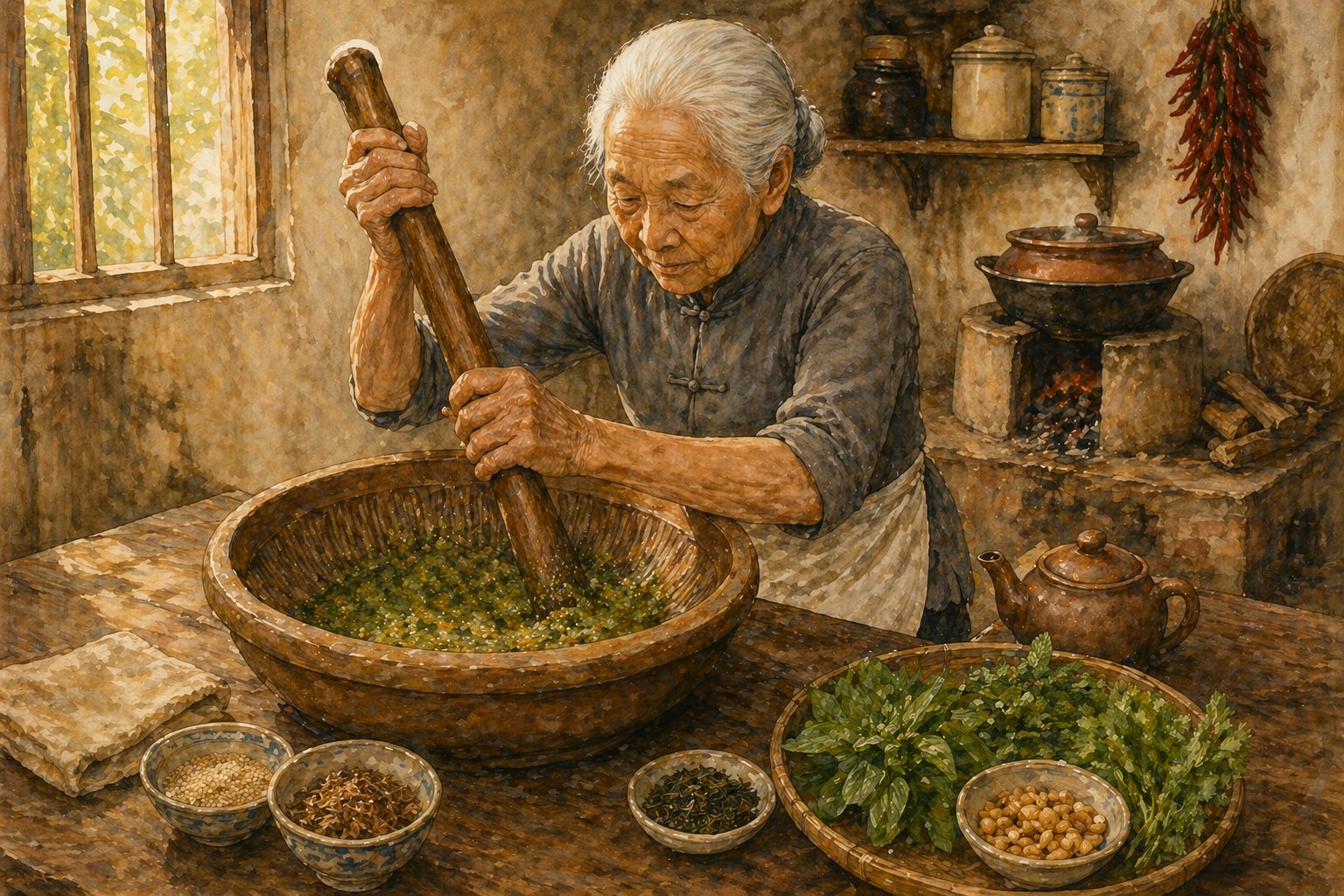
Hakka Lei Cha
Thunder Tea Rice — the most distinctly Hakka of all. Fresh green tea, herbs and toasted nuts ground in a ridged mortar into a sage-green broth, poured over brown rice surrounded by seven finely-chopped treasures. Ceremonial, ancient, slow.