Five Recipes
The Hainanese Kitchen
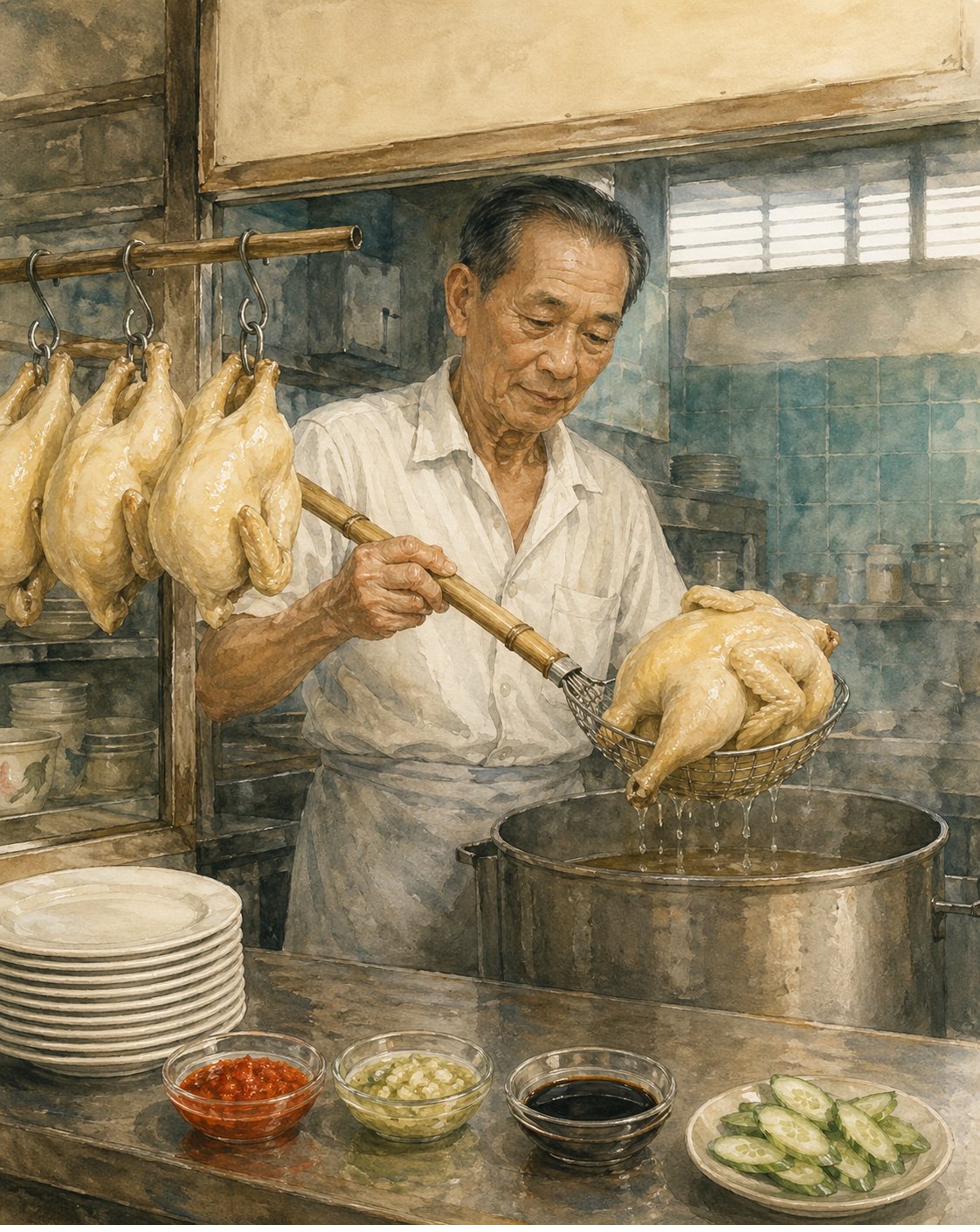
Recipe Sixteen
Hainanese Chicken Rice
海南鸡饭
Sub-boiling poach, ice bath, fragrant rice cooked in chicken fat and broth. Three sauces. The dish that made Singapore famous around the world.
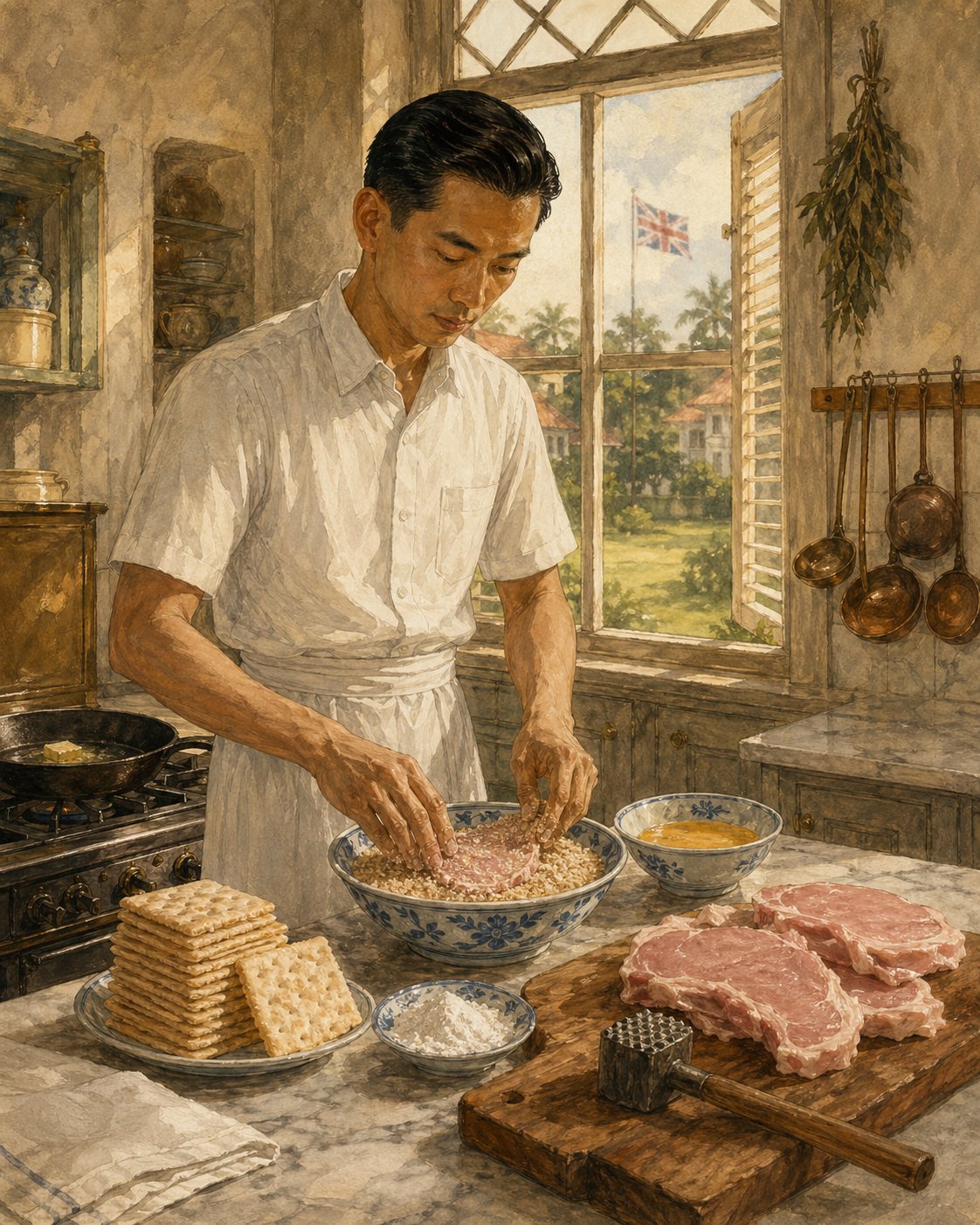
Recipe Seventeen
Hainanese Pork Chop
海南猪扒
Pounded pork in a Khong Guan cream-cracker crust, fried golden, draped in glossy tomato gravy with onions, peas, and potato. The colonial kitchen classic.
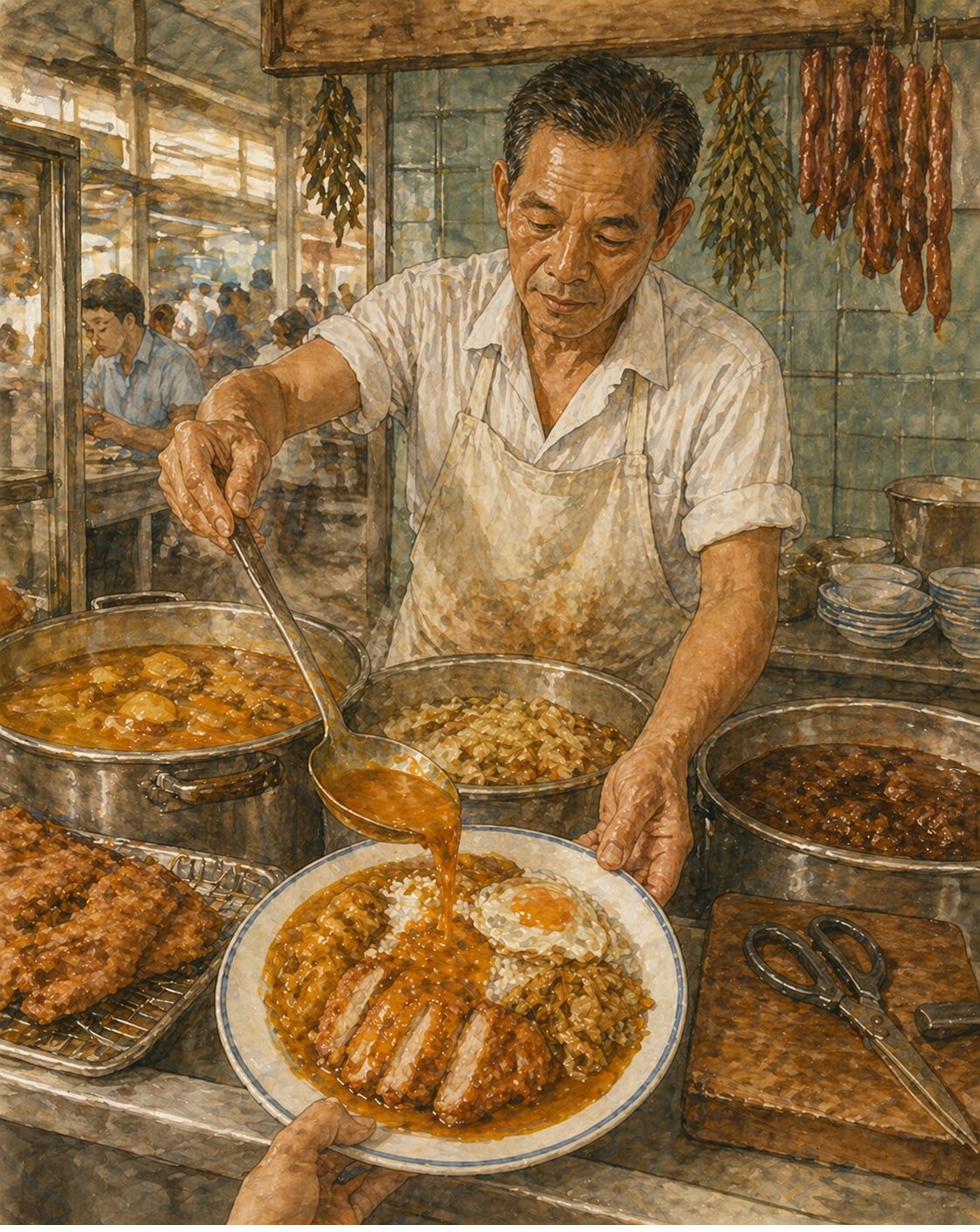
Recipe Eighteen
Hainanese Curry Rice
海南咖喱饭
The four heavenly kings — pork chop, curry chicken, chap chye, braised pork belly — over plain rice, drowned in three gravies. Eat it messy.
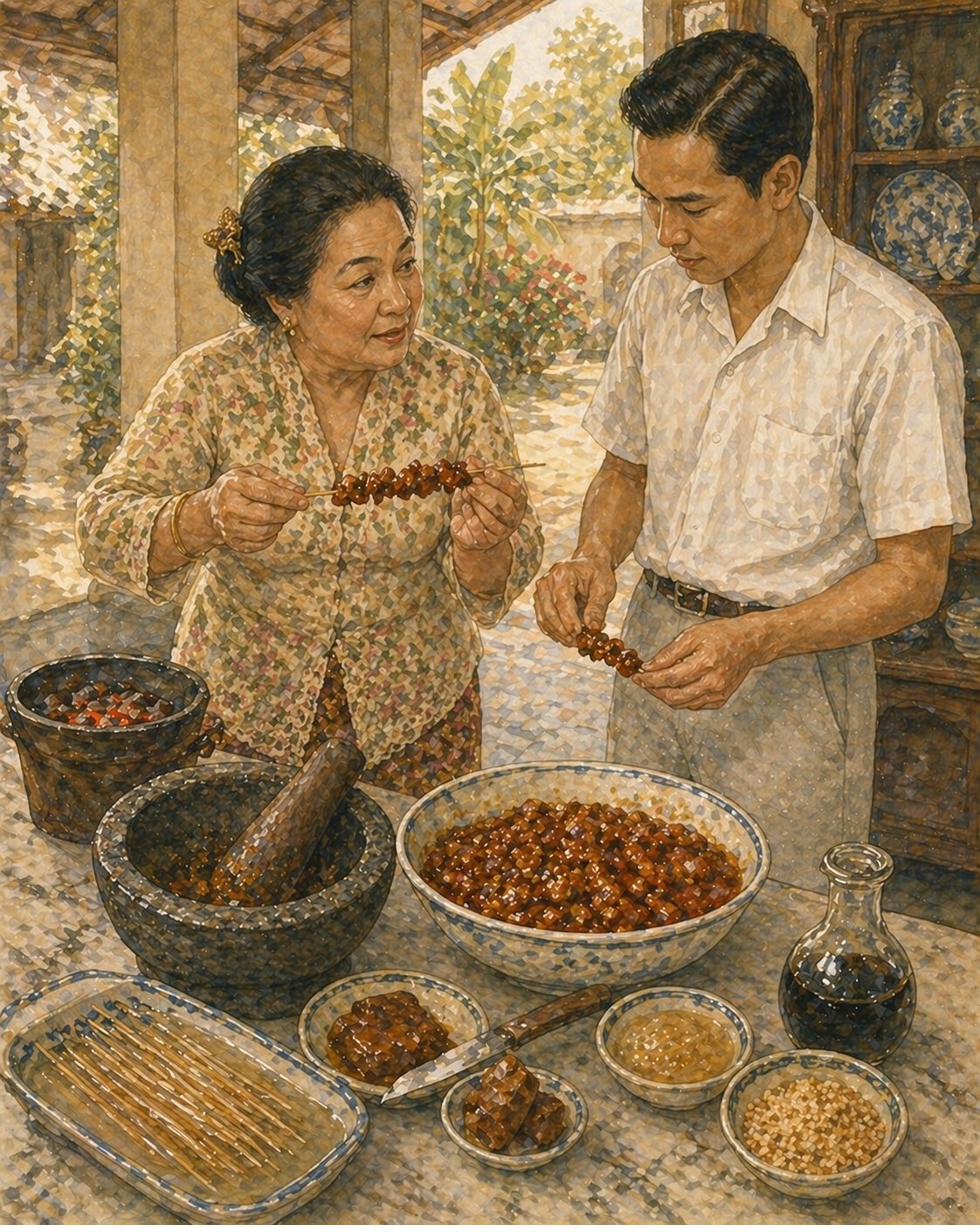
Recipe Nineteen
Hainanese Pork Satay
沙嗲猪肉
Satay babi from the Peranakan-Hainanese fence-line — rempah-marinated pork over charcoal embers, with a chunky peanut sauce and the garnish trio.
Recipe Twenty
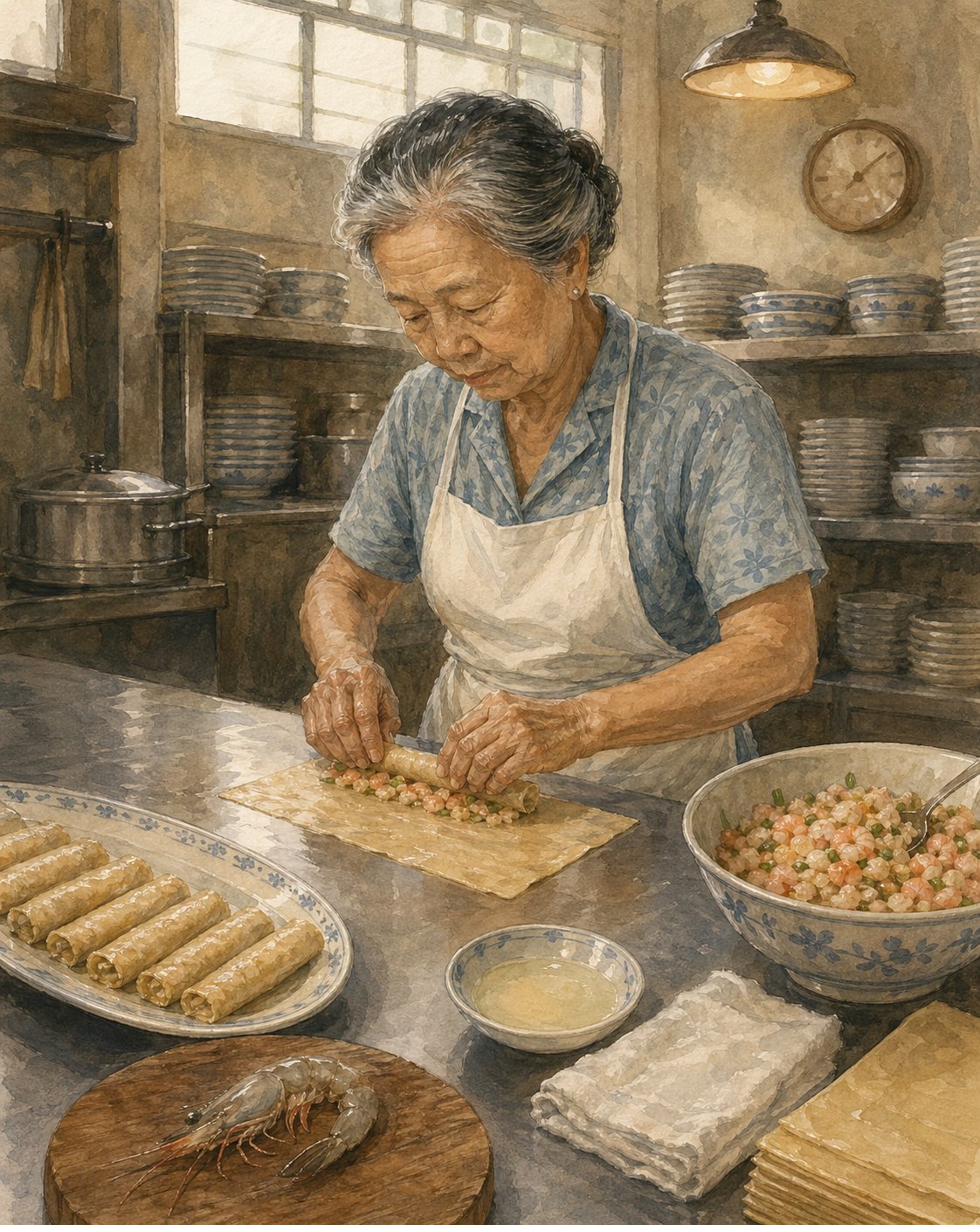
Heh Cho
虾枣
The forgotten cousin of ngoh hiang — prawn-forward, smaller, more delicate, double-fried glassy-crisp, dipped in sweet chilli with a Hainanese plum-sauce note.