Five Recipes
The Foochow Kitchen
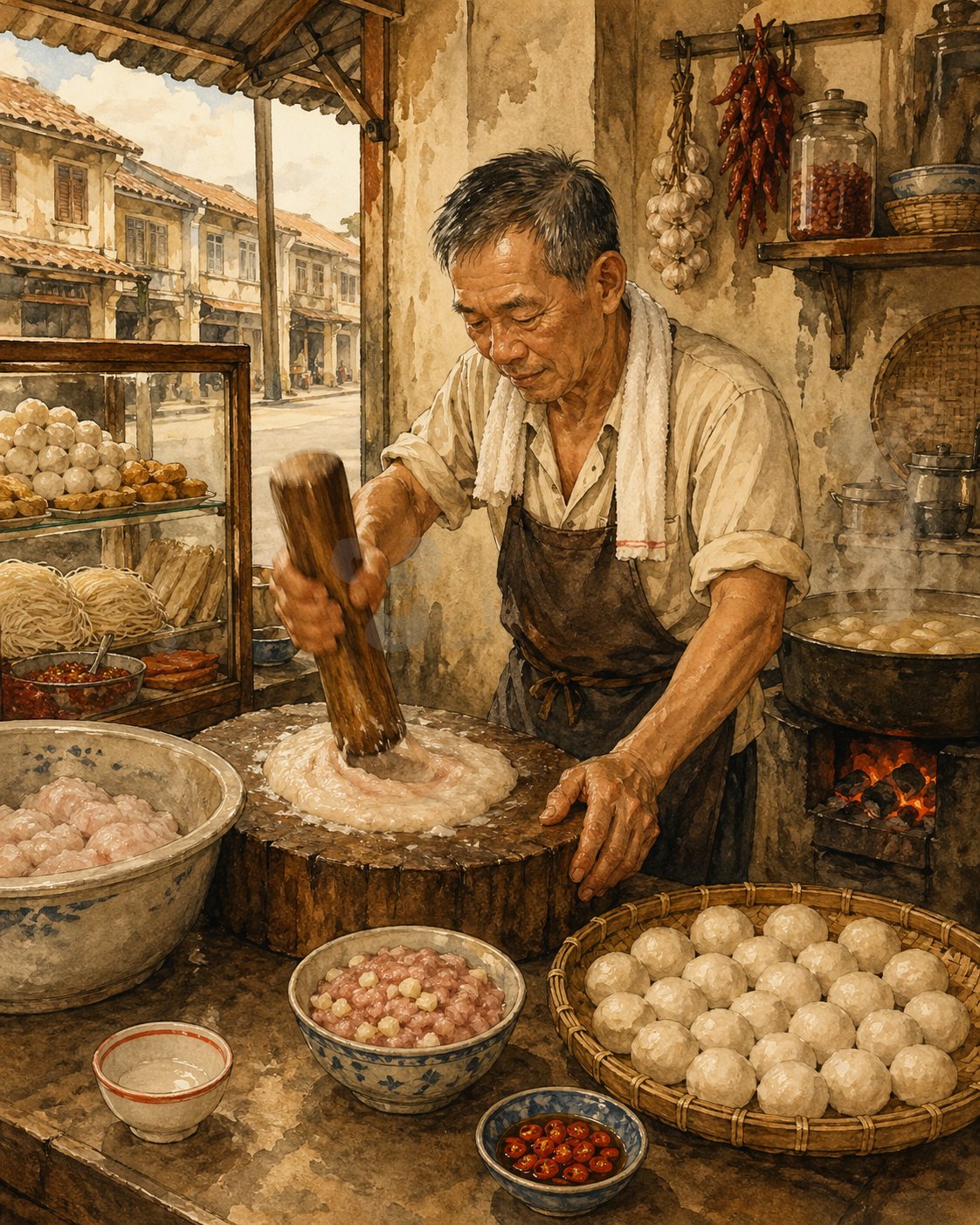
Foochow Fishball Soup
Pork-filled fish-paste balls in clear pork-and-fish-bone broth. Hand-pounded mackerel, the tiger's-mouth shaping, the float as the doneness cue. Uncle Lau's Geylang lineage — and the chapter's opening register.
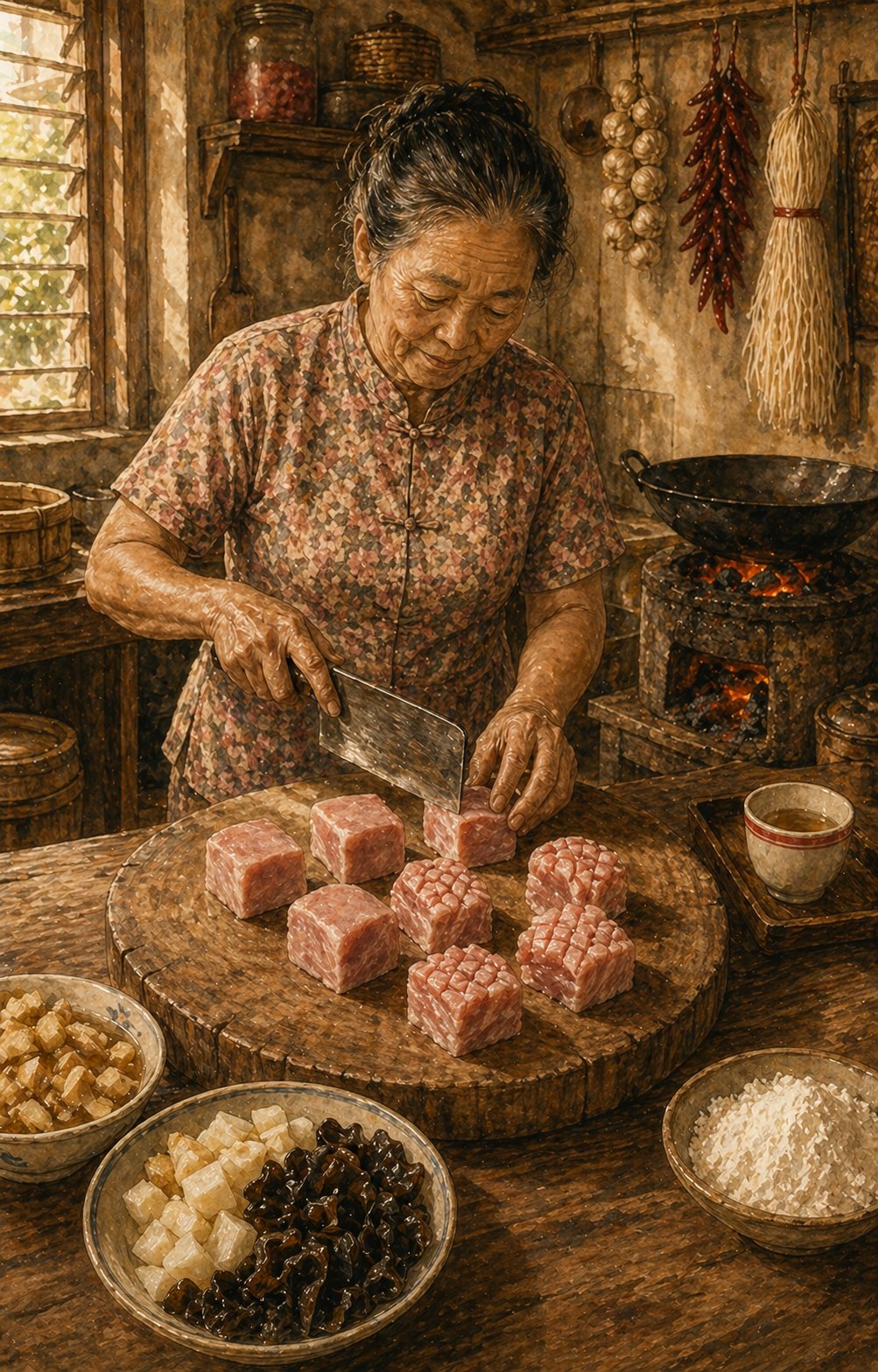
Foochow Litchi Pork
Pork shoulder cubes scored deep in cross-hatch, two-fried to bloom into the lychee shape, tossed in tomato-and-rice-vinegar glaze. The knife is more important than the wok. Auntie Lim's Sibu kitchen.
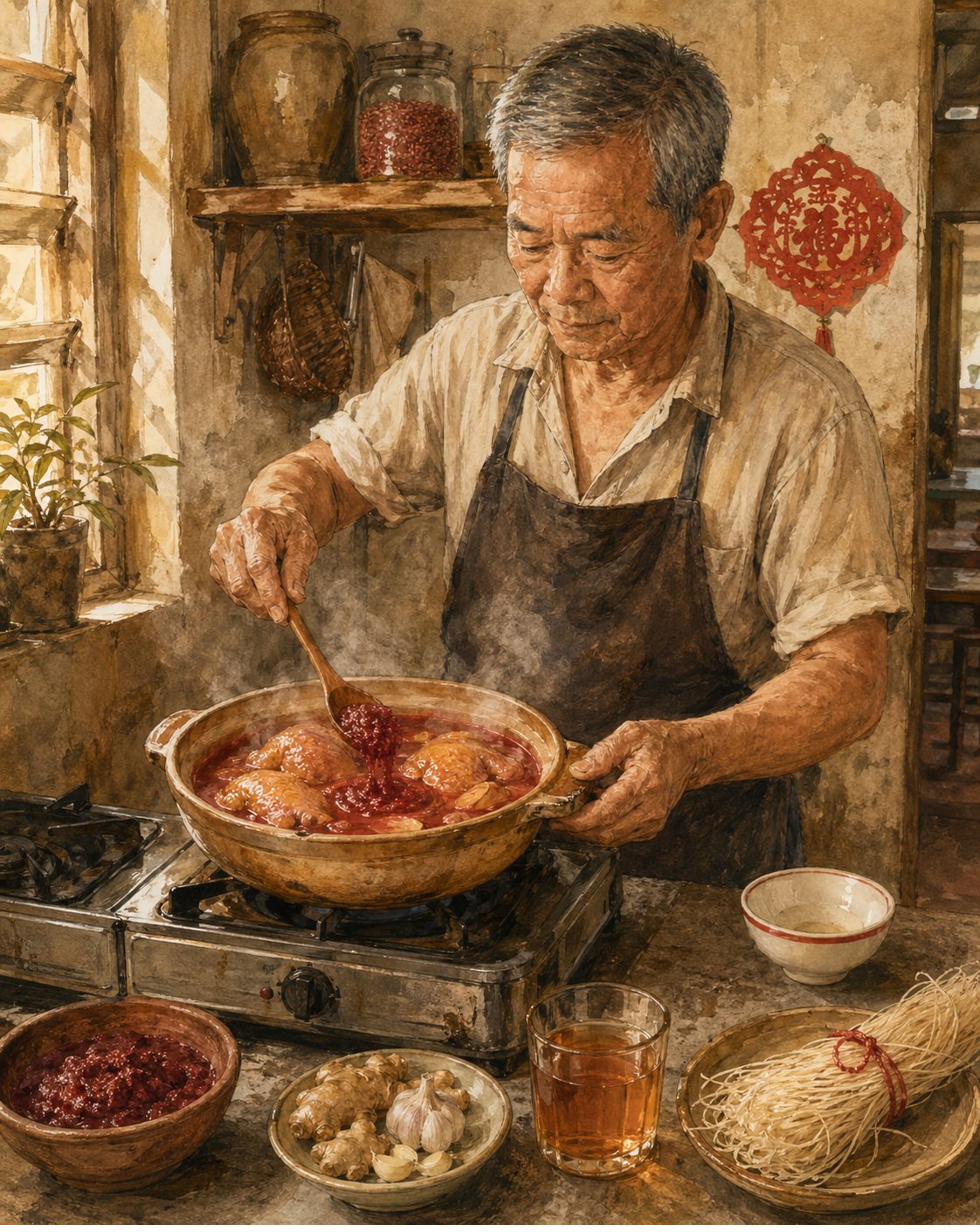
Foochow Red Wine Chicken Mee Sua
Bone-in chicken simmered in Foochow red rice wine and red wine lees, served with longevity mee sua, halved hard-boiled egg, ginger and spring onion. The only dish in this book I cook only at home. The Lunar New Year first-morning bowl.
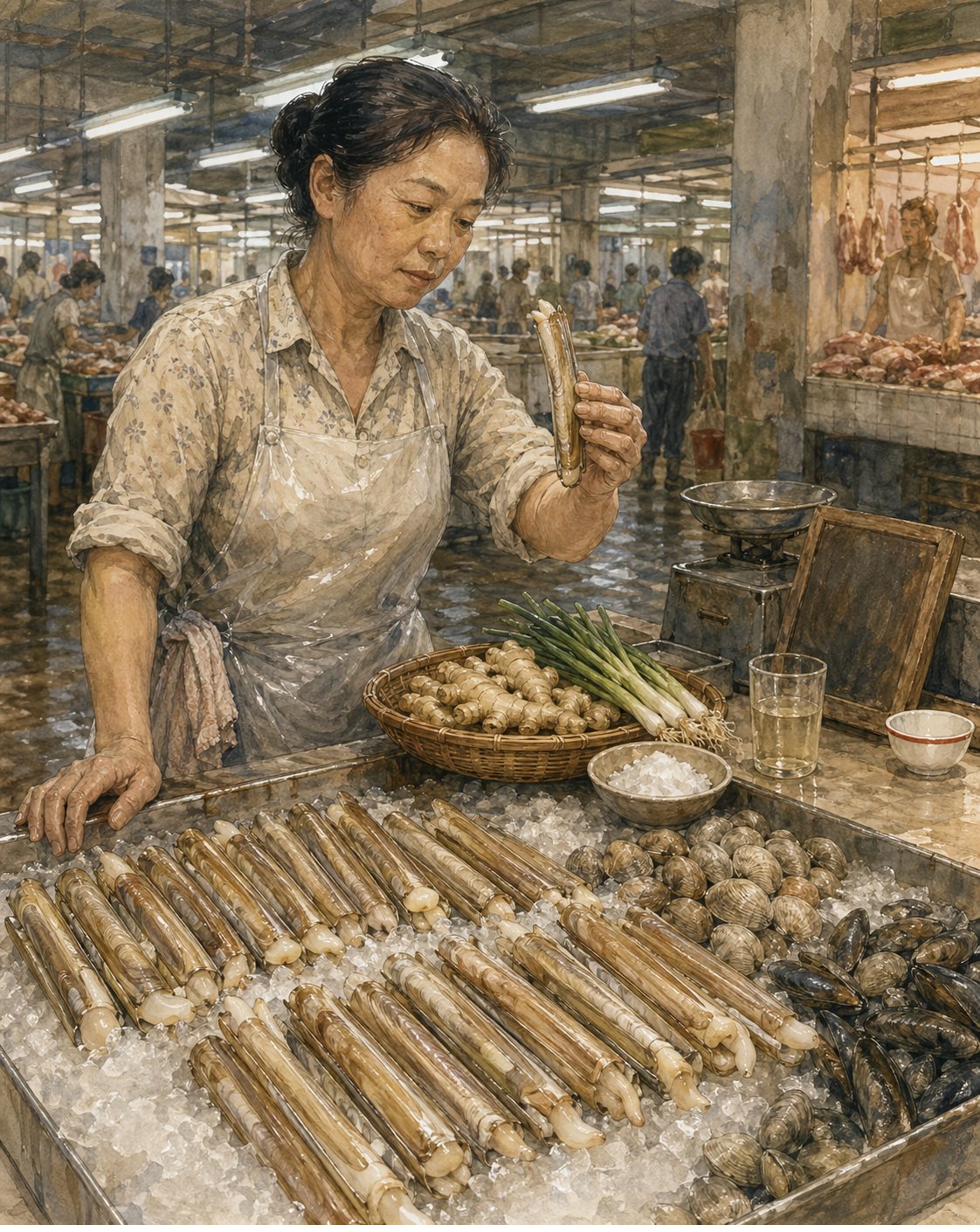
Foochow Razor Clams
Live razor clams purged in salted water, steamed to a thirty-degree gape, doused with hot ginger-and-spring-onion oil and a Shaoxing splash. Eight minutes to cook, forty years to learn how to buy. Ah Sou Tiong's Tekka stall.
Foochow Ang Chao Chicken
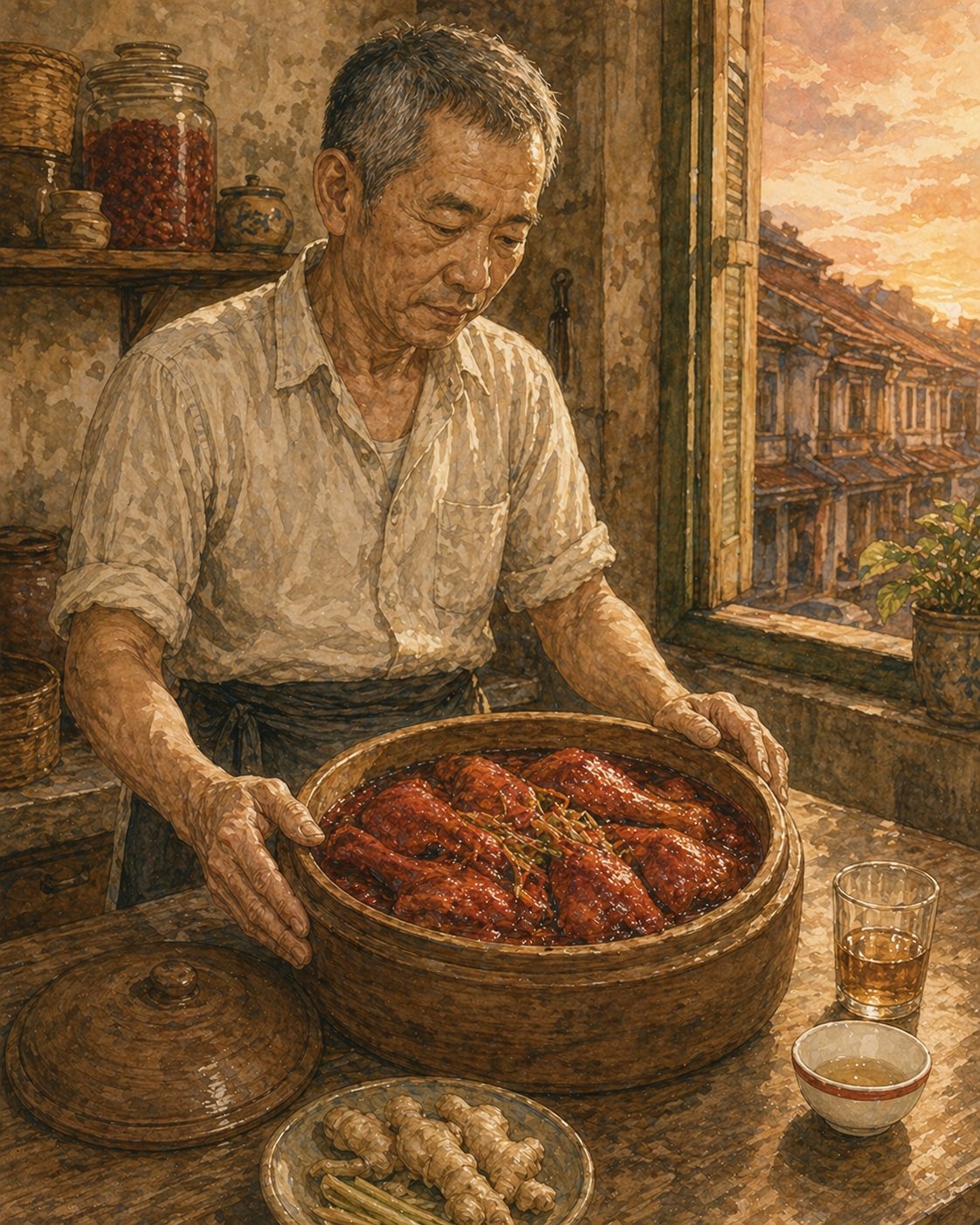
Bone-in chicken marinated, lacquered and rested 24 hours in red wine lees — cold-sliced for the banquet table. The chapter's foreground-payoff hero and the book's closing recipe. You make it for the people you love most.