Orh Nee
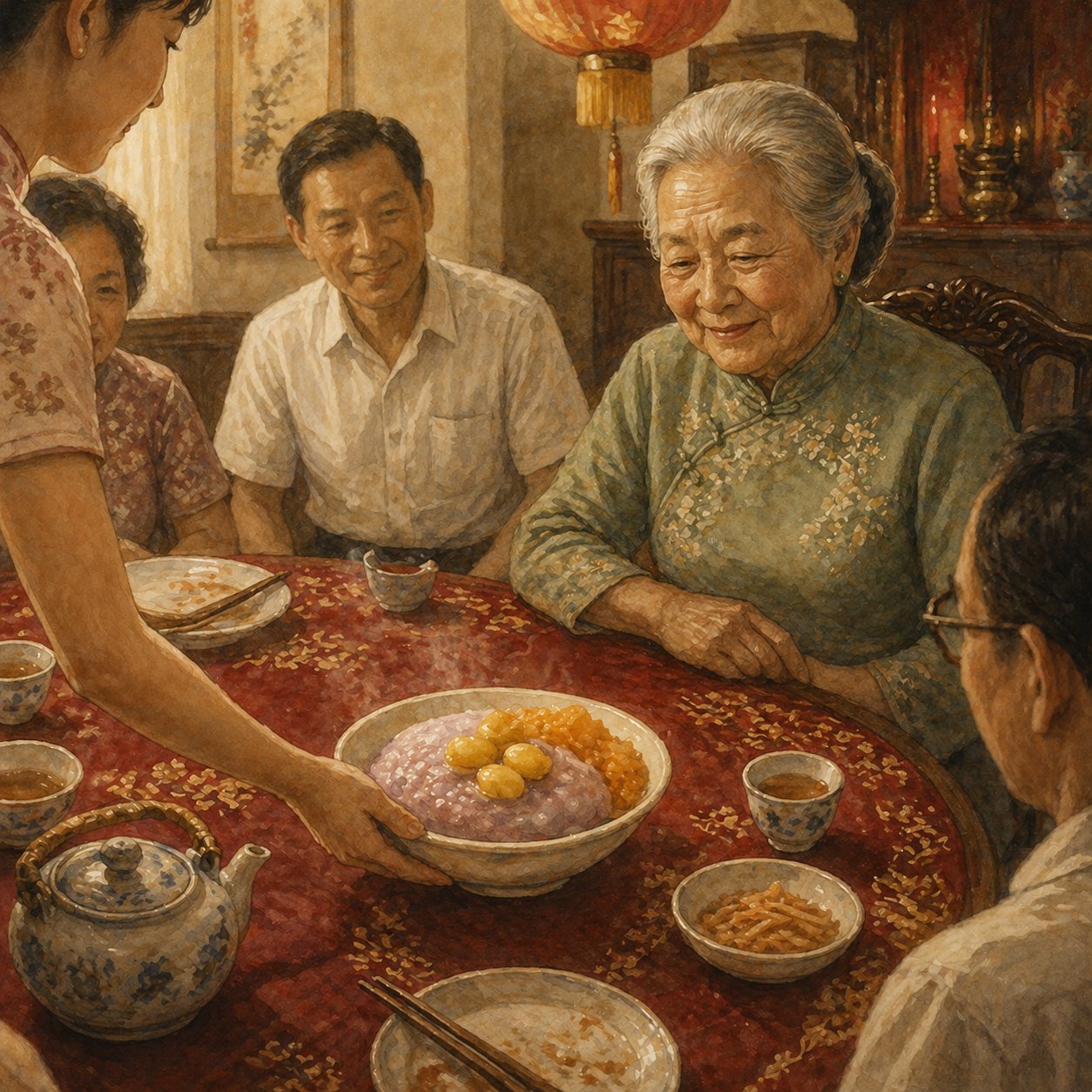
Every Teochew banquet ends with orh nee. Always.
It is the dessert that signals "the meal is complete." Smooth, rich, slightly sweet yam paste, topped with sweet candied gingko nuts and steamed pumpkin. The traditional Teochew saying: "做芋泥没功夫,糖油做师傅" — "There is no special skill in making yam paste; sugar and oil are the masters." What it means: a good orh nee depends entirely on the quality of the yam, the quality of the lard, and the patience to stir.
The dish is older than Singapore — it traces to Fuzhou and Chaoshan in southern China, where yam (taro) was a peasant staple. Yet it became banquet food through the alchemy of lard and sugar — turning a humble tuber into something that ends a feast on a sweet, comforting note.
In modern Singapore, you'll find orh nee at proper Teochew restaurants: Chui Wah Lin, Ah Orh Seafood, and family-run zi char (cooked-to-order stalls) in Joo Chiat. Some serve it warm, some chilled. Both are correct.
I am giving you the traditional lard version. There is also a healthier no-lard version using coconut milk — I will note the variation. Your call.
🛒Ingredients
Three components — yam paste, candied gingko, steamed pumpkin. The yam is the canvas; the lard and sugar are the masters.
For the Yam Paste
| Fresh yam (taro) | 600 g | Peeled, sliced 1 cm thick. Buy from any wet market — choose firm, heavy. The "Lampung" variety from Indonesia is excellent. |
| Pandan leaves | 3, knotted | |
| Pork lard | 100 ml (~100 g) | Render fresh — see Hokkien Mee. Substitute: shallot oil 80 ml, OR coconut oil 80 ml for vegetarian/healthier. |
| White sugar (or rock sugar) | 80–120 g | Start with 80 g; add more if you want sweeter. |
| Fine salt | a small pinch | Critical for flavour balance. |
For the Gingko Nuts
| Fresh gingko nuts (or vacuum-packed) | 80 g (~40 nuts) | |
| Water | 250 ml | |
| Pandan leaf | 1, knotted | |
| Sugar | 40 g |
For the Pumpkin Layer
| Pumpkin (kabocha or local) | 200 g | Peeled, deseeded, cubed. |
| Pandan leaf | 1, knotted |
Syrup Drizzle optional
| Reserved gingko syrup | 200 ml | Thicken with 1 tsp cornflour mixed with 1 tbsp water. |
🌶️Shifu's Lift
choose one path — see "Shifu's Secret" chapter for the philosophy- Old-school path: Use 100 ml fresh-rendered pork lard per 600 g yam (16% by weight). Drizzle the final 20 ml on top of the finished paste — heritage finishing touch.
- Modern hawker path: Use 60 ml lard or shallot oil. Below 60 ml the paste tastes dry and starchy.
- Heritage purist path: After plating, re-steam the assembled bowl for 5 minutes before serving — intensifies the lard's fragrance and makes the paste even glossier.
👨🍳Method
Five stages. Stage 4 is the work — twenty minutes of stirring is non-negotiable.
Steam the Yam
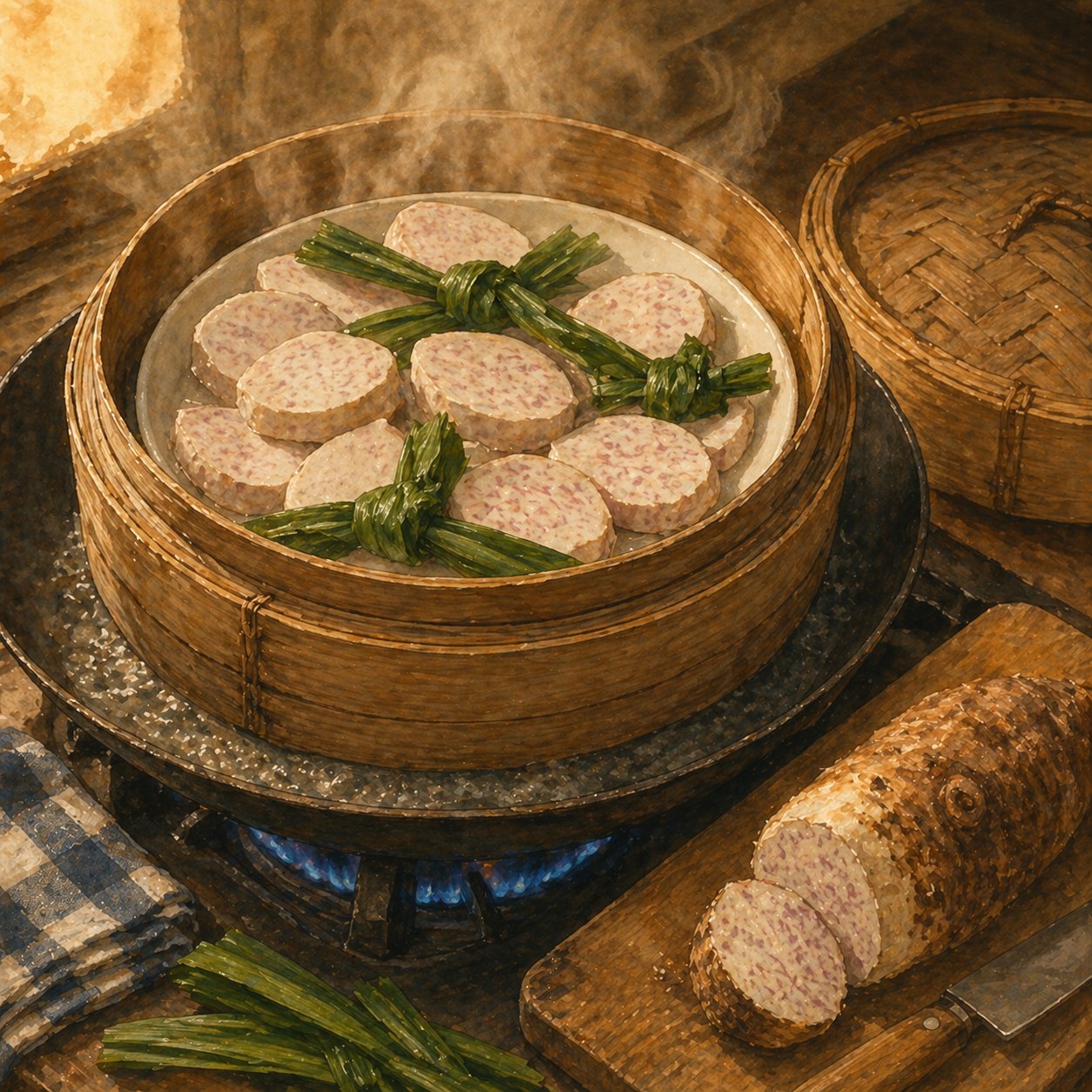
Place yam slices on a plate with pandan leaves. Steam over rapid boiling water for 30–40 minutes, or until a chopstick passes through with no resistance.
While the yam steams, prepare the other components.
Prep the Gingko Nuts
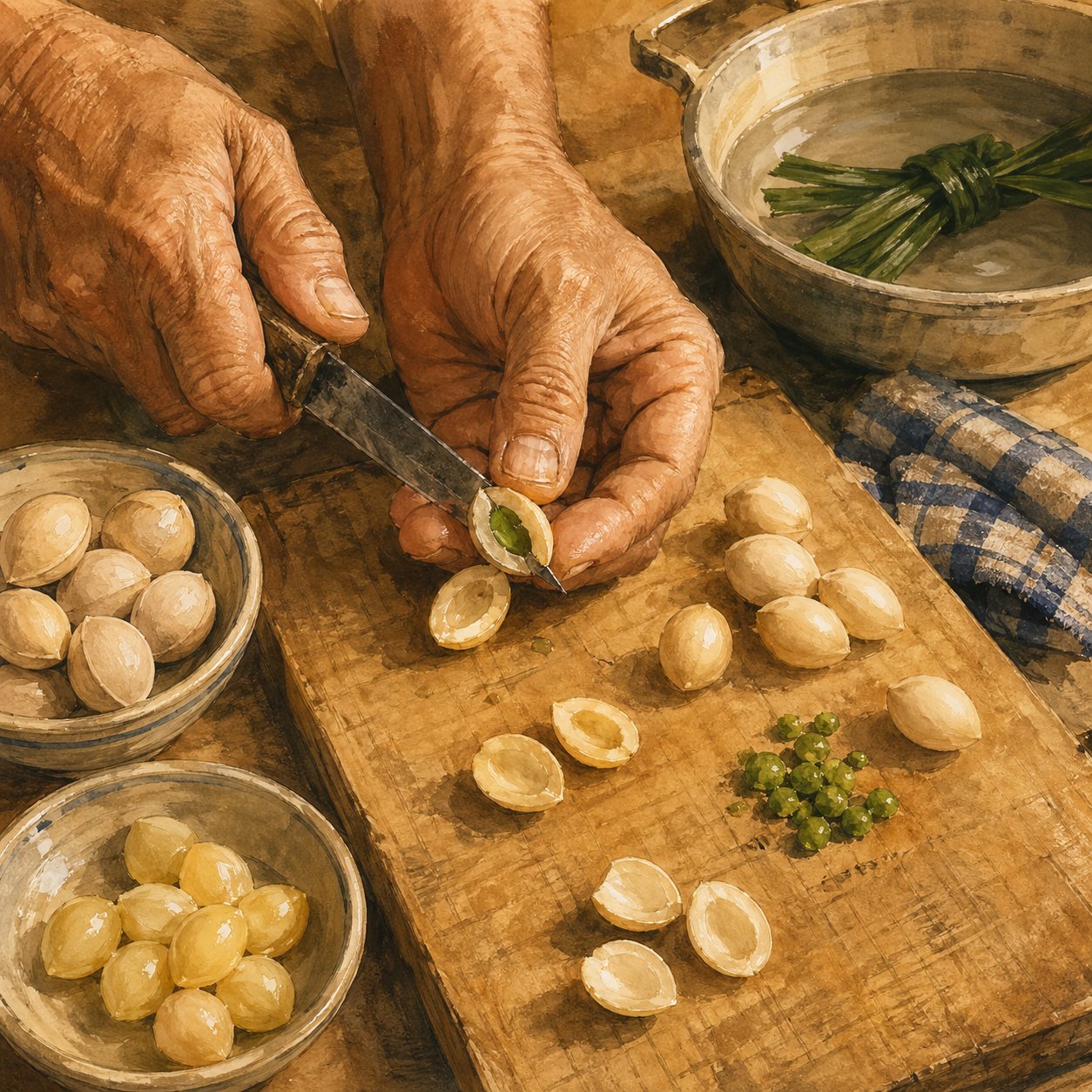
If using fresh gingko: crack the shells, remove brown skin, and split each nut to remove the bitter green pit in the centre. Skipping this step = bitter dessert.
In a small saucepan, simmer gingko nuts with 250 ml water, pandan leaf, and 40 g sugar for 30 minutes until tender. Reserve syrup separately from the nuts.
Steam the Pumpkin
Place pumpkin cubes on a plate with the pandan leaf. Steam for 20 minutes, or until fork-tender. Mash lightly with a fork — keep it slightly chunky for texture contrast.
Make the Paste — The Critical Stage
When yam is steamed, transfer to a food processor while still hot. Pulse until smooth-ish (not silky — slight texture is good).
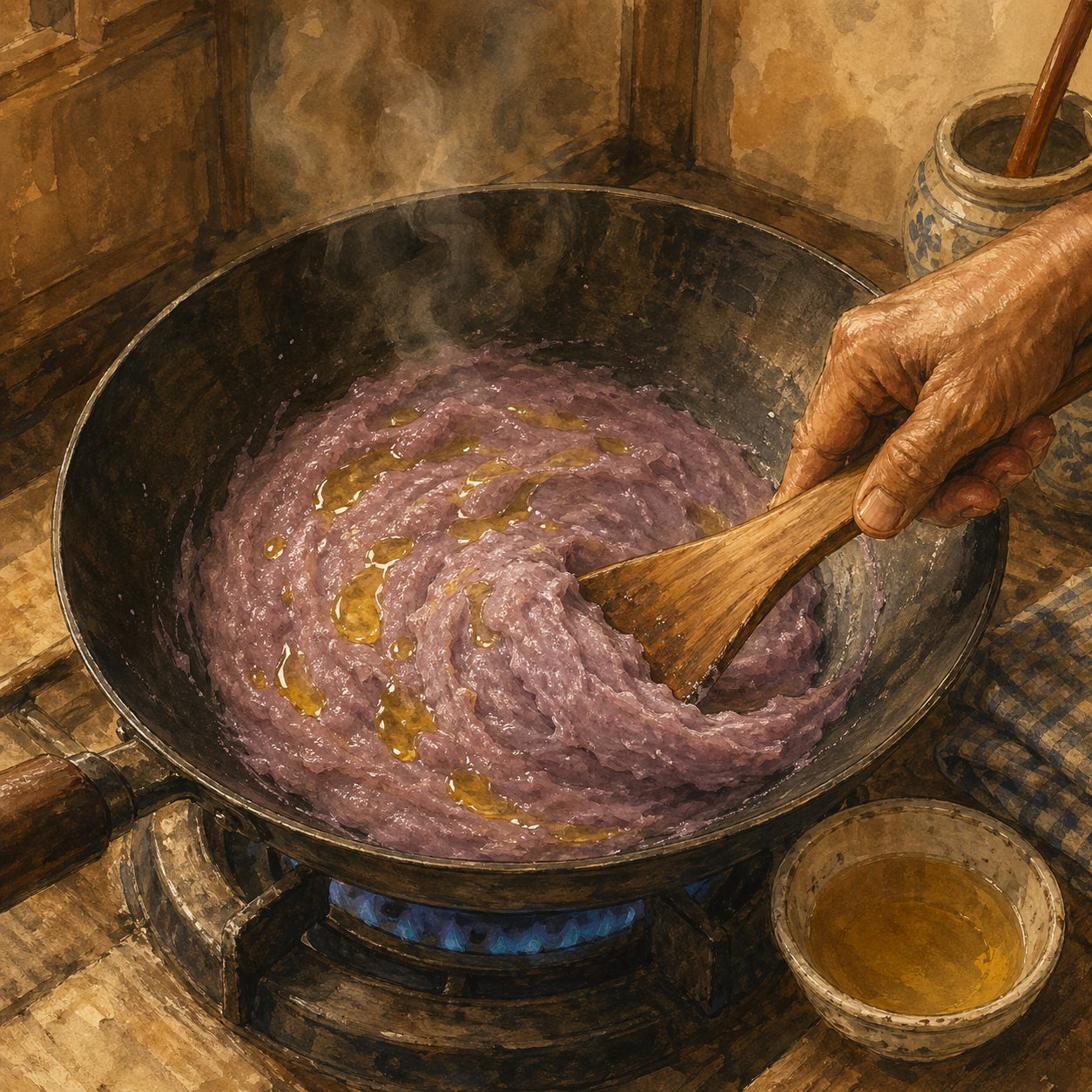
Heat 80 ml of the lard in a non-stick wok or heavy-bottomed pan over low-medium heat. When melted but not smoking, add the mashed yam.
Stir continuously for 20 minutes. This is non-negotiable. The lard incorporates, the yam smooths out, the colour deepens slightly.
Add sugar in two batches (40 g + 40 g), tasting between additions. Add salt pinch.
Continue stirring for another 10 minutes. The paste should be glossy, smooth, and pull away cleanly from the wok sides when stirred. If too thick, add 2–3 tbsp hot water. If too thin, keep stirring until reduced.
Drizzle the last 20 ml lard on top of the finished paste — this is the heritage finishing touch.
Plate
For each serving:
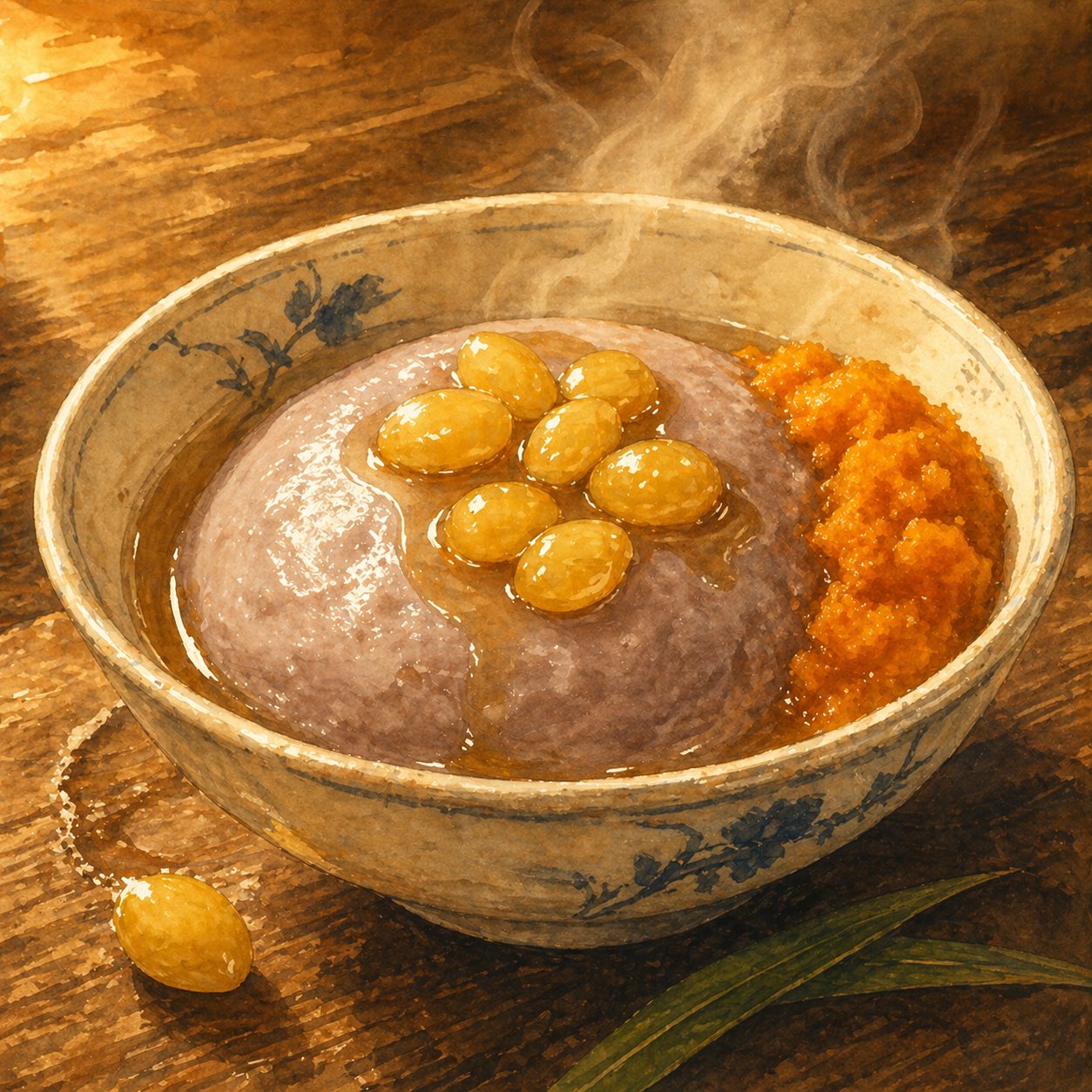
- Scoop yam paste into a bowl, smoothing the top.
- Add a small mound of mashed pumpkin to one side.
- Spoon 5–6 gingko nuts on top.
- Drizzle with thickened gingko syrup if desired.
Serve warm (traditional) or chilled (modern).
🎯The Three Tips
Heritage. Master's. Mistake.
🏛 Heritage Note
The Double-Layer Re-Steam
Old Teochew restaurants serve orh nee in a special double-layer steamed bowl — the bottom layer of paste is shaped, the gingko and pumpkin go on top, and the whole thing is re-steamed for 5 minutes before serving. This intensifies the lard's fragrance and makes the paste even glossier.
If you have time, do the final 5-minute re-steam. It is the difference between "good" orh nee and "wah lao (heavens / wow) this is from before the war" orh nee.
👨🍳 Master's Tip
Lard Quality, Lard Quantity
The Chinese saying tells you everything: "oil and sugar are the masters."
Lard is the soul of orh nee. Render fresh lard the same day — leftover lard from yesterday's frying loses fragrance. The lard must be freshly rendered, gently — no high heat, no scorching.
How much lard? Traditional: 100 ml per 600 g yam (about 16% by weight). Healthier modern: 60 ml. Below 60 ml and the paste tastes dry and starchy.
For a healthier version: substitute lard with coconut oil + a little coconut cream (60 ml oil + 60 ml cream). The coconut adds a tropical-Singaporean spin that has become quite popular in modern Teochew restaurants.
⚠ Common Mistake
Bitter or Grainy Paste
Two failures:
- Bitter paste = you forgot to remove the gingko's green pit. Fix: always split the gingko and remove the pit. No exceptions.
- Grainy paste = yam was undercooked, or you didn't process/mash enough. Fix: steam for full 40 min until truly fork-tender. Pass through a fine sieve if necessary for ultra-smooth texture.
A third subtle failure: paste tastes flat = you forgot the salt pinch. Tiny pinch of salt makes the sweetness pop. Heritage technique.
📈 Scaling for Hawker Service
For a Teochew dessert stall or zi char dessert offering
- Daily prep: 4 kg yam steamed and pasted in the morning. Pumpkin mashed. Gingko syrup-cooked. All three components separate, refrigerated.
- Service: Plate to order — scoop, top, drizzle, serve. 30 seconds per bowl.
- Storage: Yam paste keeps 5 days refrigerated. Gingko keeps 2 weeks. Pumpkin keeps 3 days.
- Premium variation: Add ice cream scoop for "modern orh nee" (+SGD 2). Coconut version (+SGD 1.50).
- Cost (Singapore 2026): Per bowl ~SGD 1.00 (yam 0.40 + lard 0.20 + gingko 0.30 + pumpkin 0.10). Sells SGD 4.50–7.00 standard, SGD 8–10 with ice cream. Margin: 75–85%.
A Teochew banquet without orh nee is a banquet without an ending. The dish is the period at the end of the sentence — soft, sweet, complete.