Lor Ark
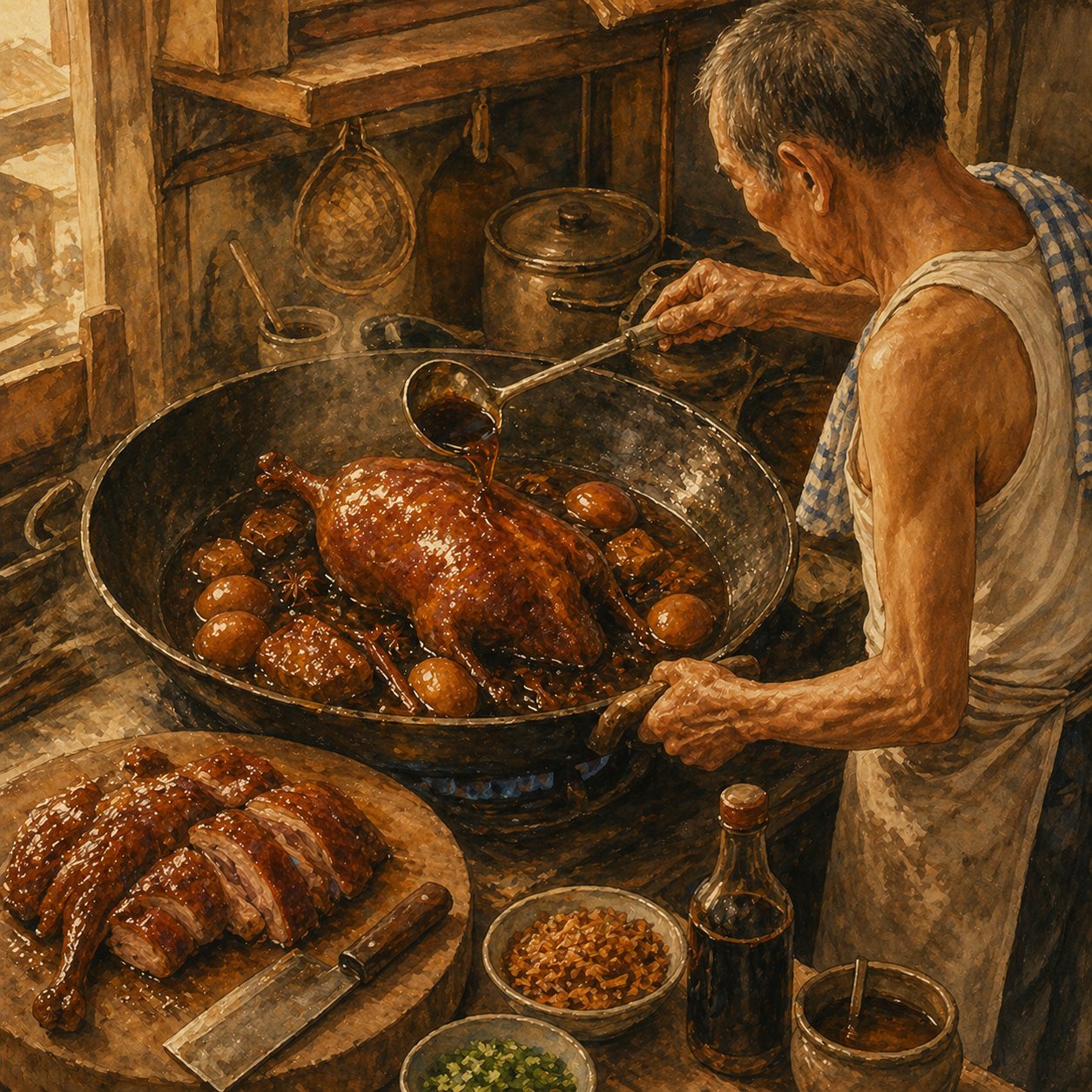
Lor ark is the master stock braise — slow, patient, deep.
The Teochew people have a tradition of lor (master stock) — kept alive for years, decades, sometimes generations. A famous Hong Kong restaurant has a master stock that is over 100 years old. In Singapore, Chuan Kee, Wei Ji, Liang Zhao Ji, Sean Kee Braised Duck all keep their lor sauces alive — adding to them daily, never letting them die.
The Teochew style is darker and more savoury than the Hokkien style (which is lighter and sweeter). The signature flavour comes from:
- Aged dark soy sauce (Tai Hwa Superior is the Singapore hawker standard)
- Galangal (lengkuas / blue ginger) — the unmistakable Teochew aromatic
- Five-spice powder + star anise + cinnamon + cloves
- Slowly caramelised sugar
Eaten with rice, braised tau kwa (firm tofu), hard-boiled eggs, sometimes pig intestine, blood, ear — all in the same lor sauce. I will keep this recipe to the cleaner cuts.
The hawker centre version is usually with rice and a side dish. The zi char (cooked-to-order stall) version is with a small Teochew porridge as the carb. Both are correct.
🛒Ingredients
Whole duck, the master sauce, and a handful of sides that braise alongside.
For the Duck
| Whole duck | 1 (~2 kg) | Fresh duck preferred. Ask wet market butcher to clean and remove the oil glands at the tail. Pluck stray feathers. |
| Salt | 2 tbsp | For initial rub. |
For the Master Lor Sauce
| Galangal (blue ginger / lengkuas) | 60 g | Sliced. Not regular ginger — galangal is the Teochew signature. |
| Fresh ginger | 30 g | Sliced. |
| Garlic | 1 bulb | Peeled. |
| Shallots | 6 | Peeled. |
| Star anise | 3 pieces | |
| Cinnamon stick | 5 cm | |
| Cloves | 5 | |
| Dried chillies | 2 | For fragrance, not heat. |
| White peppercorns | 1 tsp | |
| Five-spice powder | 1 tsp | |
| White sugar | 50 g | For caramel. |
| Rock sugar | 25 g | For braising. |
| Aged dark soy sauce | 250 ml | Tai Hwa Superior preferred — the heritage hawker standard. |
| Light soy sauce | 4 tbsp | |
| Fish sauce | 2 tbsp | |
| Shaoxing wine | 4 tbsp | |
| Water | ~1.5 L | Or enough to ¾ cover the duck. |
For the Sides braised in the same lor
| Hard-boiled eggs | 4 | Peeled. |
| Tau kwa (firm tofu) | 2 large pieces | Cut into 4 each. |
| tau pok (deep-fried tofu puffs) | 4 pieces |
🌶️Shifu's Lift
choose one path — see "Shifu's Secret" chapter for the philosophy- Old-school path: ½ tsp MSG added in last 30 minutes
- Modern hawker path: 1 tsp chicken stock powder
- Heritage purist path: Add 200 g pork bones to the braise (deepens stock without adding flavour modifiers)
👨🍳Method
Six stages. The caramel is the moment. The rest is patience.
Prep the Duck
Wash the duck thoroughly inside and out. Rub with 2 tbsp salt all over, including the cavity. Let stand 15 minutes. Rinse thoroughly. This step removes residual blood and any "duck odour."
Hang or air-dry on a wire rack for 30 minutes (or use a fan). The skin should feel dry to the touch.
Stuff the cavity with: 4 slices galangal + 4 slices ginger + 4 cloves of garlic + 1 star anise.
Caramelise the Sugar
In a large heavy wok (large enough to hold the duck), heat 2 tbsp neutral oil. Add 50 g white sugar.
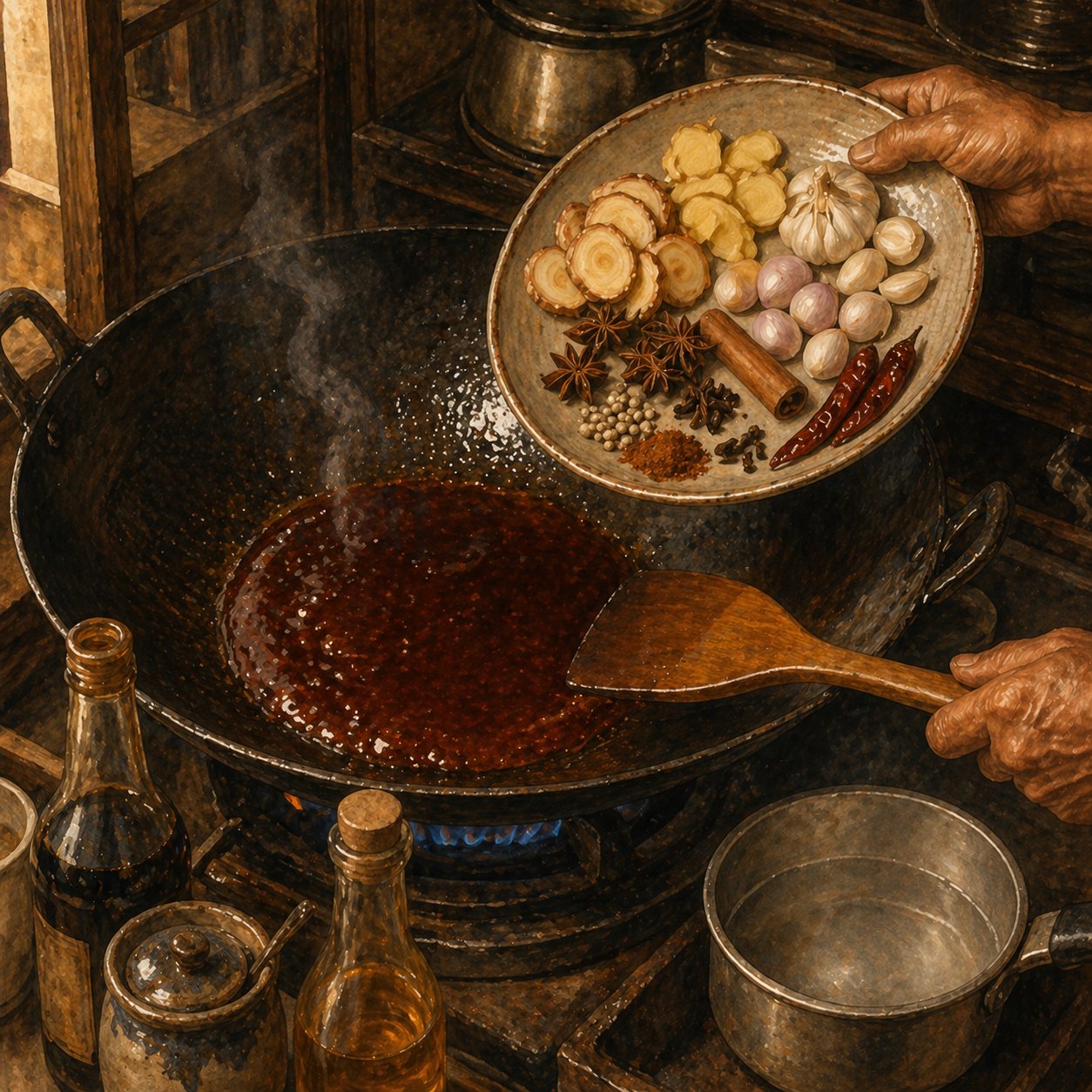
Watch carefully — keep heat low to medium. The sugar will melt, then turn light gold, then amber, then mahogany. The moment it reaches mahogany — and before it goes black — quickly add the remaining aromatics (galangal, ginger, garlic, shallots, star anise, cinnamon, cloves, dried chillies, peppercorns, five-spice).
Stir-fry 90 seconds until aromatic. The sugar will harden slightly when aromatics hit it — this is fine.
Build the Braise
Pour in dark soy, light soy, fish sauce, Shaoxing wine. Stir — the caramelised sugar will dissolve into the sauce, creating a deep mahogany lor.
Add water to fill the wok (~1.5 L). Bring to a boil. Add rock sugar.
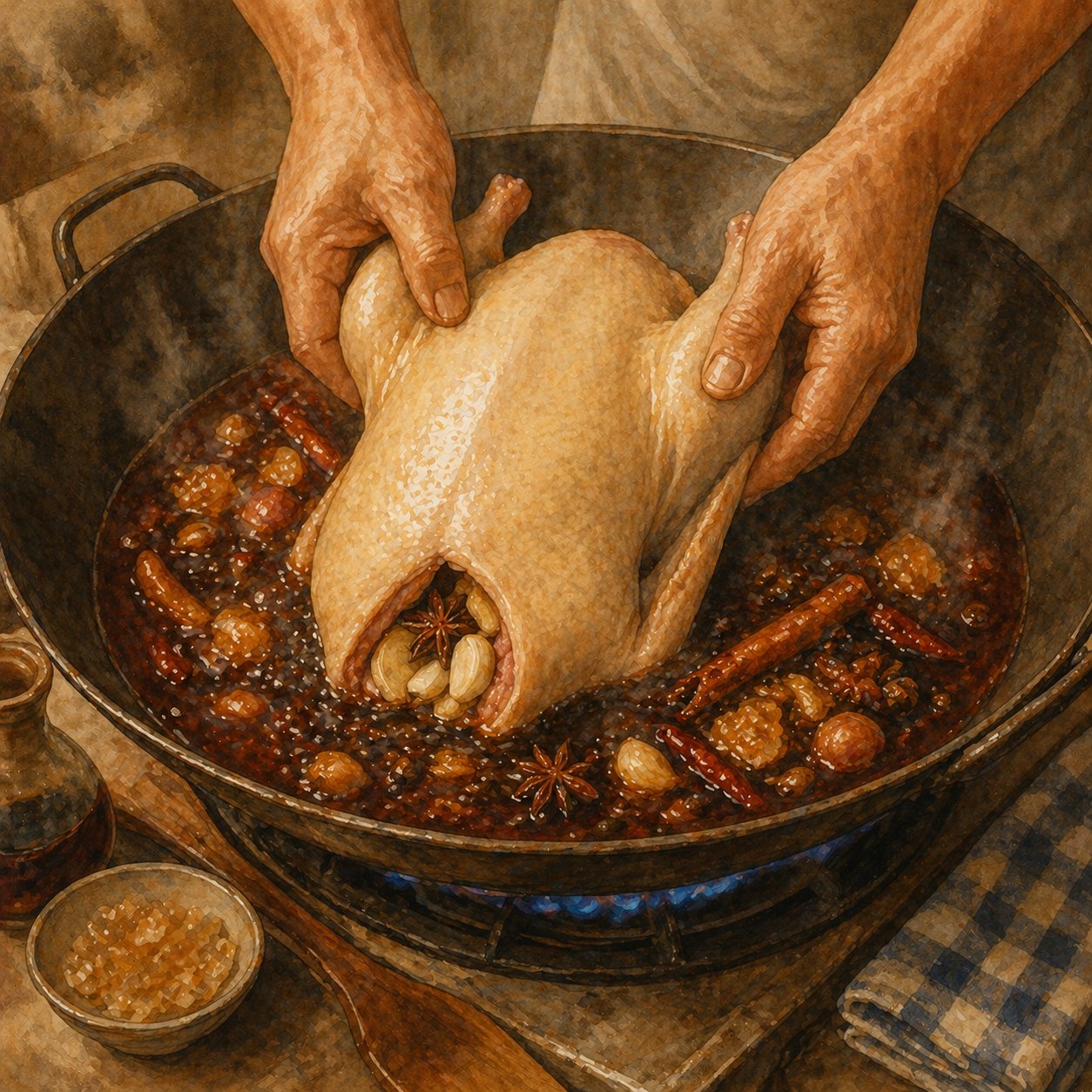
Lower the duck into the sauce, breast side down first. Always start breast side down — the densest meat needs more cooking time.
The Braise
Cover (leave a small gap for steam to escape). Simmer 45 minutes. Turn duck breast-side up. Baste with sauce every 15 minutes. Continue simmering another 45 minutes.
In the last 30 minutes: add the tau kwa, eggs, and tau pok around the duck. They will absorb the lor sauce.
Total braising time: 1 hour 30 minutes for a 2 kg duck. Test for doneness: pierce the thickest part of the thigh — juices should run clear-amber, not pink.
Rest, Then Carve
Crucial step: Turn off heat. Let the duck rest in the lor sauce for at least 30 minutes (or up to 2 hours) before carving. This is what separates restaurant lor ark from amateur lor ark — the rest in sauce.
For best results: refrigerate the duck IN the sauce overnight. The flavours penetrate deeply, and the duck slices much more cleanly when cool. Reheat the duck briefly in the warmed sauce before serving.
Serve
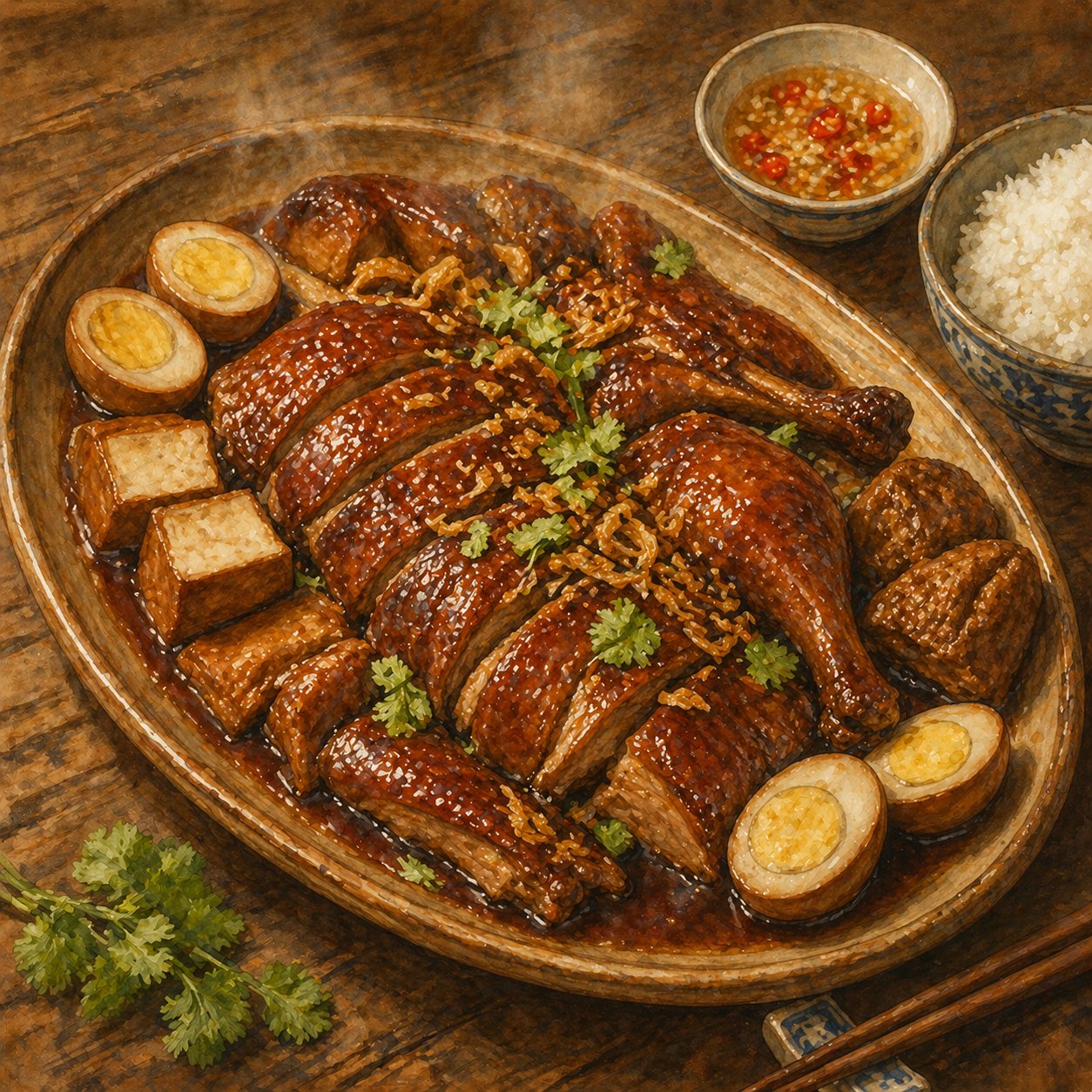
Carve the duck into bite-sized pieces with kitchen scissors or a heavy cleaver. Arrange on a platter with the eggs, tau kwa, tau pok.
Drizzle generously with the warm lor sauce. Top with chopped coriander and fried shallots.
Serve with steamed white rice and a side of chilli-garlic-vinegar dip (sliced bird's-eye chilli + minced garlic + 2 tbsp white vinegar + pinch of sugar).
🎯The Three Tips
Heritage. Master's. Mistake.
🏛 Heritage Note
The Master Stock
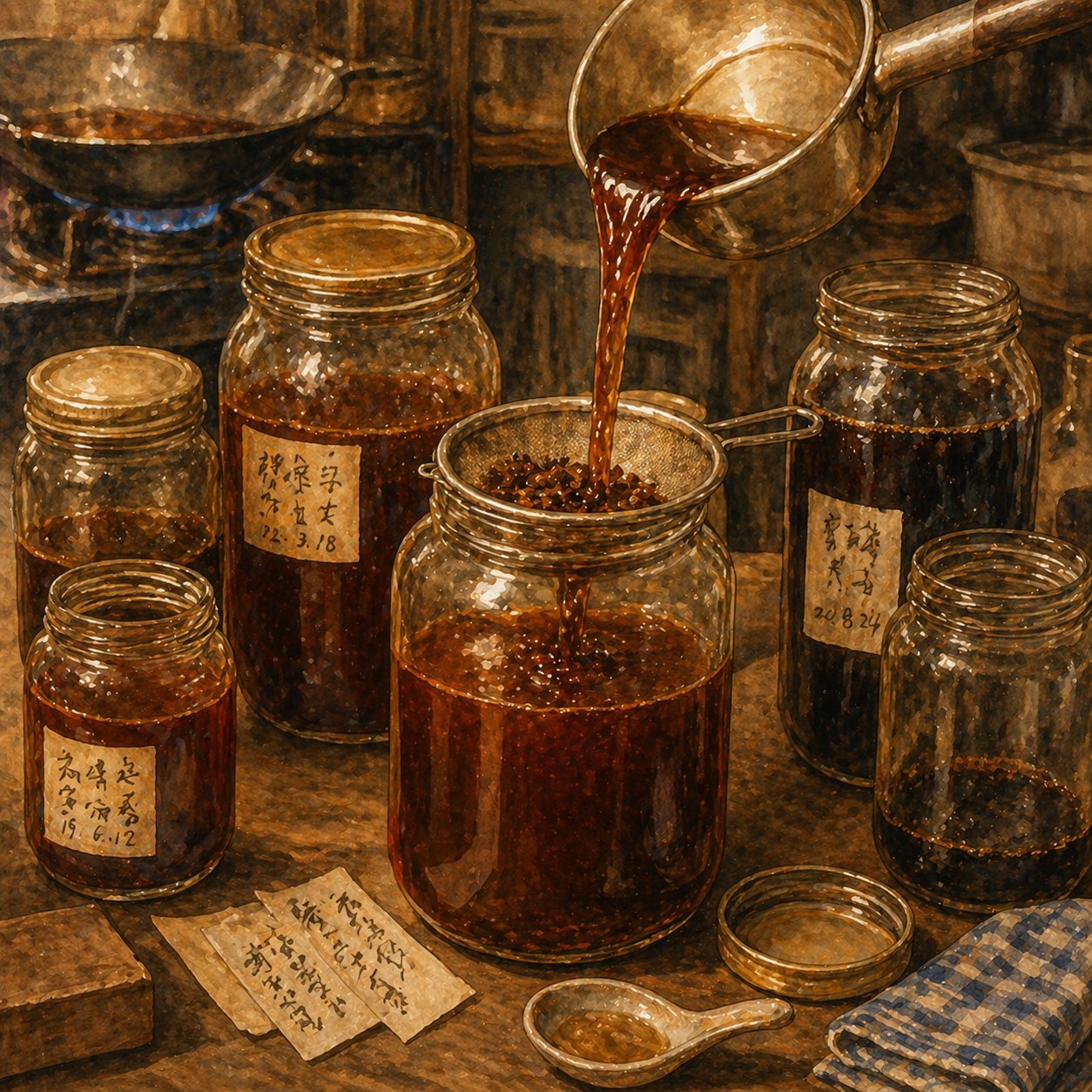
Save your lor sauce. This is the secret of the heritage stalls. After serving, strain the leftover lor through a fine sieve, cool, and refrigerate (or freeze) in glass jars. Next time you cook, add fresh aromatics + duck + half new water + half saved lor. The flavour deepens with each use.
A 30-year-old lor sauce is the holy grail of Teochew braising — every layer of duck that has passed through it leaves a residue of flavour. Some Singapore stalls (Chuan Kee, Liang Zhao Ji) have lor sauces older than the youngest hawker working there.
For young hawkers: start saving your lor on day one of business. In ten years, your competitors won't be able to replicate it.
👨🍳 Master's Tip
Galangal Is Non-Negotiable
The single ingredient that makes Teochew lor ark Teochew (and not Hokkien or Cantonese) is galangal (lengkuas / blue ginger). Substituting with regular ginger gives a different dish entirely.
Galangal has a piney, citrusy, slightly soapy aroma that pairs perfectly with duck's gaminess. It cuts through the fat in a way that ginger cannot. Use both galangal AND ginger — galangal as the dominant flavour, ginger as the support.
If your wet market doesn't have fresh galangal, get the dried/sliced packets at Chinatown Complex. Better dried galangal than no galangal.
⚠ Common Mistake
Burnt Caramel
The biggest failure mode: caramelising sugar too far. The window between mahogany (perfect) and black-burnt (ruined) is about 15 seconds.
Signs the sugar is at mahogany: thick smoke, deep amber colour, the smell of toasted sugar (not burnt sugar).
Signs you've gone too far: acrid black smoke, the sauce will be bitter no matter what you add.
Fix if burnt: Don't try to save it — start over. Burnt caramel ruins the entire braise.
Prevention: Keep heat at medium. Have aromatics ready beside the wok before the sugar starts melting. Speed is your friend at this stage.
📈 Scaling for Hawker Service
For a duck rice / lor ark stall
- Daily duck count: 8–15 ducks per day depending on stall traffic. Braise in 2 batches throughout the day.
- Master stock cycle: Top up the lor with fresh ingredients every 3 days. Replace 30% of liquid weekly. Skim fat daily.
- Sides (rotating): Offer braised duck alone (SGD 6–8), with rice (SGD 8–12), with side of tau kwa + egg (SGD 10–14), with porridge (SGD 9–13).
- Cost (Singapore 2026): Per portion ~SGD 2.50 (duck portion 1.50 + lor amortised 0.40 + sides 0.30 + rice 0.30). Sells SGD 7–14. Margin: 60–70%.
A young man's lor sauce is thin and bright. An old man's lor sauce is dark and deep. Time is the only ingredient that cannot be bought.