Ayam Buah Keluak
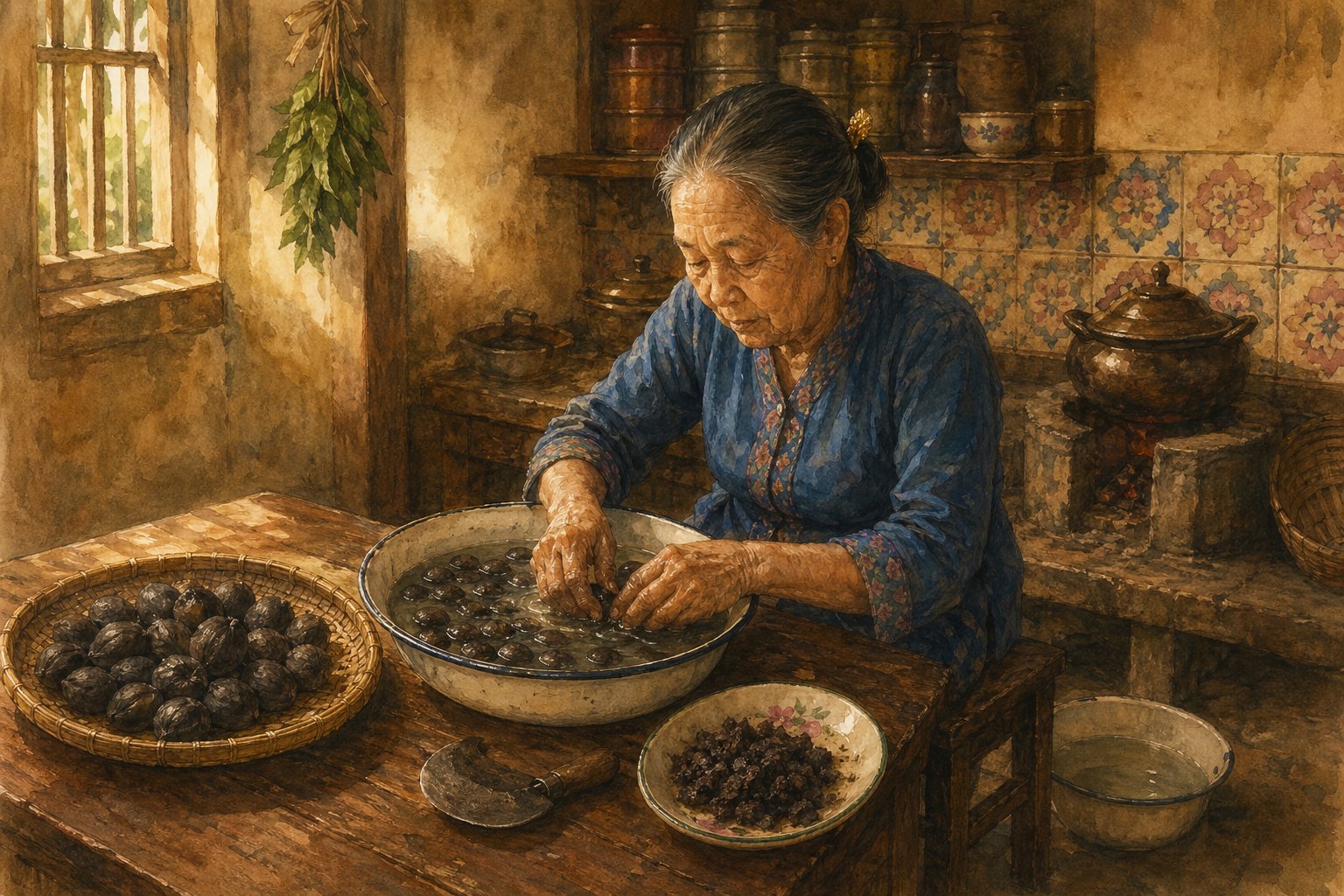
Buah keluak is the dish that says "this is a Peranakan kitchen." No other chapter in this book has a single dish that announces its heritage as completely.
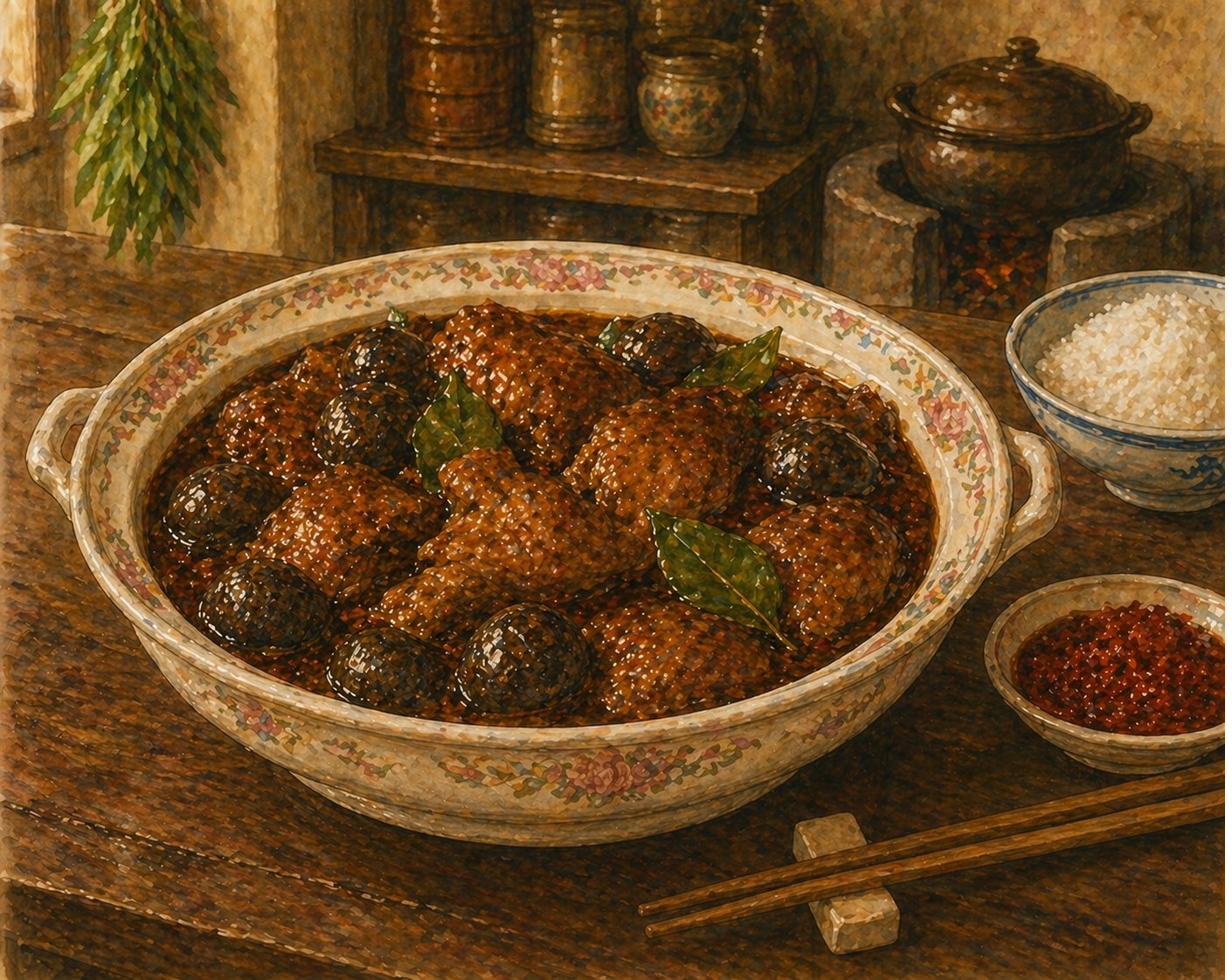
The Peranakans are the descendants of early Chinese traders — mostly Hokkien and Teochew men — who settled in the Malay archipelago from the fifteenth century onwards and married local Malay women. Their descendants developed a hybrid culture: Chinese ancestral practice, Malay language and dress, and a kitchen that synthesised the two. The matriarchs of this kitchen — the Bibik and Nyonya — were the keepers of the tradition. The most labour-intensive dish in their repertoire was ayam buah keluak: chicken slow-braised in a dark rempah (spice paste) gravy, with hand-stuffed black nuts arrayed amongst the chicken pieces.
The dish is built around buah keluak — the seed of the Pangium edule tree, native to the mangrove swamps of Indonesia and Papua New Guinea. The fresh seed is toxic: the kernel contains hydrogen cyanide at levels that would kill a person who ate it raw. The Indonesian-Malay heritage technique for rendering the seed safe is a 40-day process: the seeds are first boiled, then buried in a mix of ash, banana leaves, and earth for forty days. Boiling and fermentation release the hydrogen cyanide, which is water-soluble; the seeds are then washed, and the cyanide is rinsed away. By that point the kernel has transformed: from a creamy-white fresh seed into a dark-charcoal-grey, dense, oily, umami-rich paste that tastes like nothing else in Southeast Asian cooking. Closest comparison: black olive crossed with truffle crossed with very dark chocolate.
The buah keluak that arrives at a Peranakan home kitchen has already been through the 40-day ferment — sold in this form at heritage Peranakan provision shops. But the home cook still has work to do: soak the nuts for 1–2 days, scrub them clean, crack open one side of each shell, scoop out the kernel, pound it with the rempah and a pork-and-prawn paste, then stuff the paste back into the empty nut shells. The stuffed nuts braise alongside chicken in the rempah gravy. Why bother? Because the shell becomes a flavour-bomb at the table: the diner picks up a buah keluak shell with chopsticks gripped at the wide end, brings it to their lips, and sucks the soft umami-rich filling directly out of the shell. A paste-stirred-into-gravy version exists in modern restaurant adaptations, but heritage Peranakan cooks are clear: the heritage form is stuffed-and-sucked. The paste-into-gravy form misses the dish's defining ritual.
Two times in five home cooks attempt this dish, miss a step in the buah keluak prep, and produce a gravy that's bitter or under-flavoured — at least according to my Peranakan neighbour-auntie, who has cooked it weekly for forty years. Heritage references in Singapore include Candlenut at 17A Dempsey Road (the world's first Michelin-starred Peranakan restaurant, helmed by chef-owner Malcolm Lee, reportedly the first Peranakan restaurant in the world to be awarded a Michelin star — held continuously since 2016), Violet Oon's various establishments (the Peranakan group with multiple outlets including the National Gallery and Dempsey, where ayam buah keluak features as a heritage menu staple at reportedly S$28 per serving as of 2025), True Blue Cuisine at 47/49 Armenian Street, and the heritage Peranakan home kitchens where the dish most authentically lives — reportedly eaten at tok panjang (Malay: long table) family gatherings during Chinese New Year and major festive occasions.
I am giving you the heritage home-kitchen version here, the way it was made by my Peranakan neighbour-auntie's mother, who lived two doors down from my Maxwell stall and shared her recipe with me on the condition that I never taught it at scale. Serves 4–6 as the centrepiece of a multi-dish Peranakan family meal. I am keeping that promise. This recipe is for the home cook, not for a hawker stall.
🛒Ingredients
Multi-day prep, multi-vessel kitchen, multi-day patience. The 40-day ferment is done at the supplier; the home cook's work begins on Day 1.
For the Buah Keluak Prep Day 1–3 work
| Buah keluak nuts (already-fermented, sold at heritage Peranakan provision shops) | 25–30 nuts (~800 g) | Buy 2–3 extra; some nuts will be cracked or hollow on opening. |
| Salt for soaking water | 2 tbsp per 2 L water | |
| Cold water for soaking | 4–5 L total over 2 days |
For the Rempah Day 4 work
| Buah keluak kernels | all from the 25–30 prepped nuts | Reserve the cleanest 8–10 shells for stuffing-back. |
| Dried red chillies (mild, NOT bird's-eye) | 8–10, soaked 30 min, deseeded | |
| Shallots | 12 medium (~200 g), peeled | |
| Garlic | 8 cloves, peeled | |
| Lemongrass | 3 stalks, white-and-pale-yellow part, bashed and sliced | |
| Candlenuts | 8, dry-roasted in a small pan over low heat 5 minutes | Mildly toxic raw; the 5-minute dry-roast renders them safe. |
| Belacan (fermented shrimp paste) | 2 tsp, dry-toasted in foil 2 minutes | Toasting blooms the aroma. |
| Fresh galangal (NOT ginger) | 30 g, peeled and sliced | Galangal is the heritage rhizome — ginger is too sharp. |
| Fresh turmeric | 20 g, peeled and sliced | Or 1 tsp dried turmeric powder, but fresh is heritage. |
| Coriander seeds | 1 tbsp, dry-toasted and ground | |
| Cumin seeds | 1 tsp, dry-toasted and ground |
For the Chicken-and-Prawn Stuffing Paste stuffing for the buah keluak shells
| Minced pork (with 25% fat) | 100 g | NOT lean — fat carries the rempah. |
| Minced prawn meat | 80 g | |
| Reserved scraped buah keluak kernel paste | 2 tbsp | Take BEFORE adding the rest to the rempah. |
| Coriander leaves, finely chopped | 2 tbsp | |
| Light soy sauce | 1 tsp | |
| White pepper | ½ tsp | |
| Salt | ½ tsp |
For the Claypot Simmer
| Chicken thighs (bone-in, skin-on) | 8–10 pieces (~1.2 kg) | Heritage cut — bone-in thigh holds up to the long simmer. |
| Asam jawa (tamarind pulp) | 2 tbsp, dissolved in 100 ml warm water, strained | The signature acidity. |
| Gula melaka (Malay palm sugar) | 30 g, shaved | Heritage. White sugar substitutes but loses character. |
| Santan (coconut cream, thick) | 200 ml | Optional but heritage; gives the gravy mahogany sheen. |
| Water | 1.2 L | |
| Daun limau purut (kaffir lime leaves) | 4 leaves, lightly torn | The chapter's signature aromatic. |
| Salt | 1.5 tsp, or to taste | |
| Sea salt for finishing | a pinch |
🌶️Shifu's Lift
choose one path — see "Shifu's Secret" chapter for the philosophy- Old-school path: ¼ tsp MSG dissolved in finished gravy
- Modern hawker path: ½ tsp chicken stock powder during the simmer
- Heritage purist path: already covered with belacan + dry-toasted spice depth + buah keluak's intrinsic umami + tamarind-and-gula-melaka balance
For Serving
| Sambal belacan (heritage chilli-and-shrimp-paste condiment) | on the side | Heat-and-bright counter to the rich gravy. |
| Steamed white rice | 1 cup per diner | The gravy is the flavour-bomb; the rice is the canvas. |
👨🍳Method
Seven stages spread across five to seven days. Soak, scrape, pound, stuff, sear, simmer, plate. The patience is the dish.
Buah Keluak Soak Day 1–2
Place the 25–30 buah keluak nuts in a deep basin. Cover with cold water + 2 tablespoons salt. Soak for 24 hours, scrubbing the shells with a stiff brush at the 12-hour mark. Drain, refresh the water and salt, soak another 24 hours. Scrub thoroughly twice during the day. By the end of Day 2, the soaking water should run clear.
Crack and Scrape Day 3
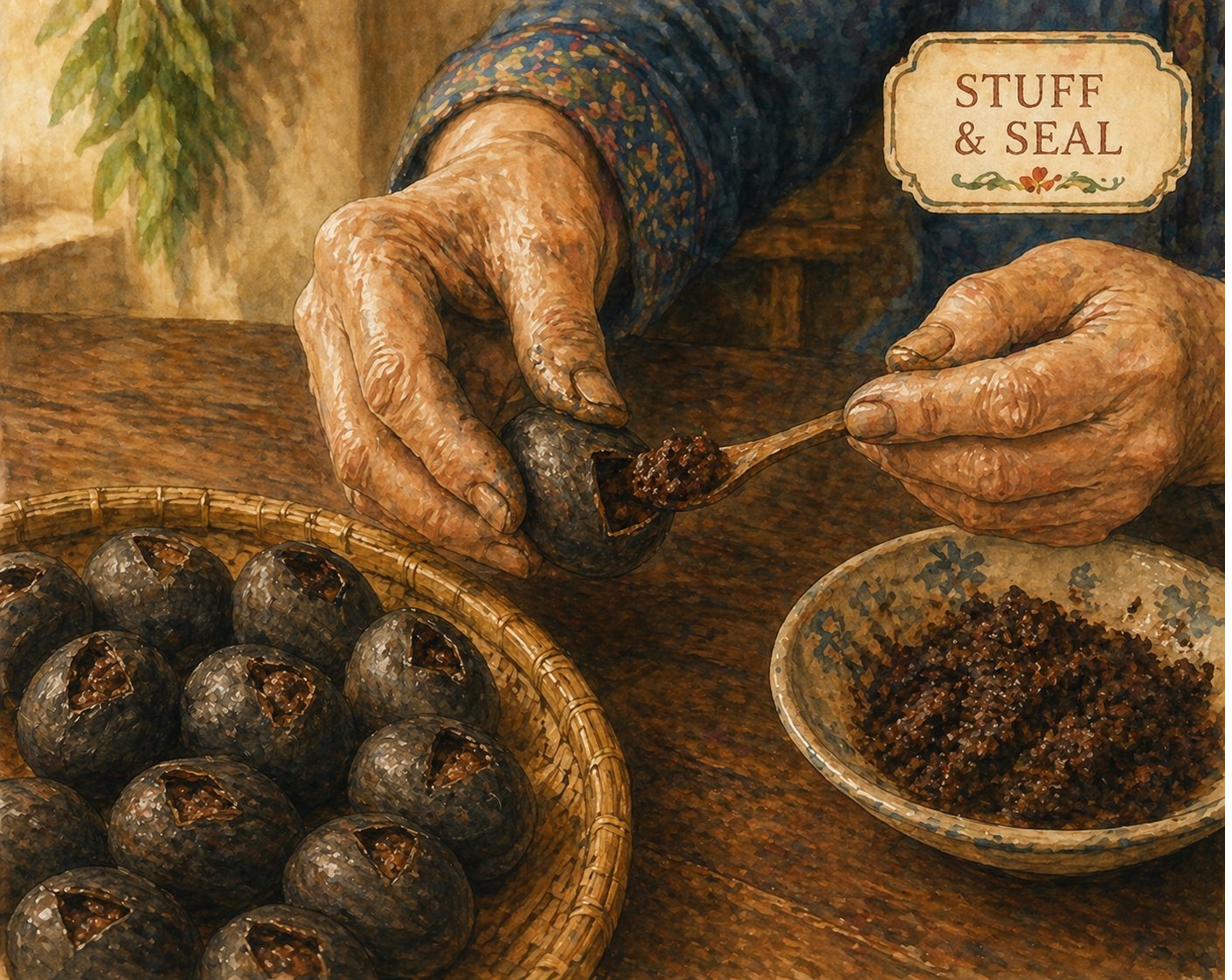
Drain the nuts. Working over a clean towel-covered chopping board, hold each nut on its side with the curved face up. Using a small heritage cleaver-tip (or a heavy chopping knife's heel), tap a small triangular hole into the upper face of the shell — about 1.5 cm wide, just large enough to scoop with a small teaspoon. Do NOT crack the nut in half — the shell needs to remain mostly-intact for the stuff-back step.
Scoop the dark-charcoal-grey kernel out of each nut into a small bowl. Scrape the inside of each shell clean. Discard 2–3 nuts that crack badly or have hollow/discoloured interiors — heritage cooks expect a 10% loss rate. Set aside the 8–10 cleanest, most-intact shells (empty) for the stuff-back step.
Make the Rempah Day 4
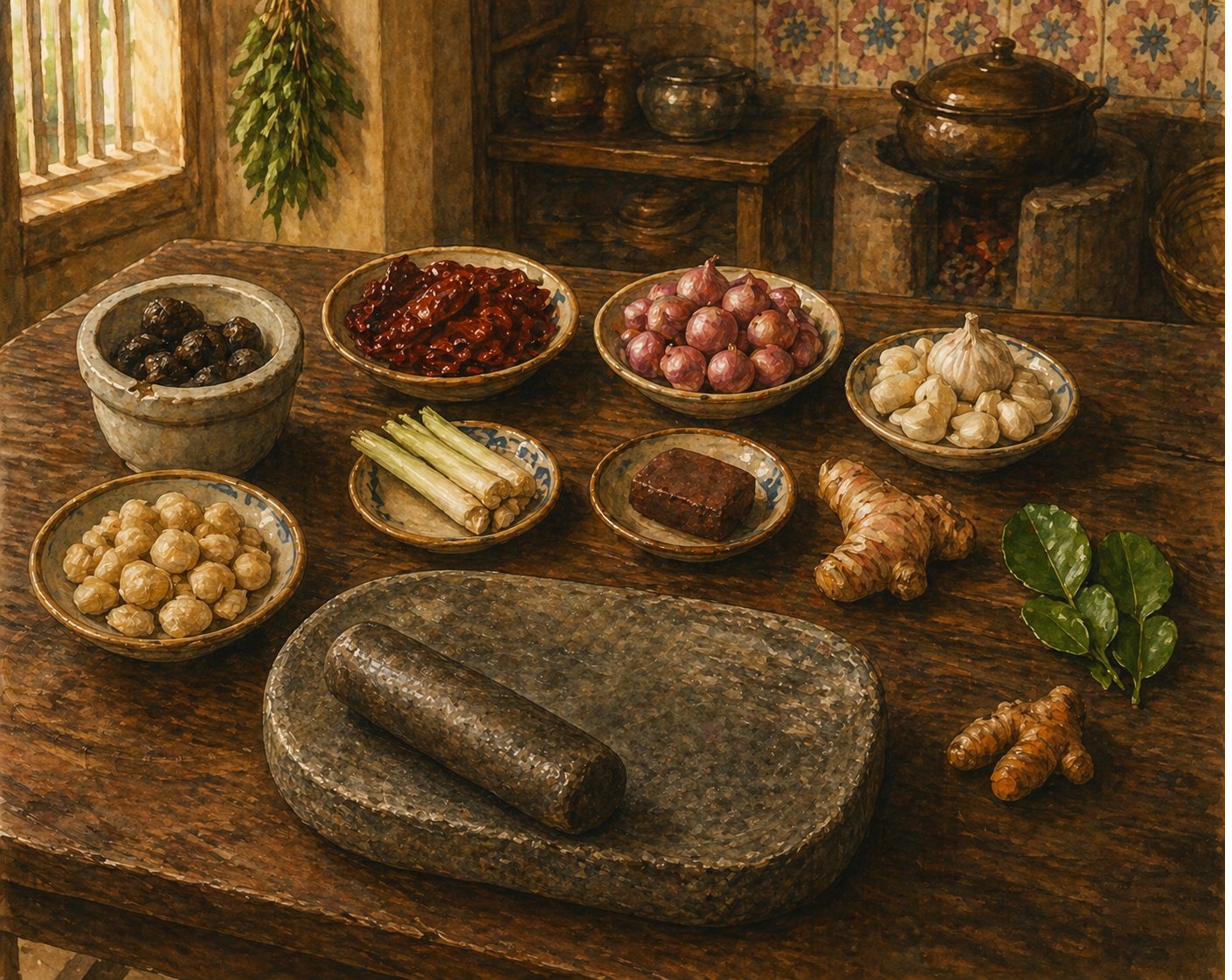
On a heritage batu giling (granite slab and roller) or a sturdy mortar-and-pestle, pound together: dried red chillies, shallots, garlic, lemongrass, candlenuts, toasted belacan, galangal, turmeric, ground coriander, ground cumin. Pound 15–20 minutes to a smooth-thick paste, adding small splashes of water as needed.
Do not use an electric blender for heritage rempah. The blender's blades chop rather than crush, producing a paste that separates oil-pools-and-fibres rather than the integrated mahogany emulsion the heritage technique gives.
Reserve 2 tablespoons of the buah keluak kernel paste for the stuffing. Add the rest of the kernels to the rempah and pound another 5 minutes until dark-mahogany-brown and integrated.
Make the Stuffing Paste and Stuff the Shells Day 4
In a small bowl, combine: minced pork, minced prawn, the reserved 2 tablespoons buah keluak kernel paste, chopped coriander leaves, light soy, white pepper, salt. Mix with a wooden spoon for 2 minutes until sticky and integrated. Cover and refrigerate while you continue.
Take the 8–10 reserved clean buah keluak shells. Using a small teaspoon, scoop the stuffing paste into each shell through the triangular hole, packing firmly. Each filled shell weighs about 25–30 g. Set aside on a small rattan tray.
Sear, Bloom, Simmer Day 4
Heat 3 tablespoons oil in a heavy claypot or heavy-bottomed pot over medium-high heat. Sear the chicken thighs skin-side down for 3–4 minutes per side until the skin is golden-mahogany. Remove and set aside.
In the same pot, add the rempah and reduce heat to medium-low. Stir constantly for 8–10 minutes — this is the rempah-blooming step. The rempah will progress from raw-pasty to deep-mahogany-with-oil-separating-out. Heritage cooks call this the minyak pecah moment (Malay: oil breaks) — the marker that the rempah is fully cooked through.
Add the seared chicken back to the pot. Stir to coat with rempah. Add the tamarind juice, gula melaka, kaffir lime leaves, and water. Bring to a gentle boil, then reduce to a low simmer.
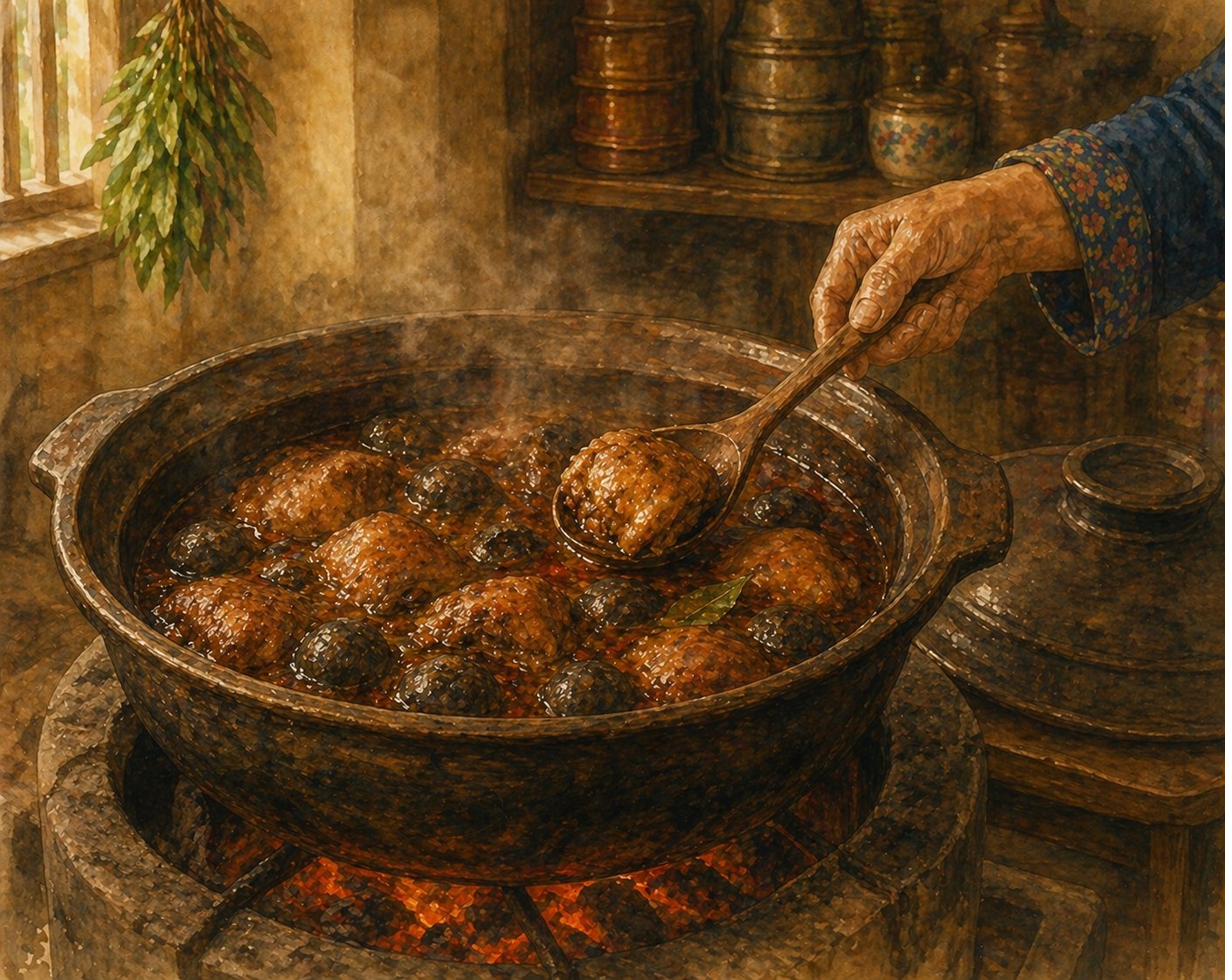
Add the stuffed buah keluak shells to the pot, arranging carefully among the chicken pieces so each is partially submerged. The shells must NOT be agitated during the simmer — the stuffing can fall out if the shells are stirred.
Simmer covered for 1.5 to 2 hours. Baste the chicken with gravy every 20 minutes. The gravy should reduce to a deep-mahogany-brown sheen with rendered-fat surface oil. Do not over-reduce — the gravy should remain ladle-able, not jam-thick.
Stir in the coconut cream (if using). Taste; adjust salt, gula melaka, or tamarind to balance.
Rest and Re-warm Day 5+, optional but heritage
Heritage Peranakan ayam buah keluak tastes better the next day. Cool the pot, refrigerate covered overnight. Re-warm gently the next day over low heat, adding a splash of water if the gravy has thickened.
Plate
Transfer chicken pieces, stuffed buah keluak nuts, and gravy to a heritage Peranakan tureen. Drizzle the surface with the rendered-fat-and-chilli-oil from the pot. Scatter fresh torn kaffir lime leaves as garnish. Finish with a tiny pinch of sea salt.
Serve hot at the centre of a tok panjang or family dining table. Each diner serves themselves chicken and gravy over rice; the buah keluak shells are picked up at the wide end and the soft umami-rich filling sucked directly from the shell.
🎯The Three Tips
Heritage. Master's. Mistake.
🏛 Heritage Note
No Shortcuts That Don't Cost the Dish
The buah keluak prep is multi-day, multi-step, and the dish punishes short-cuts. Skip the second-day soak and the gravy comes out bitter. Skip the kernel-paste-into-rempah pounding and the gravy comes out flat. Stuff the shells too loosely and the filling falls out during the simmer.
Each of the dish's heritage steps exists for a reason. There are no shortcuts that don't cost you the dish.
👨🍳 Master's Tip
The Minyak Pecah Moment
The minyak pecah moment — when the rempah's oil separates and pools on top of the cooking paste — is the dish's pivotal technique-marker. Heritage cooks know it by sight: the rempah goes from a raw-pasty texture to a deep-mahogany-brown with visible oil-pools at the surface.
Until you see minyak pecah, the rempah is not cooked, and the dish will lack depth.
⚠ Common Mistake
Using a Blender for the Rempah
The heritage batu giling crushes-and-presses; the blender chops-and-spins. The crushed paste produces an integrated emulsion. The chopped paste separates into fibres and oil pools, and no amount of cooking will integrate it back together.
If you do not have a batu giling, use a sturdy mortar-and-pestle, or pulse-blend in short bursts of 5–10 seconds with frequent stops to scrape and re-distribute. Continuous blending is the most common heritage failure point.
📈 Scaling for Hawker Service
Heritage-departure note: ayam buah keluak is a home-kitchen dish, not a hawker dish
I am breaking the project's hawker-scaling format here because the dish does not scale. The 40-day buah keluak ferment (done at the supplier), the 5-to-7-day home prep, the labour-cost-per-portion, and the dish's ritual register all argue against hawker scale. Heritage Peranakan ayam buah keluak lives in the home kitchen and the heritage restaurant — not in the hawker centre. There is no hawker-stall version of the dish in heritage Singapore.
For the home cook making this dish for a Peranakan family table:
- Buah keluak prep can be scaled up: prep 50–60 nuts in one go, freeze the cleaned-and-scraped kernel paste in 100 g portions for future cooks. Frozen kernel paste keeps for 3 months.
- Rempah can be made in larger batches: double or triple, freeze in 200 g portions. Frozen rempah keeps for 3 months.
- The dish improves with overnight rest: cook the day before serving for the best flavour integration.
- Cost in Singapore (2026): buah keluak nuts are the dominant raw-ingredient cost. The dish carries a restaurant-tier price relative to other Peranakan home-cooked dishes — heritage establishments such as Candlenut, Violet Oon, and True Blue Cuisine carry it as a menu staple at standard Peranakan-restaurant pricing.
Buah keluak is not a dish you cook once a month. It is a dish you commit to. The Peranakan grandmothers I knew started prepping the nuts on the first of the month for a feast on the seventh. The cooking is not the work; the patience is. If you don't have the patience, eat something else.