Hokkien Mee
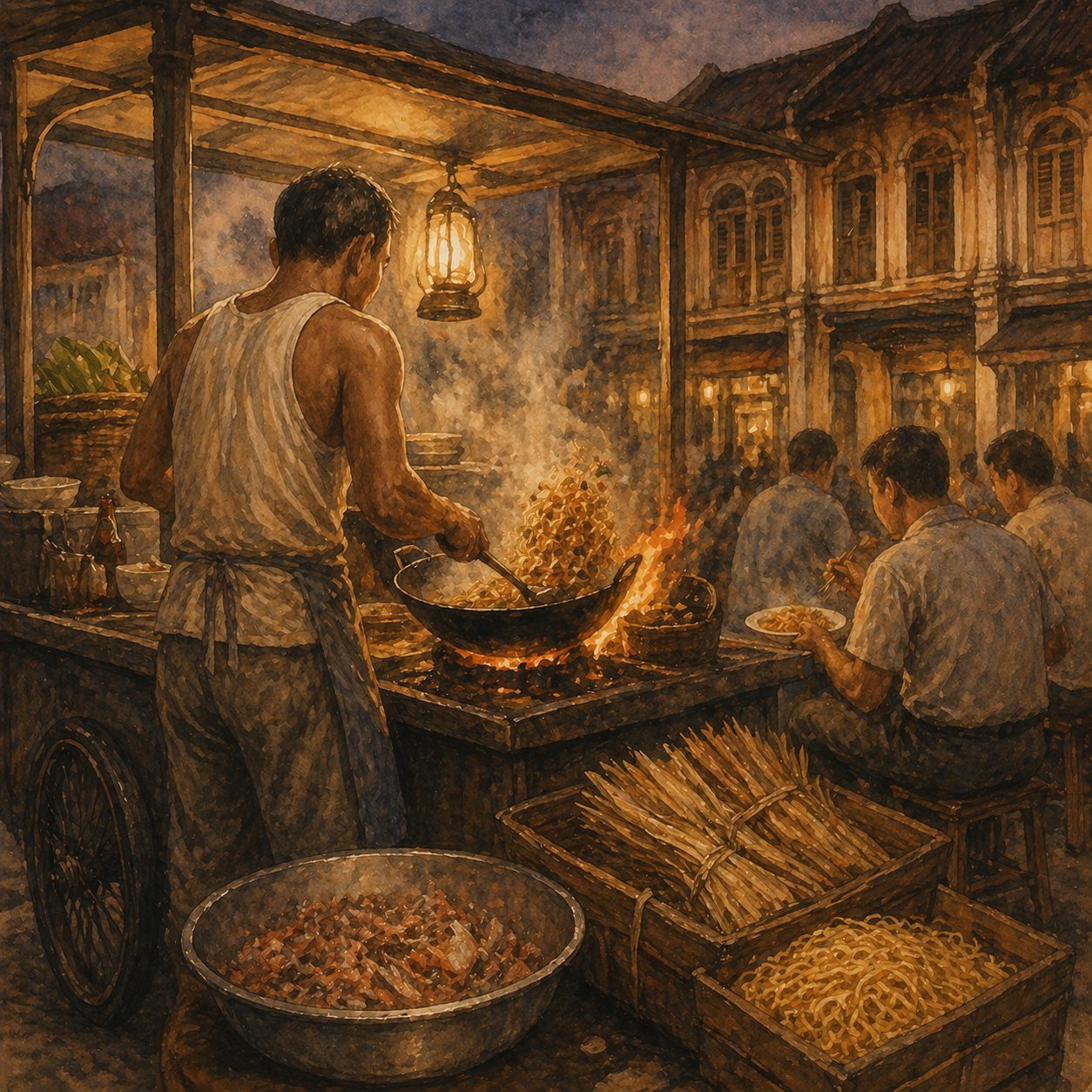
Siao di (little brother), listen carefully — this is the dish that built me.
The fried Hokkien Mee you eat today is not the Hokkien Mee from Fujian. In Fujian, what they call "Hokkien Mee" is something else entirely. Our version was born in post-war Singapore around the Rochor area, with roots from the 1940s onwards, when Hokkien noodle factory workers fried up the leftover yellow noodles with prawn stock at the end of their shift. By the 1950s and '60s, hawkers were carrying it on bamboo poles to Tanglin, Balestier, New World amusement park, and the car parks opposite the old Cold Storage on Orchard.
Here is the funny thing — historically, most of the famous fried Hokkien Mee hawkers were actually Teochew. So when you eat this, you are eating a dish where Hokkien noodles meet Teochew wok skill, all drenched in prawn stock made the Singapore way. That is our heritage — not pure, but ours.
The traditional way wraps it in opei leaf (the dried betel nut palm leaf), which gives it that earthy, smoky scent. Most stalls today serve it on a plate with sambal and calamansi on the side. If you can still find a stall using opei leaf — bow your head and order three plates.
🛒Ingredients
Three tables — the prawn stock that takes 1.5 hours, the stir-fry that takes 8 minutes, and the master's lift you choose.
For the Prawn Stock makes ~1.5 L · enough for 8 portions
| Fresh medium prawns, head-on | 600 g | Sua lor (sea prawns) preferred from Tekka or Geylang Serai. Vannamei works as substitute. |
| Pork bones (with marrow) | 500 g | Ribs work too; ask the wet market butcher for "pai gu" cuts. |
| Pork lard cubes | 150 g | Render fresh — see Master's Tip. Substitute: 4 tbsp neutral oil if avoiding pork. |
| Garlic | 1 bulb | Peeled, smashed. |
| Shallots | 6 | Peeled, smashed. |
| ti po (dried sole fish) | 10 g | Optional. Adds deep umami; available at Chinatown Complex basement. |
| White peppercorns | 1 tbsp | Lightly cracked. |
| Rock sugar | 25 g | Use rock sugar, not white — see Master's Tip. |
| Water | 2 L | |
| Salt | 1 tsp |
For the Stir-Fry per 4 portions
| Fresh yellow Hokkien noodles | 400 g | Find at any Singapore wet market — alkaline, round, thick. |
| Thick bee hoon (rice vermicelli) | 200 g | Soaked 20 min. Mix of yellow + bee hoon is essential for Singapore style. |
| Fresh prawns, peeled (keep tails) | 12 medium | Reserve shells for stock. |
| Squid, cleaned, sliced into rings | 200 g | Fresh, not frozen, if possible. |
| Pork belly | 200 g | Par-boiled in stock then sliced. |
| Eggs | 3 large | |
| Garlic | 8 cloves | Finely minced. |
| Bean sprouts | 200 g | Tailed. |
| Chinese chives (gu chai) | 100 g | Cut to 4 cm lengths. NOT spring onion — gu chai is the proper one. |
| Pork lard cubes (crispy) | 4 tbsp | Reserved from stock-making. |
| Fish sauce | 1 tbsp | |
| Light soy sauce | 1 tsp | |
| Calamansi limes | 8 | |
| Sambal belacan | to serve | See "Master Sauces" chapter. |
🌶️Shifu's Lift
choose one path — see "Shifu's Secret" chapter for the philosophy- Old-school path: ¼ tsp MSG dissolved in stock
- Modern hawker path: ½ tsp chicken stock powder
- Heritage purist path: Add 10 g extra dried sole fish + 1 tbsp toasted hae bee powder to stock
👨🍳Method
Four stages, two days possible. The stock is the soul; the wok is the moment.
Render the Lard
Can be done any time; lasts 1 month refrigerated.
Cube your pork lard into 1 cm pieces. Place in a wok with 100 ml water and 2 cubes of ginger. Cook on low heat — the water will boil off slowly. Once the water dries up, the lard will start to release its oil. Keep on low heat for 45 minutes to 1 hour, until the cubes are golden-brown and crispy. Strain the cubes (your tee yew phok — crispy rendered lard cubes) and reserve the liquid lard. Both go into your Hokkien Mee.
Build the Stock
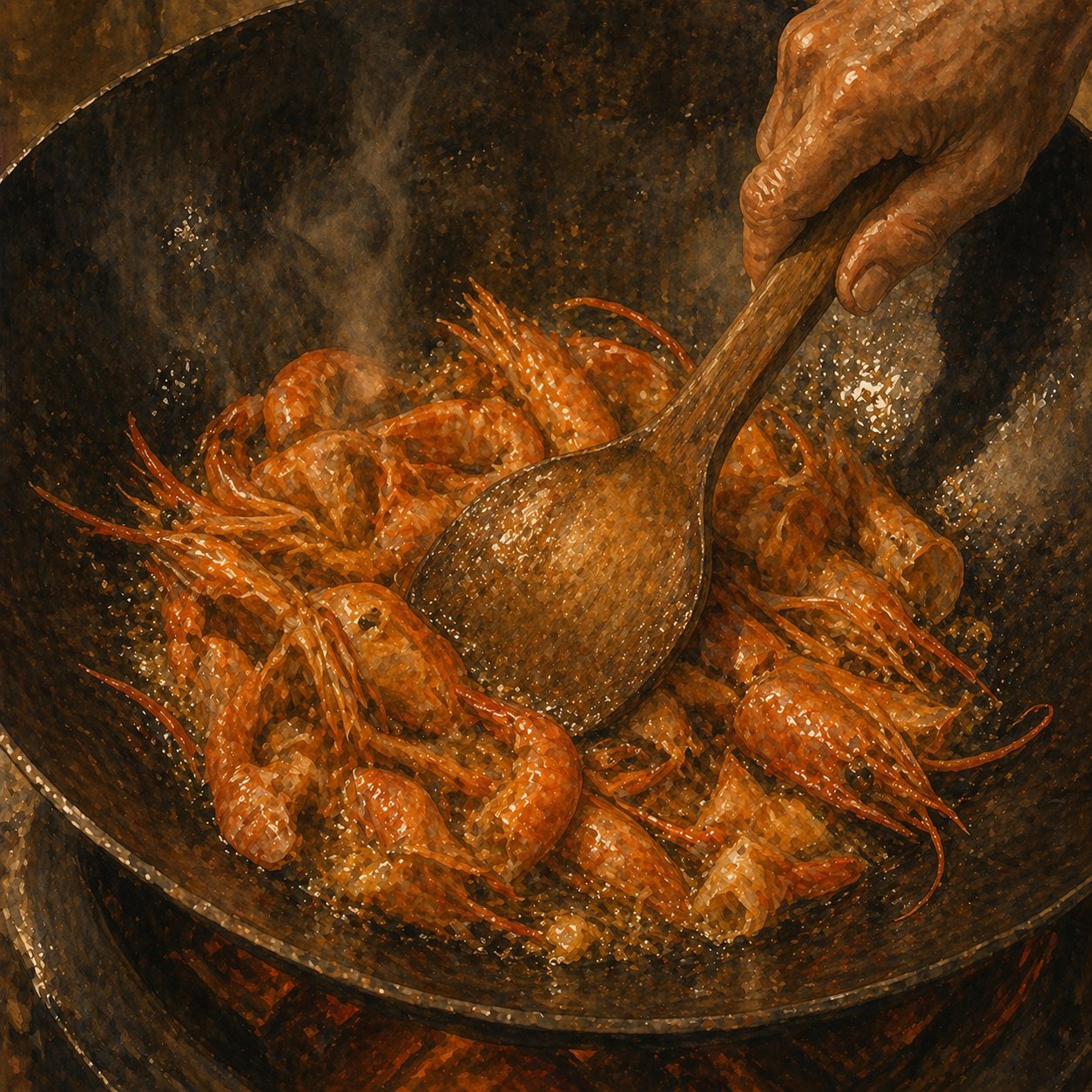
Heat 2 tbsp of your fresh lard in a wok. Add prawn shells and heads (separated from the prawns) and fry hard, pressing with a ladle until they turn deep orange and you smell that grilled-prawn aroma. This is where your soul comes from — do not rush. About 5–6 minutes.
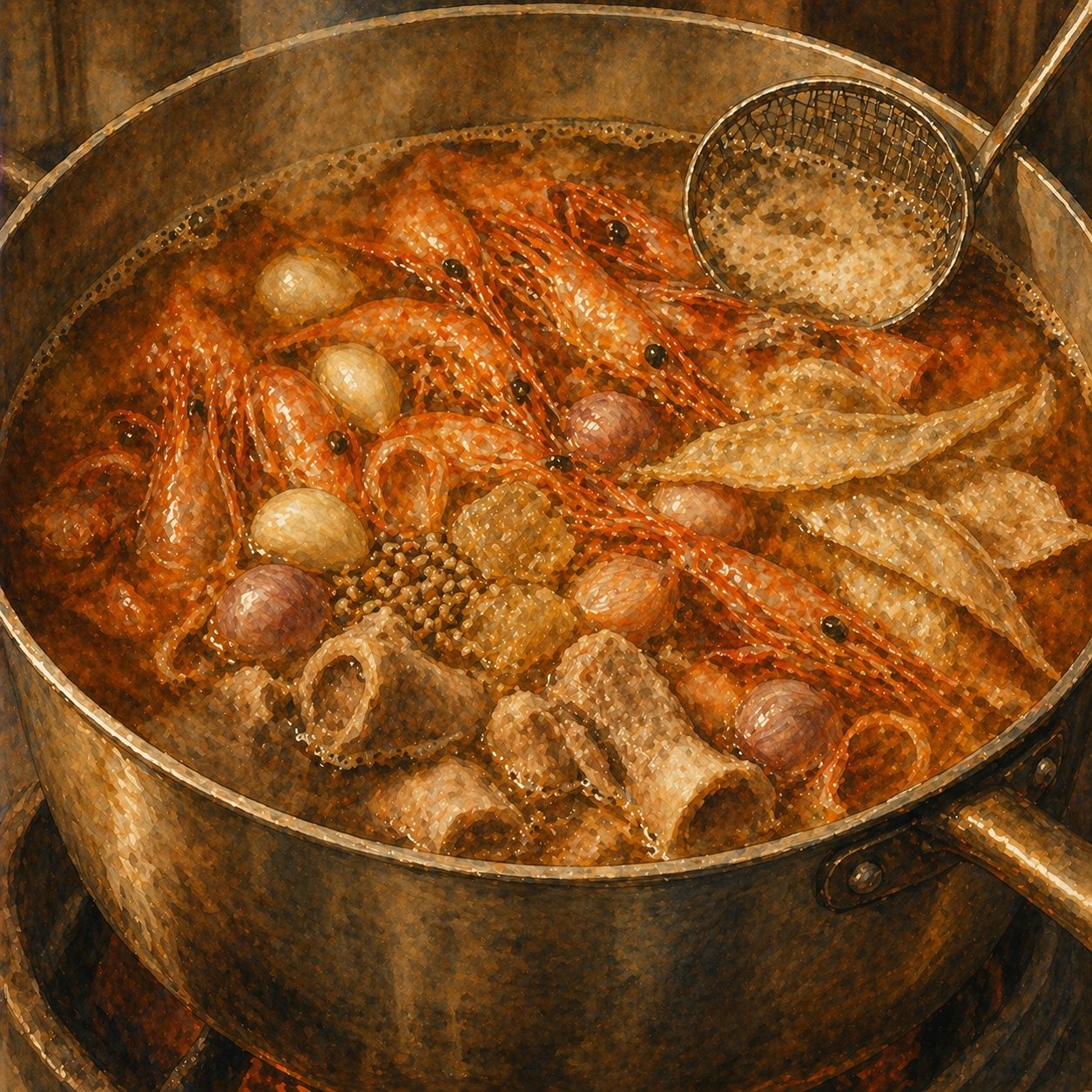
Push prawn shells to the side. Add pork bones, garlic, shallots — sear until lightly golden. Add 2 litres of water, dried sole fish, white peppercorns, rock sugar, salt. Bring to boil, then simmer for 1.5 hours, uncovered. Skim the foam every 20 minutes.
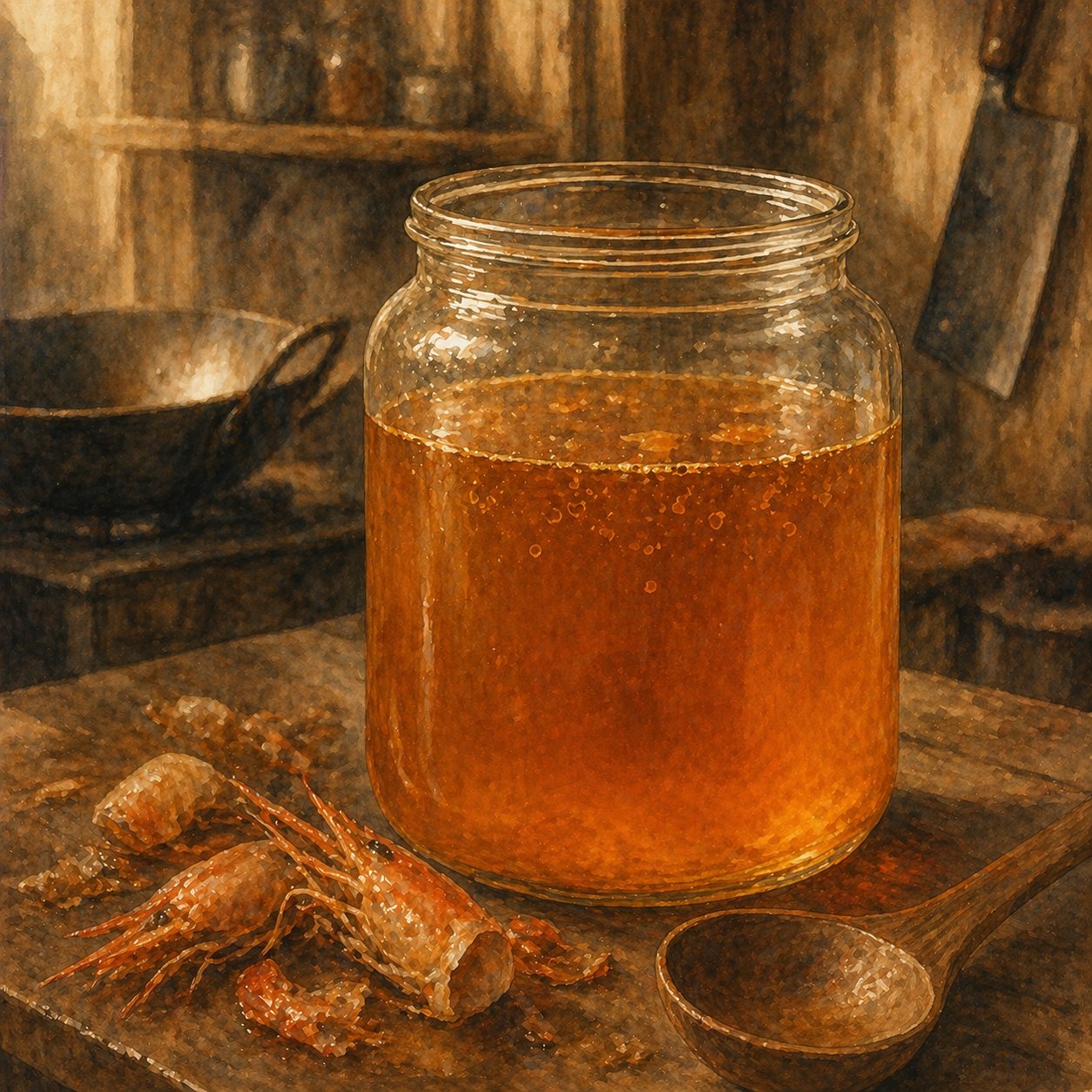
Strain through a fine sieve, pressing the prawn shells one final time to extract every drop. Reduce the strained stock back down to 1.5 litres if it has gone too watery. The colour should be a deep amber-orange.
Get Everything Ready
Marinate sliced pork belly with 1 tsp light soy. Have eggs cracked into a bowl, beaten lightly. Garlic minced and divided into two portions. Bean sprouts, chives, prawns, squid all in separate bowls within arm's reach. Having everything ready is everything for stir-fry — once the wok is hot, you have no time to chop.
The Wok
Cook in 2 batches of 2 portions each — never crowd the wok.
- Heat wok until smoking. Add 2 tbsp lard.
- Throw in half the garlic. Stir 10 seconds — do not let it brown to bitter, just to fragrant golden.
- Add prawns, squid, pork belly. Stir-fry 30 seconds. Push everything up the sides.
- Crack 1.5 eggs into the well at the bottom. Let it set for 5 seconds, then break it up.
- Add yellow noodles + bee hoon (drained). Toss with the egg and aromatics for 30 seconds.
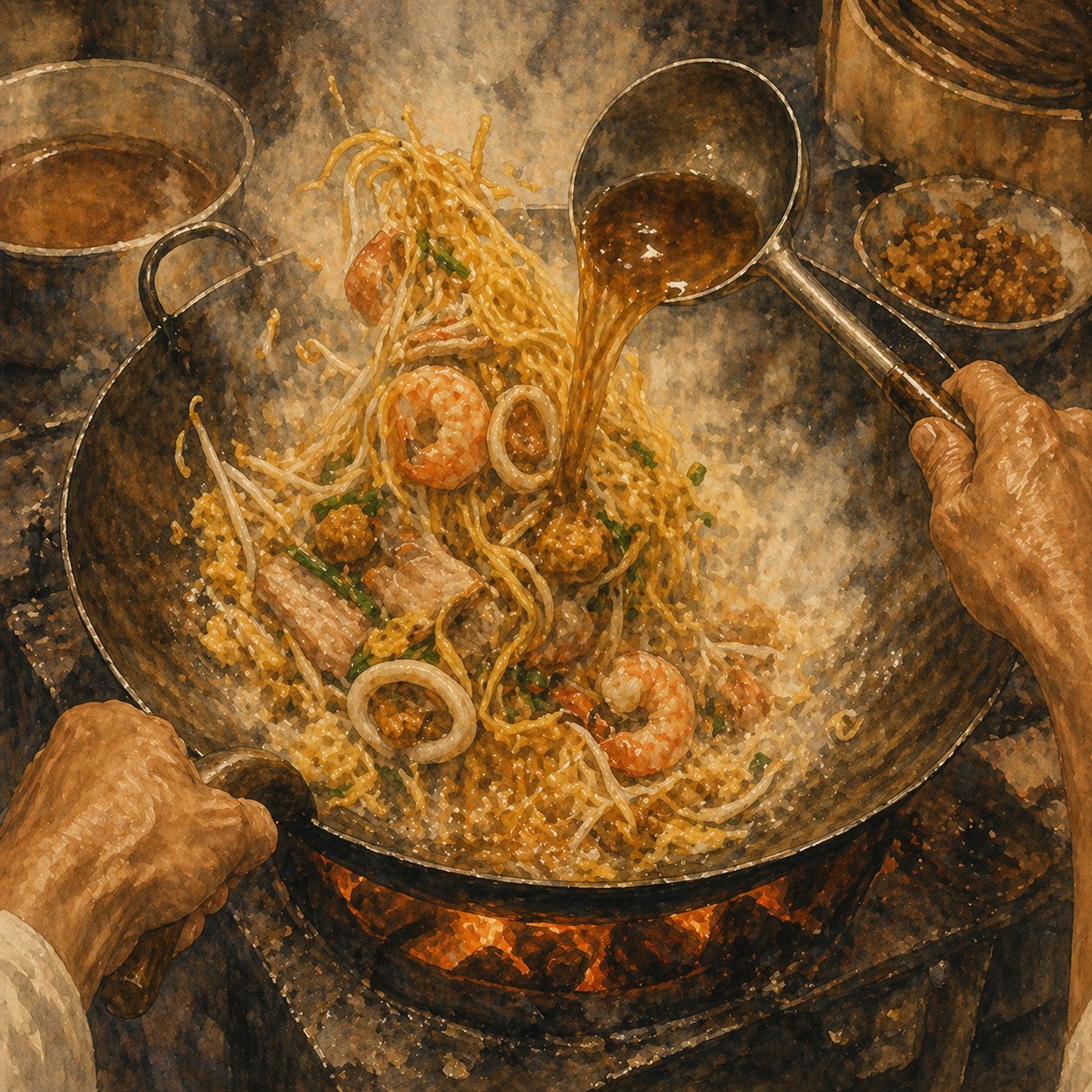
- Now the magic — add 250 ml of your prawn stock. The noodles will hiss and absorb. Cover the wok with a lid for 1 minute.
- Open lid. Add fish sauce, light soy. Toss again.
- Add another 100 ml stock if it looks dry. Toss to coat — the noodles should look glossy and slightly wet, not soupy.
- Add bean sprouts and chives. Toss 20 seconds — they should still have crunch when served.
- Off heat. Sprinkle the crispy lard cubes on top.
Plate immediately. Serve with calamansi halves and sambal belacan on the side. No ketchup. Never ketchup.
🎯The Three Tips
Heritage. Master's. Mistake.
🏛 Heritage Note
The Vanishing Opei Leaf
The opei leaf wrap is fading from Singapore — only one or two old-school stalls still use it. If you ever see it, the leaf imparts a slight earthy aroma that reminds you this dish was once eaten by night-shift workers under kerosene lamps in 1950s Tanglin. You don't need opei leaf to make great Hokkien Mee. But knowing the leaf existed reminds us that every dish has a history older than the customer.
👨🍳 Master's Tip
Three Sweetnesses, Layered
A great Singapore Hokkien Mee has three layers of sweetness: (1) the natural sweetness of fresh prawns, (2) the deep caramel of rock sugar in the stock, and (3) the smoky char of wok hei from a properly heated wok.
Lose any one and your dish is dead. White sugar — flat, sharp, no depth. Frozen prawns — no marine sweetness, just rubber. Cold wok — no smoke, no soul. Rock sugar, fresh prawns, screaming-hot wok. These are non-negotiable.
⚠ Common Mistake
Soggy Noodles, Dead Dish
Young hawkers always make this mistake: they treat Hokkien Mee like soup. They drown the noodles in stock, cover the wok, walk away, and come back to a wet, glue-like mess.
Hokkien Mee is a stir-fry that braises. The stock should hit the noodles, hiss, and be mostly absorbed within 60–90 seconds. The finished plate should be moist and glossy, never wet.
📈 Scaling for Hawker Service
For 50–80 portions a day
- Stock: Make 8–10 litres in a stockpot the night before. Reduce by one-third in the morning. Hold at simmer during service.
- Lard: Render 1.5 kg pork fat once a week. Strain liquid into containers, refrigerate. Crispy cubes in airtight tin.
- Get Ready: Pre-portion noodles into single-serve mounds. Pre-slice pork belly. Pre-tail bean sprouts. Everything within arm's reach.
- Wok rotation: Use two woks alternating. While one is plating, the other is heating. Cuts service time by 40%.
- Cost (Singapore 2026): Per plate ~SGD 1.80 (noodles 0.40 + prawn/squid/pork 0.80 + stock amortised 0.40 + lard/aromatics 0.20). Sells SGD 5–7 standard, SGD 8–12 premium with extra prawns. Margin: 60–70%.
A good Hokkien Mee plate is wet enough to wipe up with the last noodle, dry enough that no soup runs to the side. Everything in its right place. That is the work.