Or Luak
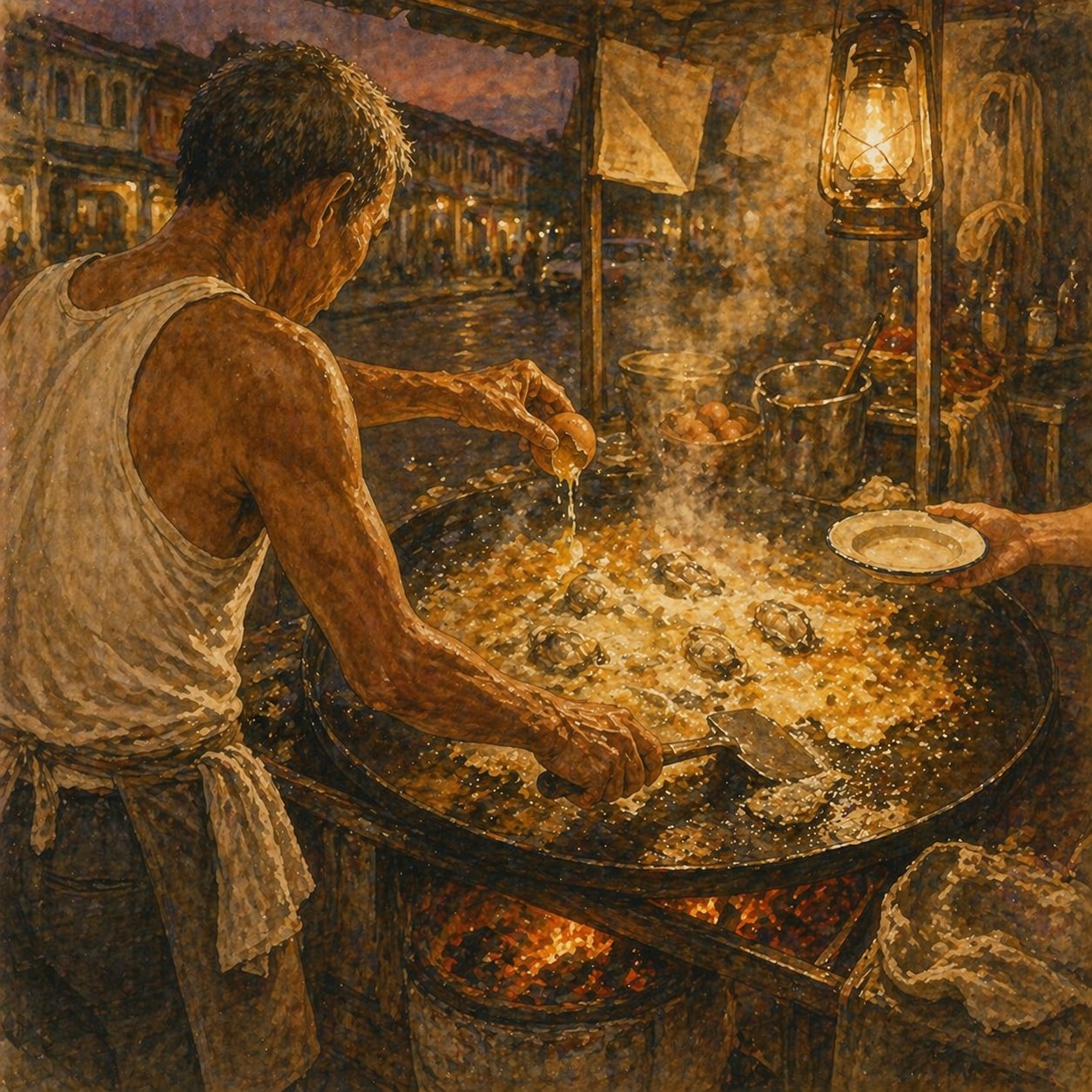
This dish has two souls — Hokkien soul and Teochew soul.
In Fujian and Taiwan, they call it o-a-tsian (Hokkien-style oyster omelette) — deep-fried, thicker, more egg. In Chaoshan and Singapore, the Teochew style is pan-fried with a mixture of sweet potato starch and tapioca starch, with crispy lacy edges and a gooey middle. Singapore took both traditions and created its own version — slightly more starch than the Hokkien original, less duck egg than Chaoshan, with a garlic-vinegar-chilli dip that is purely ours.
The dish was born in poverty — when Fujian famine struck in the Qing Dynasty, sweet potato flour was the cheap substitute for rice flour, and mud oysters could be foraged from the riverbanks for free. Villagers and soldiers ate it. It crossed the South China Sea with our forefathers. Today, it is recognised by the Michelin guide. Heritage food does not always come from palaces. Sometimes, it comes from people who had nothing.
The name spelling tells you the dialect: Or Luak (Teochew style) or Or Jian (Hokkien style). Same dish, slightly different hands.
🛒Ingredients
Three components: a rested starch batter, the omelette itself, and a sharp dipping sauce that wakes the tongue.
For the Starch Batter
| Sweet potato starch | 50 g | The base — gives that signature gummy-crispy texture. |
| Tapioca starch | 30 g | For chew and stretch. |
| Rice flour | 20 g | For crisp edges. |
| Cold water | 200 ml | |
| Salt | ¼ tsp |
For the Omelette
| Fresh oysters | 150 g (12–15 medium) | Freshly shucked from Tekka or quality frozen Pacific. Rinse with cornflour, then water. |
| Eggs | 4 large | |
| Pork lard | 4 tbsp | Non-negotiable for authentic flavour. Substitute: 4 tbsp neutral oil — but you'll lose 30% of the soul. |
| Garlic | 4 cloves | Finely minced. |
| Spring onions | 2 stalks | Chopped. |
| Coriander leaves | a handful | Roughly chopped. |
| Fish sauce | 1 tsp | |
| White pepper | ½ tsp |
For the Dipping Sauce
| Sambal chilli | 3 tbsp | Homemade or Lee Wee Brothers. |
| White rice vinegar | 1 tbsp | |
| Garlic, finely minced | 1 tsp | Mix all and set aside. |
🌶️Shifu's Lift
choose one path — see "Shifu's Secret" chapter for the philosophy- Old-school path: ¼ tsp MSG into the egg mixture
- Modern hawker path: ½ tsp chicken stock powder
- Heritage purist path: 1 tsp fish sauce (already in recipe — no extra needed)
👨🍳Method
Three stages. Heat control is everything — the pan must be screaming.
Mix the Batter
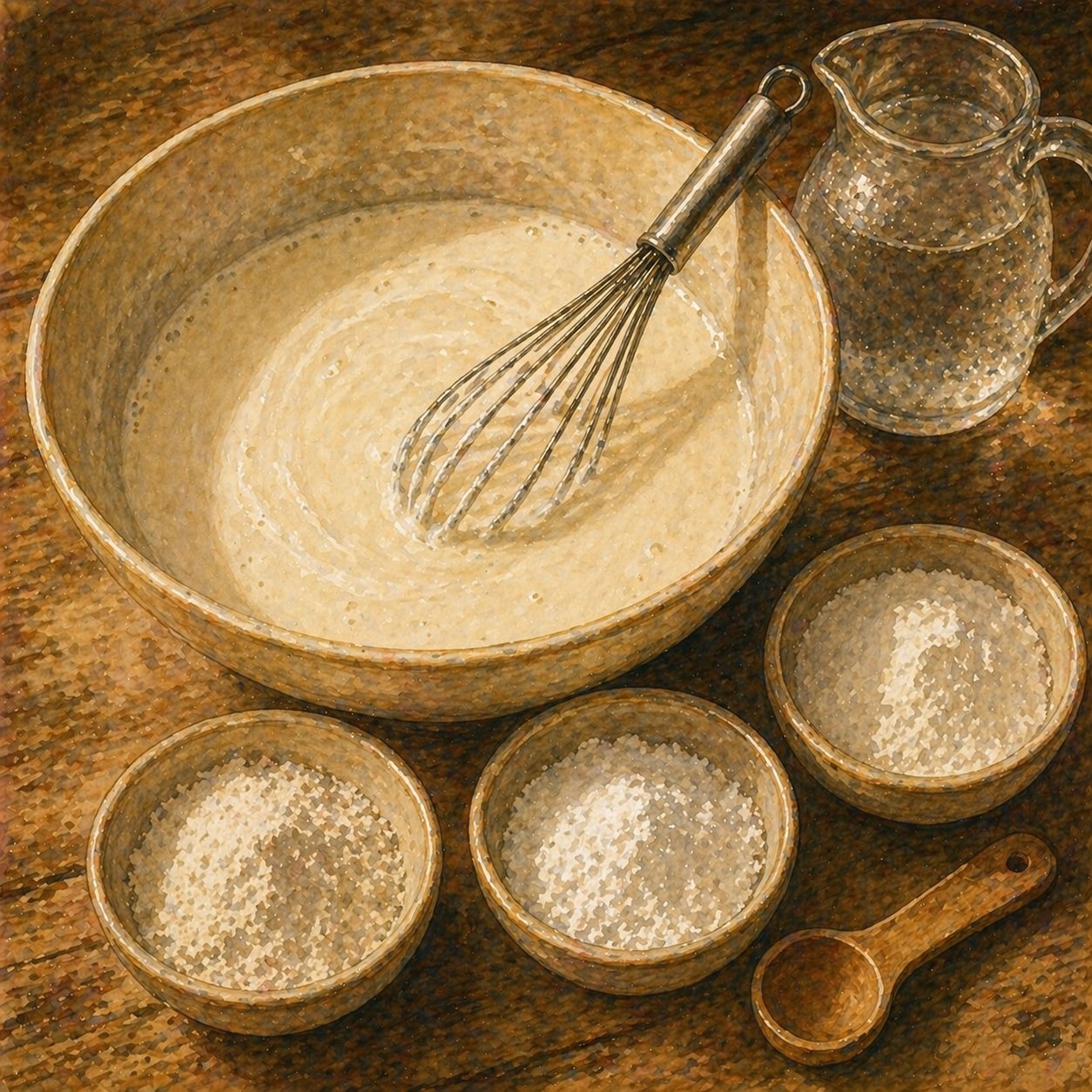
Combine sweet potato starch, tapioca starch, rice flour, salt, and cold water in a bowl. Whisk until smooth. Cover and rest 15 minutes. Do not skip — the starches need to hydrate or your omelette will be gummy.
Stir again right before using — the starch settles to the bottom.
Prep the Oysters
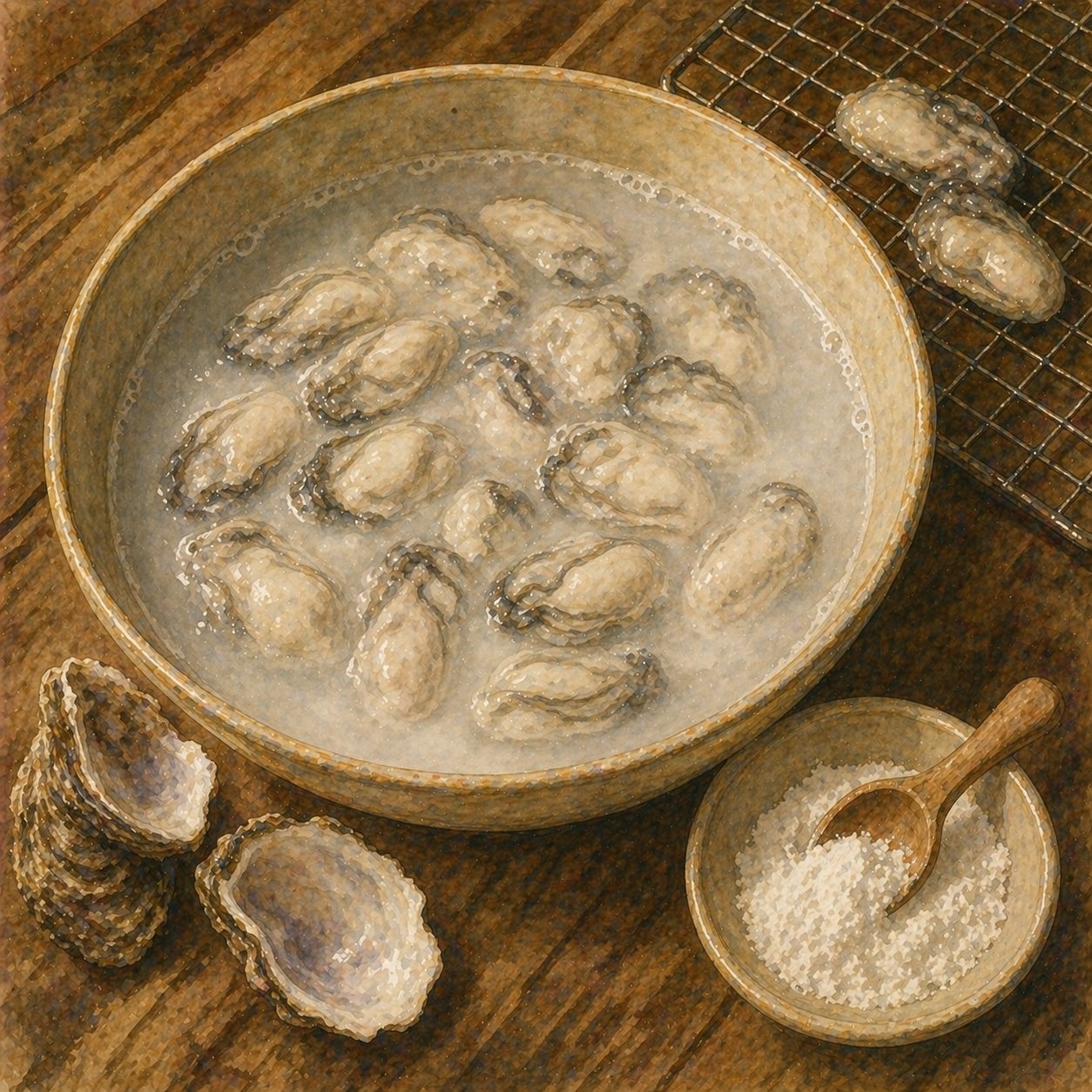
Toss oysters with 1 tsp of cornflour. Massage gently. Rinse under cold water — the cornflour pulls out grit and any "fishy" film. Drain on a wire rack. Pat top dry with paper towel.
The Frying
Heat a flat non-stick pan or seasoned wok on high heat until smoking.
- Add 2 tbsp lard. Swirl to coat.
- Throw in half the minced garlic. Stir 5 seconds.
- Stir the batter once more, then pour about 2 ladles in a thin layer. Let it spread.
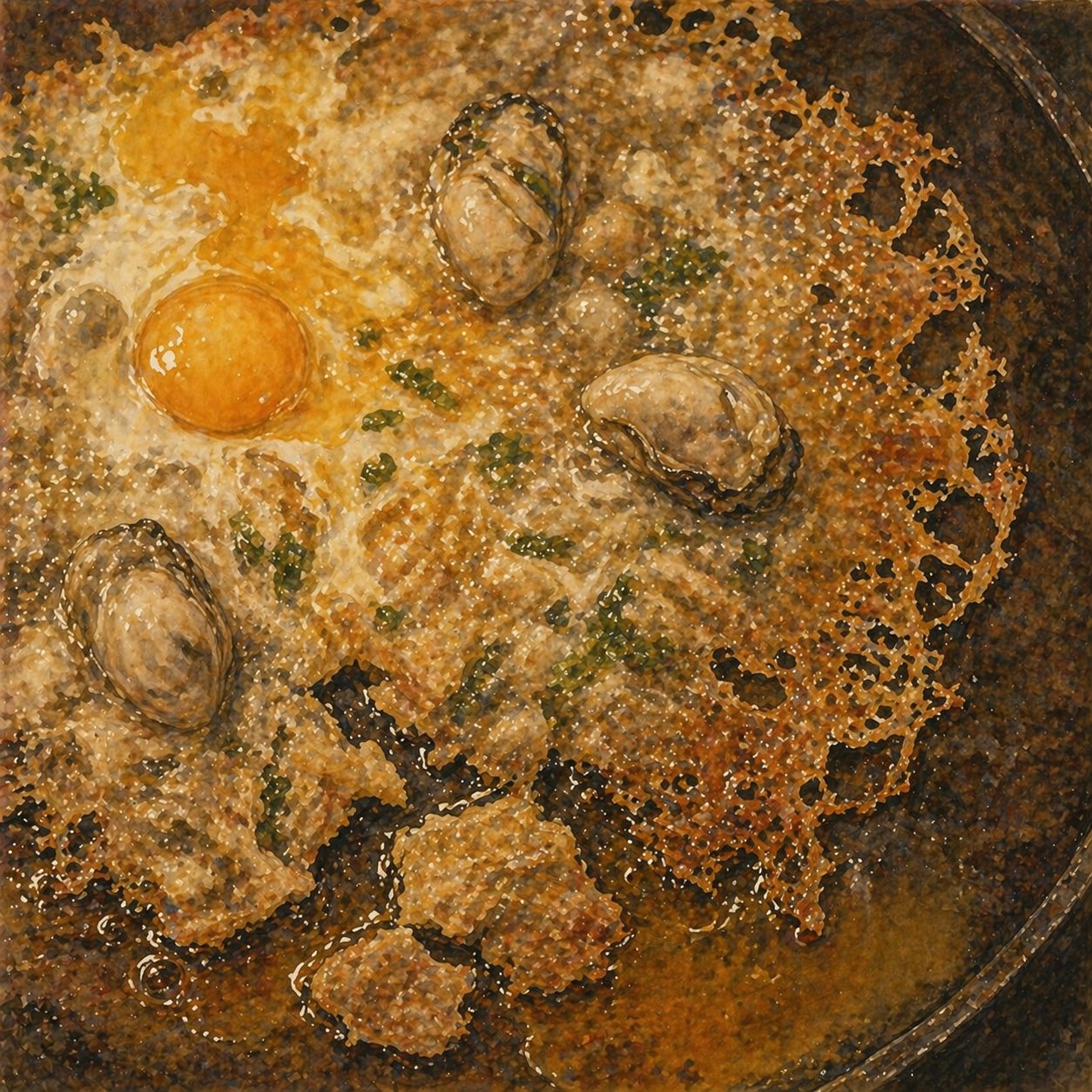
- Wait 60 seconds — do not touch. The edges will turn lacy and crisp, the middle still translucent and gooey.
- Use a spatula to break the batter into 3–4 large irregular pieces — this creates more crispy edges.
- Drizzle in 1 more tbsp lard around the edges.
- Beat the eggs with a pinch of salt and white pepper. Pour over the broken batter.
- Let the egg set for 30 seconds, then break and toss with a spatula.
- Add the oysters last. Stir-fry for 45 seconds — no more. Oysters become rubber if overcooked.
- Sprinkle fish sauce around the pan edge so it sizzles.
- Off heat. Toss in spring onion and coriander.
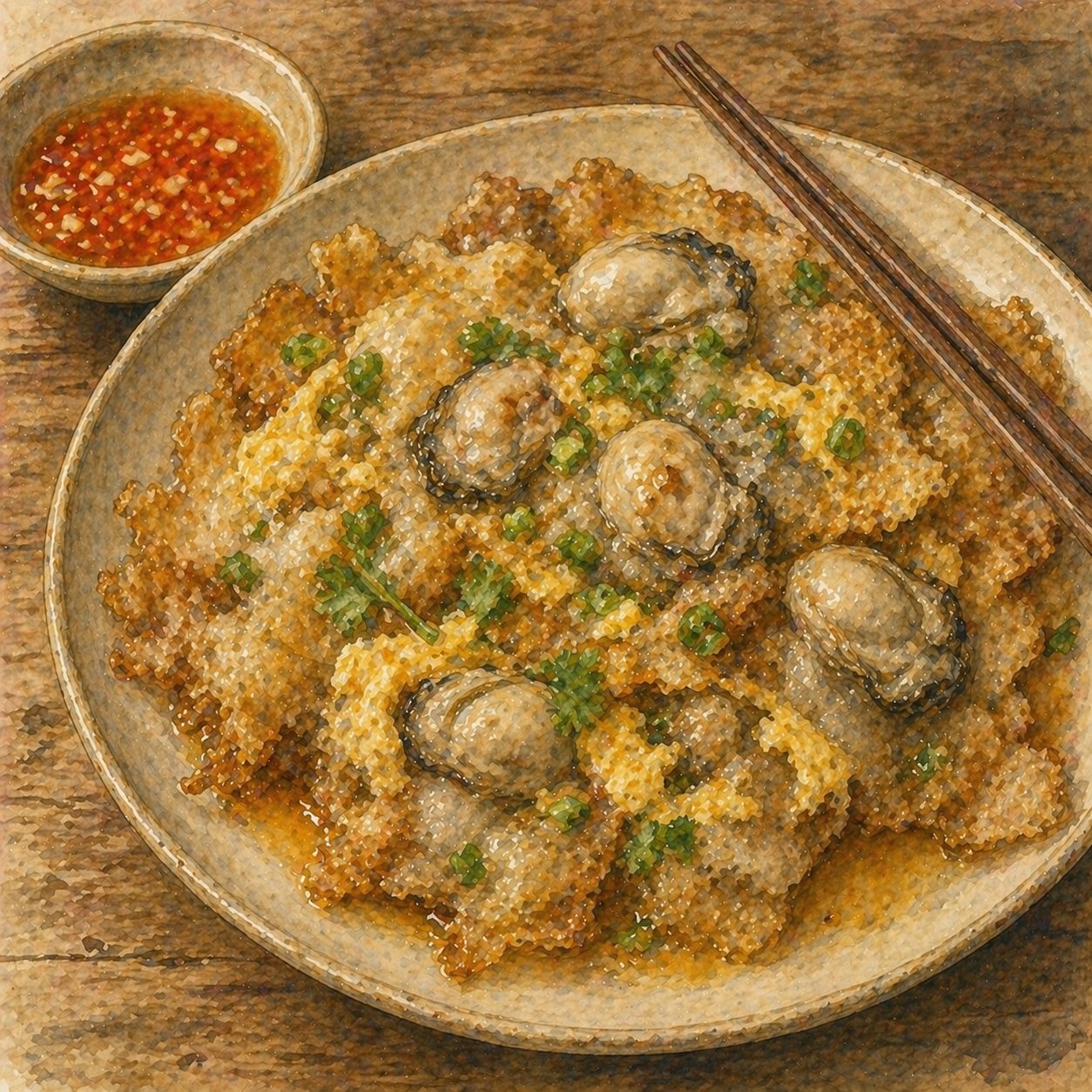
Plate and serve immediately, with the chilli-vinegar dip on the side.
🎯The Three Tips
Heritage. Master's. Mistake.
🏛 Heritage Note
The Vanishing Orh Suan
There is a related dish called Orh Suan (oyster vinegar omelette, 蚝酸) — the same family but with Hakka or Chaoshan twist, oilier, with red wine lees. It is fading from Singapore. If you ever come across an old auntie still making it, learn from her immediately — when she goes, the recipe goes with her.
👨🍳 Master's Tip
Fat, Heat, Time
Or Luak is a dish of three controls:
- Fat: Use lard. Not oil. I will say this until I die. Lard gives the unique smoky-sweet richness vegetable oil cannot. Substitute order: rendered duck fat, then a butter-and-oil blend.
- Heat: The pan must be screaming hot when the batter hits. No medium heat. A cool pan = soggy starch.
- Time on oysters: 45 seconds maximum. The moment the oyster edges curl, they're done. They keep cooking on the hot plate as you serve.
The hawker stall version looks like it's "swimming in oil" — that's correct. A proper or luak should leave a slick of orange oil on the plate when finished. That oil is the soul.
⚠ Common Mistake
Soggy, Pale, Sad
Three mistakes ruin or luak:
- Crowding the pan — too much batter, too many oysters, no airflow. Result: stewed, not fried.
- Stirring too early — moving the batter before the bottom has set crispy. Result: gummy lump, no lace.
- Adding oysters too early — they shrink to half their size. Result: rubbery dots, not plump pillows.
Fix: Cook in small batches. One pan, two portions max. Patience until the bottom is crisp. Oysters in the last 45 seconds. Always.
📈 Scaling for Hawker Service
For 50–80 plates a day
- Two pans always running — one cooking, one heating. Service rhythm: 90 seconds per plate.
- Pre-portioned batter: in 200 ml jars, refrigerated. Stir before each use. Replace batch every 3 hours.
- Lard supply: 2 litres rendered fresh daily. Discard at end of day — oyster proteins break down lard quickly.
- Oysters: Buy fresh daily from Tekka or via Pacific oyster supplier. Frozen acceptable if pulse-thawed in cold water 5 min before use. Never refreeze.
- Cost (Singapore 2026): Per plate ~SGD 1.80 (oysters 1.20 + batter/eggs/lard 0.50 + aromatics 0.10). Sells SGD 6–10 standard, SGD 12–18 with extra oysters. Margin: 65–80%.
The lacy edge that catches between your teeth, the gooey middle that wraps the oyster, the dip that wakes your tongue — this is or luak. One plate, three pleasures.