Nyonya Laksa
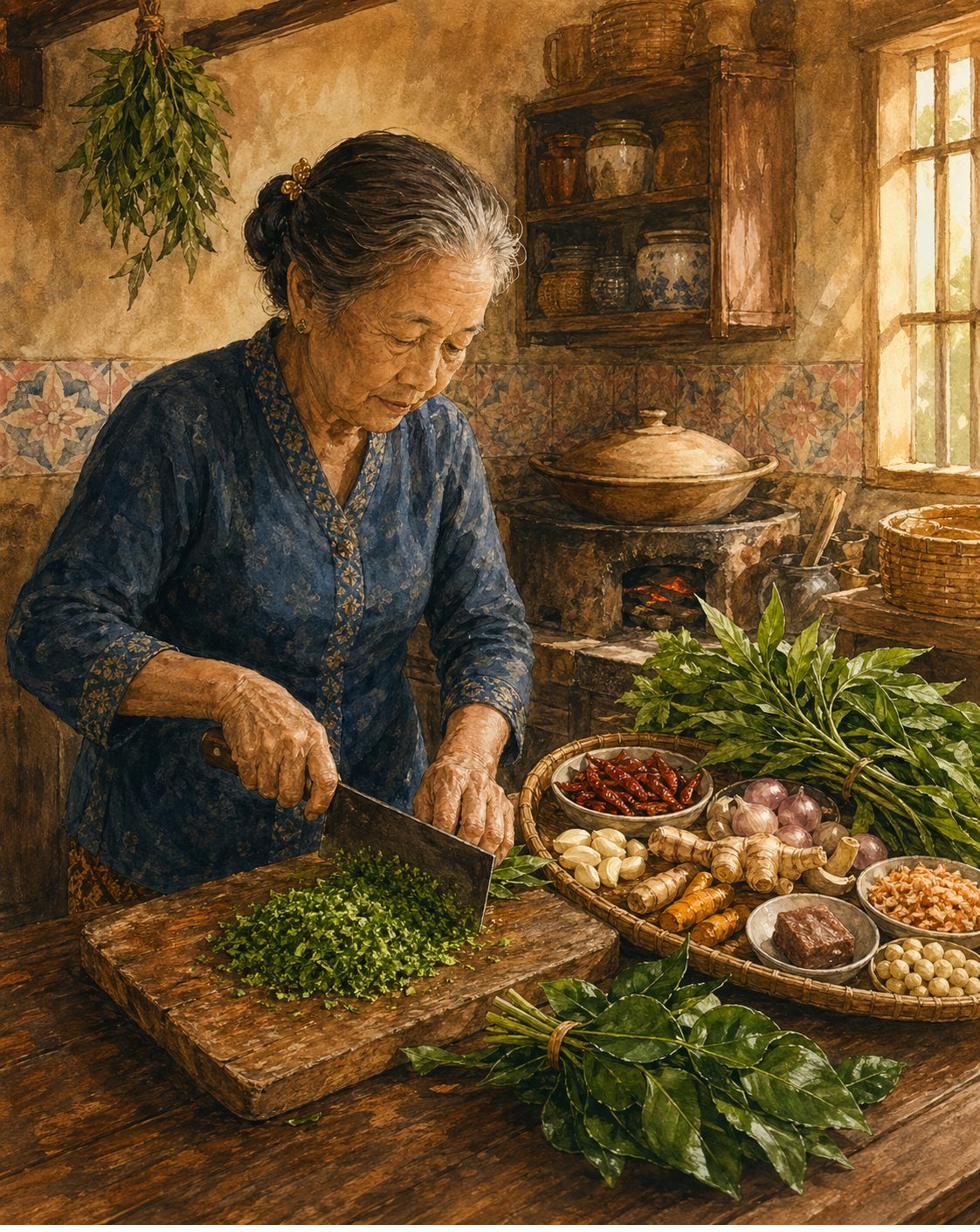
If buah keluak announces the heritage, pongteh feeds the family, itek tim quiets the table, and kueh pie tee proves the cook took time — then Nyonya Laksa is the dish that holds the chapter together. This is the bowl every Peranakan kitchen makes, the bowl every Singapore hawker centre serves, the bowl that turned Peranakan cooking from a private home tradition into a public Singapore icon.
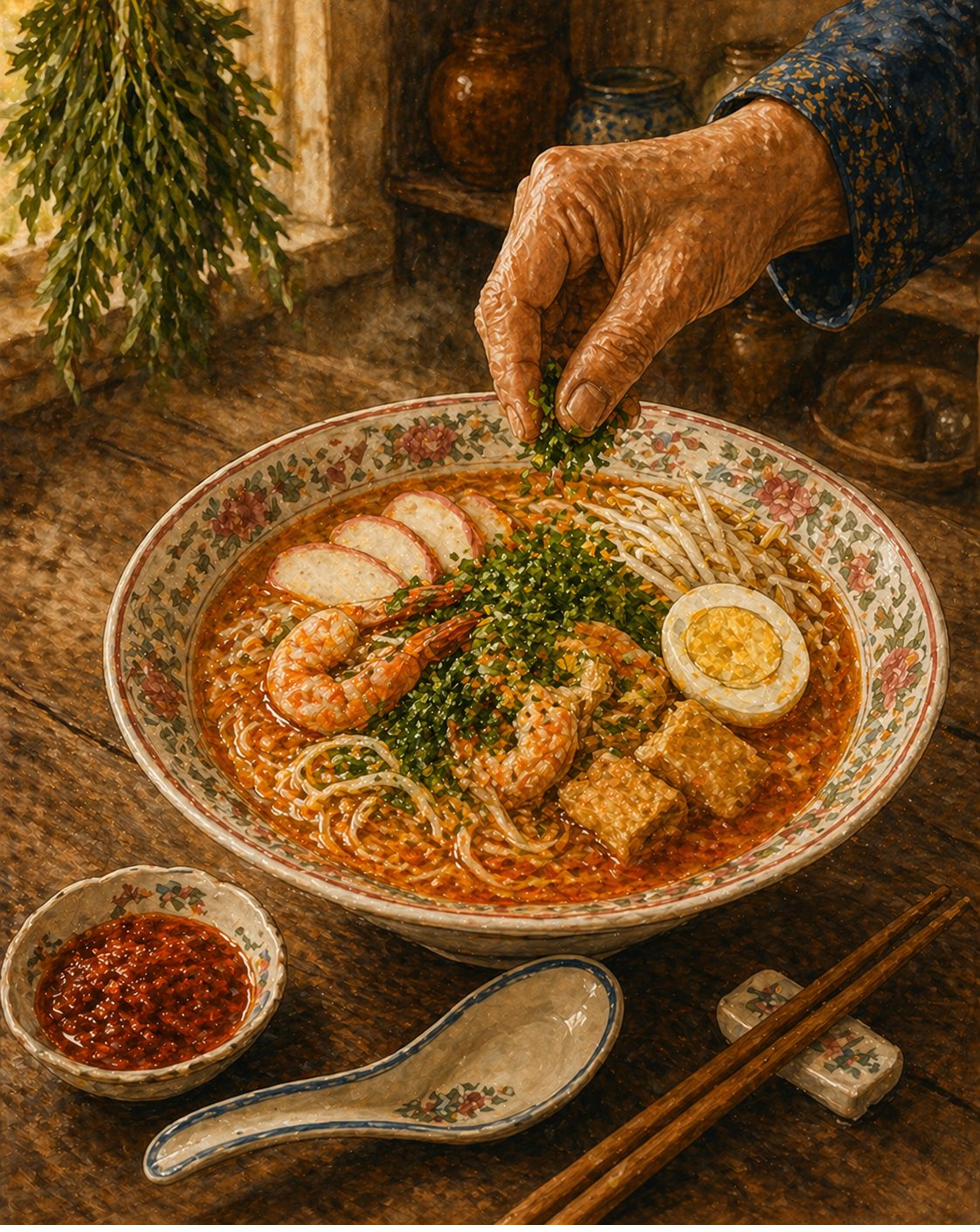
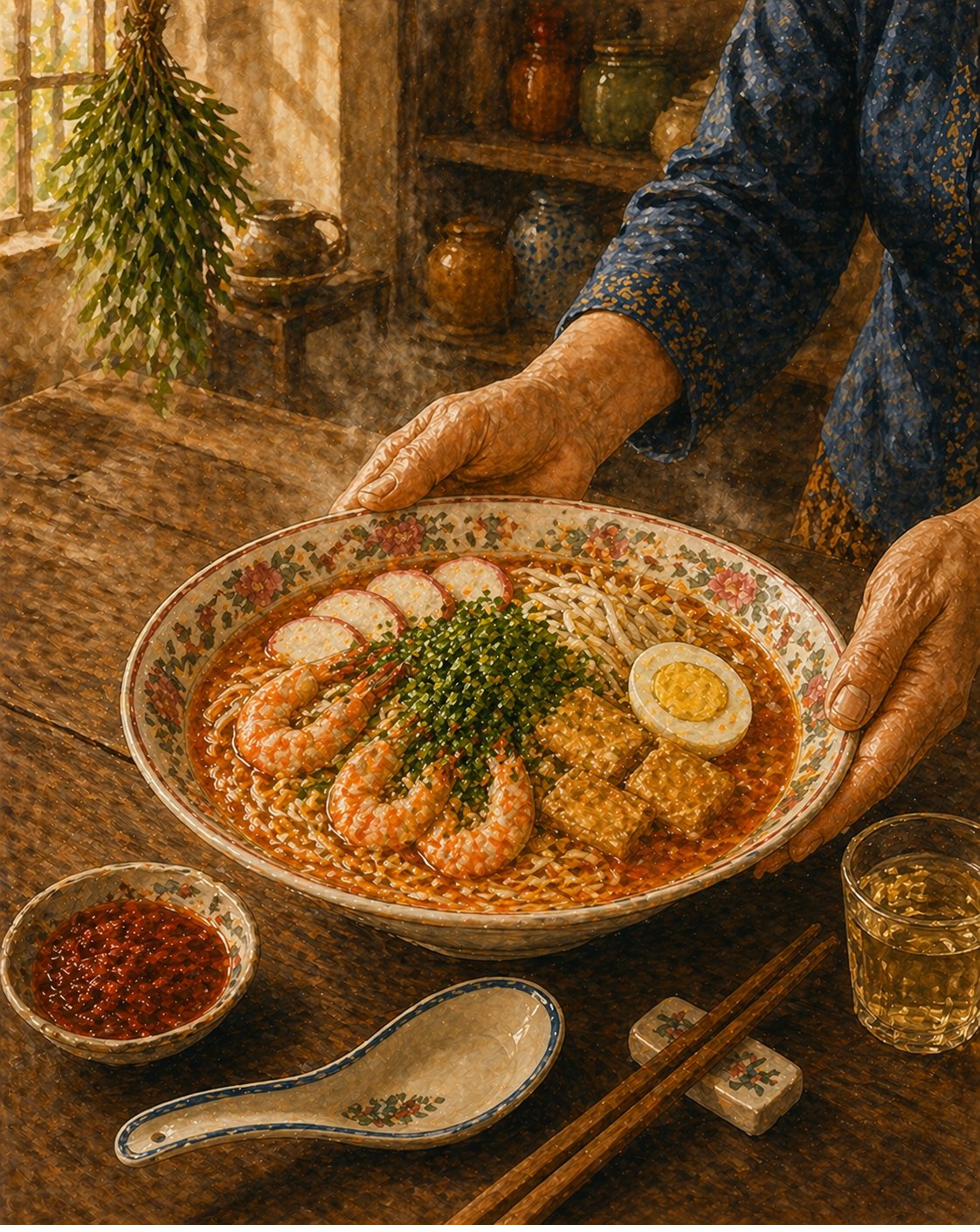
Nyonya Laksa is a coconut-milk-based noodle soup built on a complex rempah (spice paste) of dried red chillies, shallots, garlic, galangal, lemongrass, turmeric, candlenuts, and belacan, with the heritage signature note of dried shrimps (hae bee) giving the gravy its characteristic gritty-savoury depth. The bloomed rempah is enriched with thick coconut cream and prawn stock, then poured over thick white rice vermicelli (NOT thin bee hoon — heritage cooks are firm on this) and topped with halved prawns, fish cake slices, blanched bean sprouts, taupok (fried tofu puffs), and a halved hard-boiled egg. The chapter's closing-payoff garnish: freshly-minced laksa leaves (daun kesum, Polygonum odoratum / Vietnamese coriander) scattered generously across the surface — vivid jade-green against the deep-orange-red gravy.
The dish has a Singapore heritage-origin story that is itself a hybrid. The most-cited account holds that Janggut Laksa — named after Ng Juat Swee, whose nickname janggut meant "beard" in Malay (referring to a prominent mole-hair on his chin) — and his brother Ng Chwee Seng began hawking Peranakan-style laksa on the streets of Singapore's east coast in the 1940s, walking with two pots of laksa balanced on a bamboo pole across Janggut's shoulders. By 1950, the brothers had settled into a stall at the Hock Tong Hin coffee shop at 49 East Coast Road, in the heart of Singapore's Katong-and-Marine-Parade Peranakan enclave.
How a Hokkien-Fujianese man came to know Peranakan cooking is itself heritage-debated. One theory holds that Janggut married a Peranakan woman, learning the rempah-and-coconut-milk discipline from her family kitchen. A second theory, advanced in Janggut's brother Ng Chwee Seng's interview with Singapore Mediacorp TV, holds that Janggut learnt the laksa recipe from a Hainanese cook — heritage Singapore Hainanese men commonly worked as domestic helpers in wealthy Peranakan households in the early twentieth century, and Nyonya recipes "leaked out" from those kitchens to the public domain through such helpers. Both theories are heritage-documented; both reportedly point to the same source-truth, that Nyonya Laksa came to the public domain in mid-century Singapore through hybrid family-and-cross-cultural transmission.
What's NOT contested: Janggut's signature innovation was to cut the noodles short so the dish could be eaten with a spoon alone — no chopsticks needed. This became the defining Katong Laksa hallmark: the laksa where you scoop noodles-and-gravy together with a spoon, the way you would soup or porridge. Heritage cooks are clear on this — if you serve laksa with full-length noodles, you have made a coconut-curry noodle soup, but you have not made Katong Laksa.
The etymology of "laksa" itself is heritage-debated. The most-cited theory holds it derives from the Chinese word 辣沙 (làt-sā in Cantonese, "spicy-sand") — referring to the gritty-sandy texture imparted to the sauce by ground dried shrimp. The name "Katong" refers to the historic east-coast Peranakan precinct of Singapore.
The dish today exists in two heritage-recognised forms that have evolved as parallel traditions: the original Janggut Laksa lineage (continuing as a family-run chain at Roxy Square, Queensway Shopping Centre, Chinatown Point, Wisma Atria, and other outlets) and the 328 Katong Laksa rebrand (founded in 1998 by Nancy Koh, who had worked at the original stall under Ng Chwee Seng; awarded the Michelin Bib Gourmand in 2017 and 2018, beat Gordon Ramsay in a 2013 cookoff that brought the dish international fame).
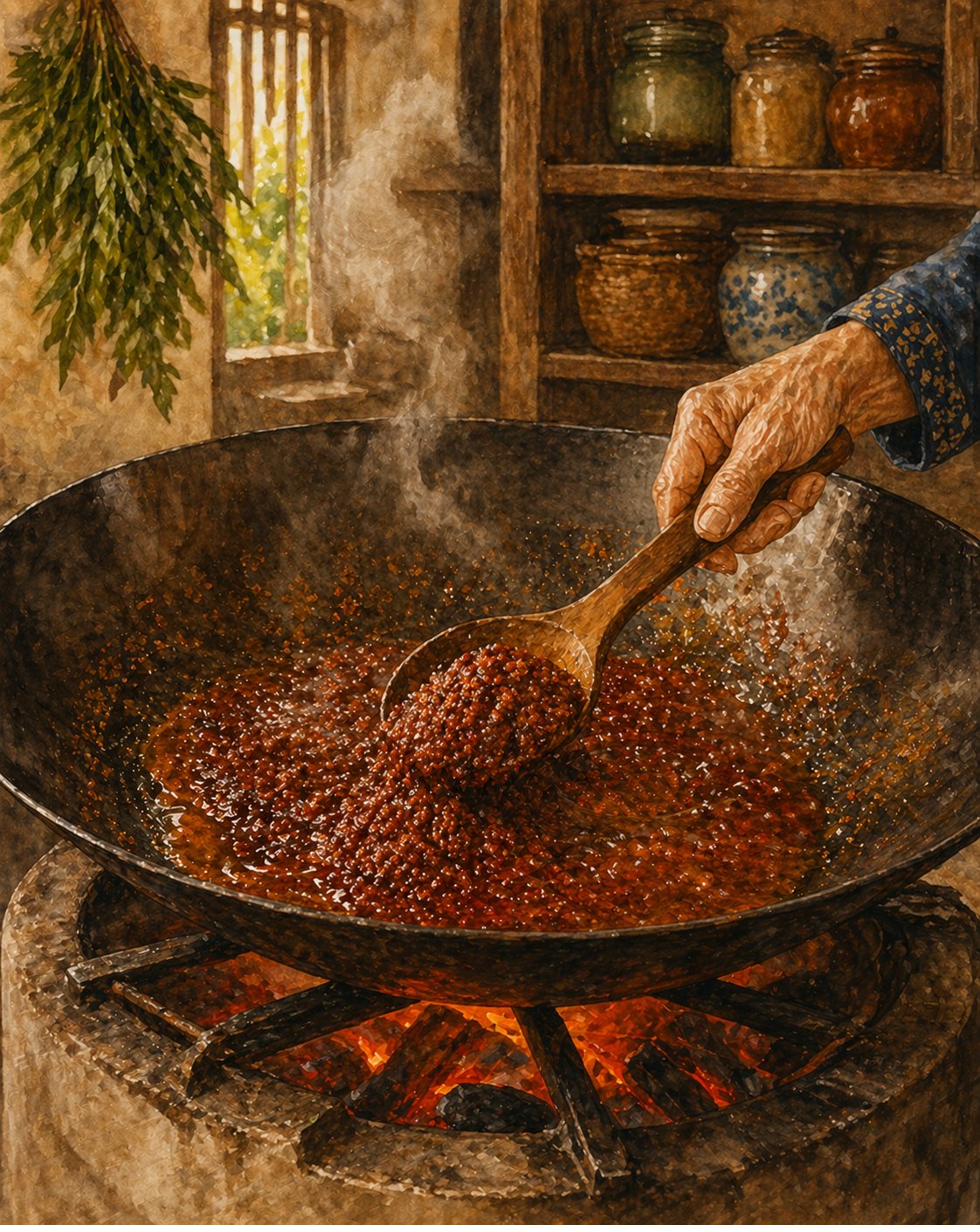
Two times in three home cooks who attempt Nyonya Laksa reportedly under-cook the rempah — heritage Peranakan home-kitchens are very firm on the discipline: the rempah must be fried low-and-slow for 30 to 45 minutes until the pecah minyak moment — oil-separation, where rendered oil pools at the surface and the paste's colour deepens to glossy mahogany-with-oxblood-undertones.
The second heritage-discipline marker: the coconut milk must NEVER come to a vigorous boil. As Nancy Koh of 328 Katong Laksa reportedly put it: if the heat is not controlled and the coconut milk comes to a boil, the whole dish is ruined. The milk's fat-and-protein structure curdles under hard heat, and the gravy splits into oil-pools-and-grainy-sediment that no amount of stirring can rescue.
I am giving you the heritage home-kitchen version here, the way it was made by my Peranakan neighbour-auntie's mother — same kitchen, same recipe-keeper as Recipes 26, 27, 28, and 29. The chapter's final dish: the bowl that holds the heritage together.
🛒Ingredients
Rempah, prawn stock, coconut, thick rice vermicelli, components, freshly-minced laksa leaves. The dish lives or dies on the pecah-minyak bloom.
For the Rempah enough for 6–8 servings; double or triple to batch-freeze
| Dried red chillies (mild, NOT bird's-eye) | 25, deseeded and soaked in hot water 30 min | Heritage-Peranakan rempah is colour-saturated; reduce to 15–20 if you prefer milder heat. |
| Fresh red chillies | 3, deseeded | Adds fresh-chilli brightness to the deep-dried-chilli base. |
| Shallots | 12 medium (~200 g), peeled | |
| Garlic | 8 cloves, peeled | |
| Lemongrass | 4 stalks, white-and-pale-yellow part, bashed and sliced | |
| Fresh galangal | 30 g, peeled and sliced | NOT ginger — heritage rempah needs the cool-pine-citrus note of galangal. |
| Fresh turmeric | 25 g, peeled and sliced | Or 1 tsp dried turmeric powder, but fresh is heritage. |
| Candlenuts | 8, dry-roasted in a small pan over low heat 5 min | Mildly toxic raw; the 5-minute dry-roast renders them safe and develops flavour. |
| Belacan (fermented shrimp paste) | 2 tsp, dry-toasted in foil 2 min | Toasting blooms the aroma; non-negotiable heritage step. |
| Dried shrimps (hae bee) | 30 g, soaked in warm water 15 min, drained | The heritage signature ingredient — the gritty-sandy texture in the gravy. Reserve soaking water for the stock. |
| Coriander powder | 1 tbsp, dry-toasted and ground | Heritage rempah; dry-toast whole seeds first if available, then grind. |
| Cooking oil (peanut or vegetable) | 250 ml (~1 cup) | Generous amount; heritage rempah needs to "swim" in the oil during the bloom. |
For the Prawn Stock
| Fresh medium prawns (with shells and heads) | 600 g | Heritage cooks shell the prawns; reserve shells-and-heads for the stock; reserve prawn meat for serving. |
| Reserved dried-shrimp soaking water + extra water | ~2 L total | |
| Salt | ½ tsp |
For the Laksa Gravy
| Bloomed rempah (from above) | all of it | |
| Prawn stock (from above) | ~1.5 L | Strain through a fine sieve before adding to the rempah. |
| Thick coconut cream (santan, undiluted) | 400 ml | Fresh-pressed is heritage; canned thick coconut cream is acceptable substitute. |
| Thin coconut milk | 400 ml | Or dilute thick coconut cream 1:1 with water. |
| Fresh laksa leaves (daun kesum) | 5–6 stems, leaves picked | Add to the gravy whole during simmer; remove before serving — flavour-infusion role. |
| Fish sauce | 1 tbsp | Heritage umami booster. |
| Sugar | 1 tsp | Balances the chilli heat. |
| Salt | to taste |
For Serving per bowl
| Thick white rice vermicelli (laksa noodles) | ~100 g per bowl | NON-NEGOTIABLE heritage choice — the noodles MUST be the thick white rice vermicelli register, NOT thin bee hoon. Many Singapore brands sell pre-cooked laksa noodles in plastic packs that just need a quick blanch. |
| Reserved fresh prawns (shelled, cooked) | 3–4 halved per bowl | |
| Fish cake slices (heritage Singapore-style, pale-cream-with-pink-edge) | 4–5 slices per bowl | |
| Bean sprouts (blanched 30 seconds) | a small handful per bowl | |
| Taupok (fried tofu puffs) | 4–5 strips per bowl, halved | Heritage signature — the spongy puffs absorb the gravy and burst on bite. |
| Hard-boiled egg | 1 halved per bowl | |
| Freshly-minced laksa leaves (daun kesum) | a generous 1–2 tbsp per bowl | The chapter's closing-payoff garnish. The defining fragrance-and-visual-anchor of the heritage bowl. NEVER substitute with regular coriander; the laksa leaf's distinctive citrus-pepper-mint note is the dish's signature. |
🌶️Shifu's Lift
choose one path — see "Shifu's Secret" chapter for the philosophy- Old-school path: ¼ tsp MSG dissolved in finished gravy
- Modern hawker path: ½ tsp chicken stock powder during the simmer
- Heritage purist path: already covered with the dried-shrimp + belacan + prawn-stock + fish-sauce umami stack — heritage Nyonya Laksa is one of the project's most umami-dense bowls; further additions are not heritage-needed
Optional Heritage Finishing-Touches diner-served, table-side
| Sambal chili paste (heritage) | 1–2 tsp per bowl, optional | For diners who want extra heat — the sambal layers atop the gravy without integrating, giving each spoonful a fresh chilli kick. |
| Calamansi (or regular lime) wedge | 1 wedge per bowl, optional | Optional heritage finishing flourish — diners may squeeze a small amount into the gravy at the table for citrus brightness. Heritage cooks differ on whether the lime is required (some heritage Janggut-lineage cooks omit it; some Katong-style cooks include it). Both forms are heritage-acceptable. |
👨🍳Method
Seven stages. Stock, pound, bloom, build, components, assemble, eat. Pecah minyak is the dish.
Make the Prawn Stock
Shell and devein the fresh prawns. Reserve the shells-and-heads for the stock; reserve the prawn meat for serving (refrigerate, covered).
In a large stockpot, heat 2 tablespoons oil over medium-high heat. Add the prawn shells-and-heads. Fry vigorously for 5 minutes, pressing the heads with a spoon to release the rich orange tomalley.
Add the reserved dried-shrimp soaking water + enough additional water to make 2 L total. Bring to a vigorous boil, then reduce to a steady simmer. Simmer uncovered for 30–40 minutes — the stock should reduce to about 1.5 L and turn a pale-orange colour.
Strain through a fine sieve, pressing the shells with the back of a ladle to extract maximum juice. Discard solids. Set aside.
Pound the Rempah
In a sturdy mortar-and-pestle (or food processor pulsed in short bursts to avoid over-blending), pound or process all rempah ingredients EXCEPT the cooking oil and dried shrimps into a fine paste — about 15–20 minutes by hand, or 5–7 minutes in pulse-mode. The paste should be smooth-thick with the chillies and shallots fully integrated.
Mash the soaked-and-drained dried shrimps separately to a coarser paste (or pulse briefly in the processor); reserve for the bloom step.
Bloom the Rempah heritage pecah-minyak step
Heat the 250 ml of cooking oil in a heavy-bottomed wok or claypot over medium heat. When hot, reduce heat to low.
Add the rempah paste. Stir constantly for 30 to 45 minutes — this is the dish's pivotal heritage technique. The paste will progress through three stages:
- First 10 minutes: the paste absorbs the oil; texture goes from raw-pasty to oil-soaked-and-shiny.
- Minutes 10–25: the paste's water content slowly evaporates; colour deepens from raw-bright-red to deep-mahogany-with-oxblood-undertones; aroma shifts from raw-spice to cooked-fragrant.
- Minutes 25–45 (the pecah minyak moment): rendered oil begins to separate and pool at the surface of the paste; the rempah goes glossy-and-mahogany-rich; the aroma fully blooms.
Until you see the oil-separation, the rempah is not bloomed. Heritage cooks are unanimous on this — the pecah minyak moment is the dish.
Add the mashed dried shrimps. Stir 5 more minutes — the shrimps will bloom into the rempah, adding the heritage gritty-sandy texture-and-savour.
Build the Gravy
Pour the strained prawn stock into the bloomed rempah. Stir gently to integrate; the rempah and stock will marble briefly before unifying into a deep-orange-red colour.
Bring to a gentle simmer over medium heat. Add the whole laksa-leaf stems (5–6 stems) for flavour-infusion.
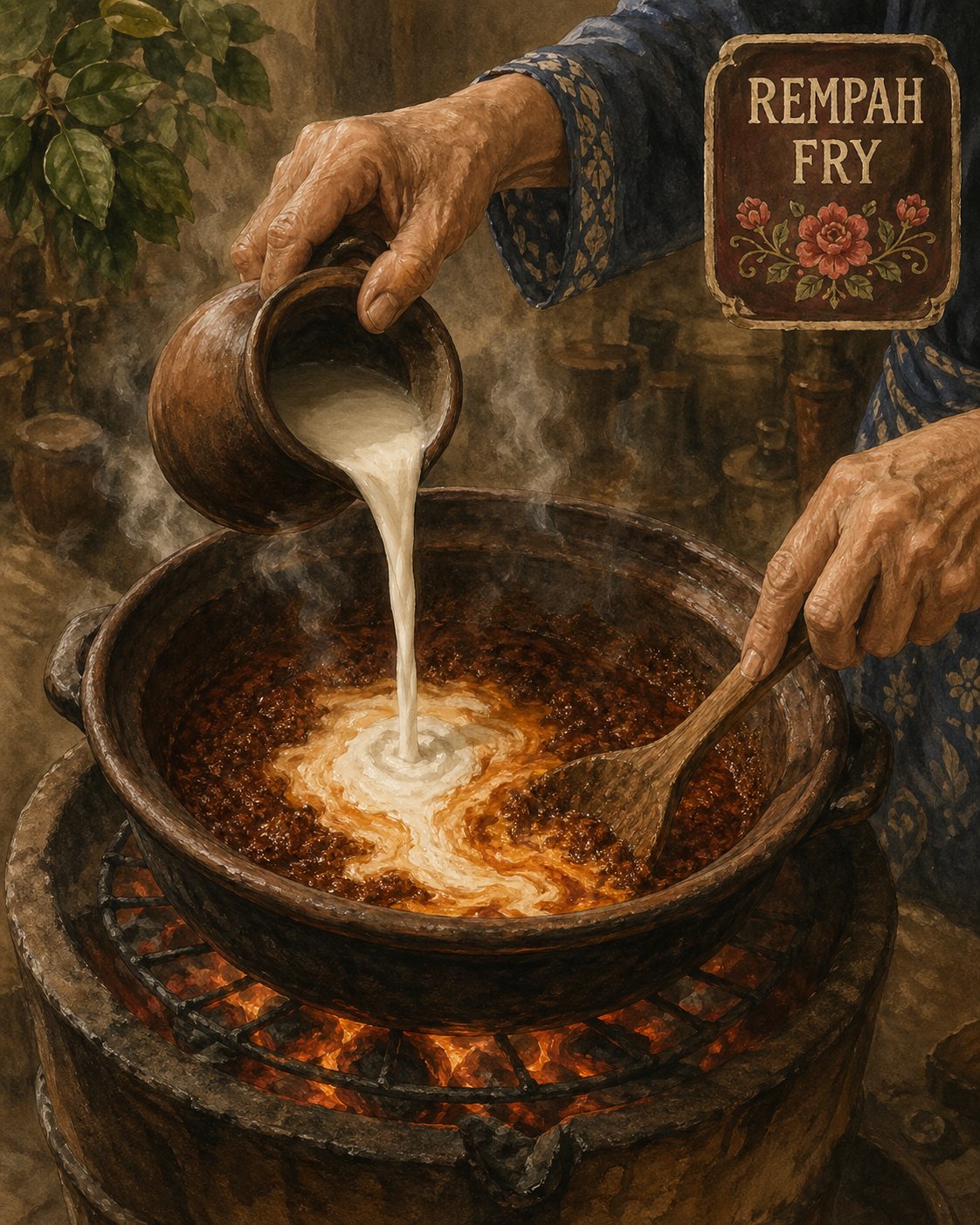
Now the heritage coconut-milk discipline: reduce heat to LOW. Add the thick coconut cream slowly, in three additions, stirring continuously between each addition. Then add the thin coconut milk, also slowly. Do NOT allow the gravy to come to a vigorous boil at any point — the coconut milk's fat-and-protein structure will curdle under hard heat, and the gravy will split.
Simmer gently for 20 minutes, stirring occasionally. Add the fish sauce, sugar, and salt to taste — the gravy should taste creamy-spicy-savoury-with-sweet-notes, all four registers integrated.
Remove and discard the laksa-leaf stems.
Cook the Components
While the gravy simmers, prepare the components:
- Cook the laksa noodles per package directions (most pre-cooked Singapore brands need just a 1-minute blanch in boiling water).
- Boil the reserved prawn meat in the gently-simmering gravy for 2 minutes, then remove with a slotted spoon. Halve the prawns lengthwise.
- Slice the fish cake into 4–5 thin slices per portion.
- Blanch the bean sprouts in boiling water for 30 seconds, drain.
- Slice the taupok (fried tofu puffs) in half — the gravy will fill the spongy interior at serving time.
- Halve the hard-boiled eggs.
- Mince the laksa leaves finely just before serving — the leaves' aroma is at peak when freshly minced; do NOT mince ahead.
Assemble Each Bowl
In a heritage Peranakan medium-deep soup bowl, place a generous portion of cooked laksa noodles. Arrange the prawns, fish cake, bean sprouts, taupok, and halved egg on top. Ladle a generous amount of hot laksa gravy over — about 1.5 cups per bowl, enough to cover the noodles and pool in the bowl.
The closing flourish: scatter 1–2 tablespoons of freshly-minced laksa leaves generously across the surface. The bright-jade-green should sit visibly on the deep-orange-red gravy as the dominant garnish.
Serve immediately, while the gravy is hot and the laksa-leaf aroma is at peak.
The Diner's Ritual
Eat with a Chinese-style soup spoon — heritage Katong Laksa noodles are cut short specifically for spoon-only eating. Stir the bowl gently to integrate the gravy with the noodles and components. Add a teaspoon of sambal chili paste if you want extra heat; squeeze a small wedge of calamansi or lime if you want citrus brightness (optional). Eat hot, slurp loudly, finish the gravy.
🎯The Three Tips
Heritage. Master's. Mistake.
🏛 Heritage Note
The Two Disciplines That Cannot Be Skipped
The dish is built on two heritage disciplines that cannot be skipped: the pecah minyak rempah-bloom (30–45 minutes low-and-slow until oil-separation) and the no-vigorous-boil coconut-milk discipline (gentle simmer only, never hard boil).
Skip either and the dish falls apart — flat-tasting on one end, split-and-grainy on the other. Heritage Nyonya Laksa is fundamentally a discipline-of-patience dish; the long ingredient list is not the labour, the slow attention is.
👨🍳 Master's Tip
The Pecah Minyak Window
The heritage pecah minyak moment is the dish's pivotal technique-marker — the same heritage marker as R26 buah keluak's rempah, but in laksa it's the load-bearing foundation rather than one of several techniques.
If you are using a food processor for the rempah rather than a heritage mortar-and-pestle, expect the pecah minyak window to be slightly longer — the processor's smoother paste releases its water more gradually than a hand-pounded coarser paste.
⚠ Common Mistake
Boiling the Gravy After Adding Coconut Milk
The single most common heritage-failure mode. Once coconut milk is added, the gravy must NEVER reach a vigorous boil — the milk's fat-and-protein structure will curdle, and the gravy will split into oil-pools-and-grainy-sediment. As Nancy Koh of 328 Katong Laksa reportedly observes: if the heat is not controlled and the coconut milk comes to a boil, the whole dish is ruined.
If you see your gravy beginning to bubble vigorously, immediately turn the heat down and let it settle to a gentle simmer. If it has already split, no amount of stirring will rescue it — heritage cooks consider a split gravy a failed pot, and start over.
📈 Scaling for Hawker Service
The chapter's only dish with a meaningful hawker-stall presence at heritage scale
Unlike Ayam Buah Keluak (R26), Babi Pongteh (R27), and Itek Tim (R28) — strict home-kitchen — and unlike Kueh Pie Tee (R29) which sits on the boundary, Nyonya Laksa has been a Singapore hawker icon since Janggut Laksa's bamboo-pole-vendor days in the 1940s. The chapter ends in the same place Peranakan cooking went public: the hawker centre.
For the home cook scaling up for a Peranakan tea-meal or family lunch:
- The rempah scales beautifully — make a triple batch and freeze the bloomed rempah in 200 g portions in airtight containers. Frozen rempah keeps for 3 months and is the heritage Peranakan kitchen's freezer-staple for laksa, curry chicken, and other rempah-based dishes.
- The prawn stock can be made up to 2 days ahead — refrigerate covered.
- The gravy CAN be made a few hours ahead — the coconut-milk no-boil discipline applies on re-warming as well; warm gently over low heat, NOT over high heat. Re-warm just to serving temperature, not to a boil.
- The components are best prepped same-day — the laksa-leaf garnish must be minced just before serving for peak fragrance.
- The Singapore-hawker version uses a "central-kitchen" model: at scale, both 328 Katong Laksa and the Janggut Laksa chain reportedly use centrally-produced rempah and gravy, distributed to multiple outlets. The heritage discipline is in the rempah-bloom, not in whether the bloom happens at the stall or at a central kitchen.
- Singapore restaurant references for inspiration: 328 Katong Laksa at reportedly S$6.30 (small) / S$8.30 (large) per bowl for the heritage-bloomed version; Janggut Laksa at multiple outlets for the Janggut-lineage heritage version; Famous Sungei Road Trishaw Laksa at Hong Lim Food Centre for the Bib Gourmand heritage register.
- Cost in Singapore (2026): the prawns and dried shrimps are the dominant raw-ingredient cost; the rempah components are individually inexpensive but the labour-of-bloom is the constraining factor.
Nyonya Laksa is the bowl that closes the Peranakan chapter. The buah keluak is for the festival, the pongteh is for the family, the itek tim is for the cool of the evening, the kueh pie tee is for the tea party — but the laksa is for any time. Morning, lunch, late afternoon, midnight. The Nyonya grandmothers I knew made it once a week and ate it whenever they were hungry. The bowl that holds the chapter together is also the bowl that says: this food belongs to everyone now.