Five Recipes
Hock Ko's Mother's Kitchen
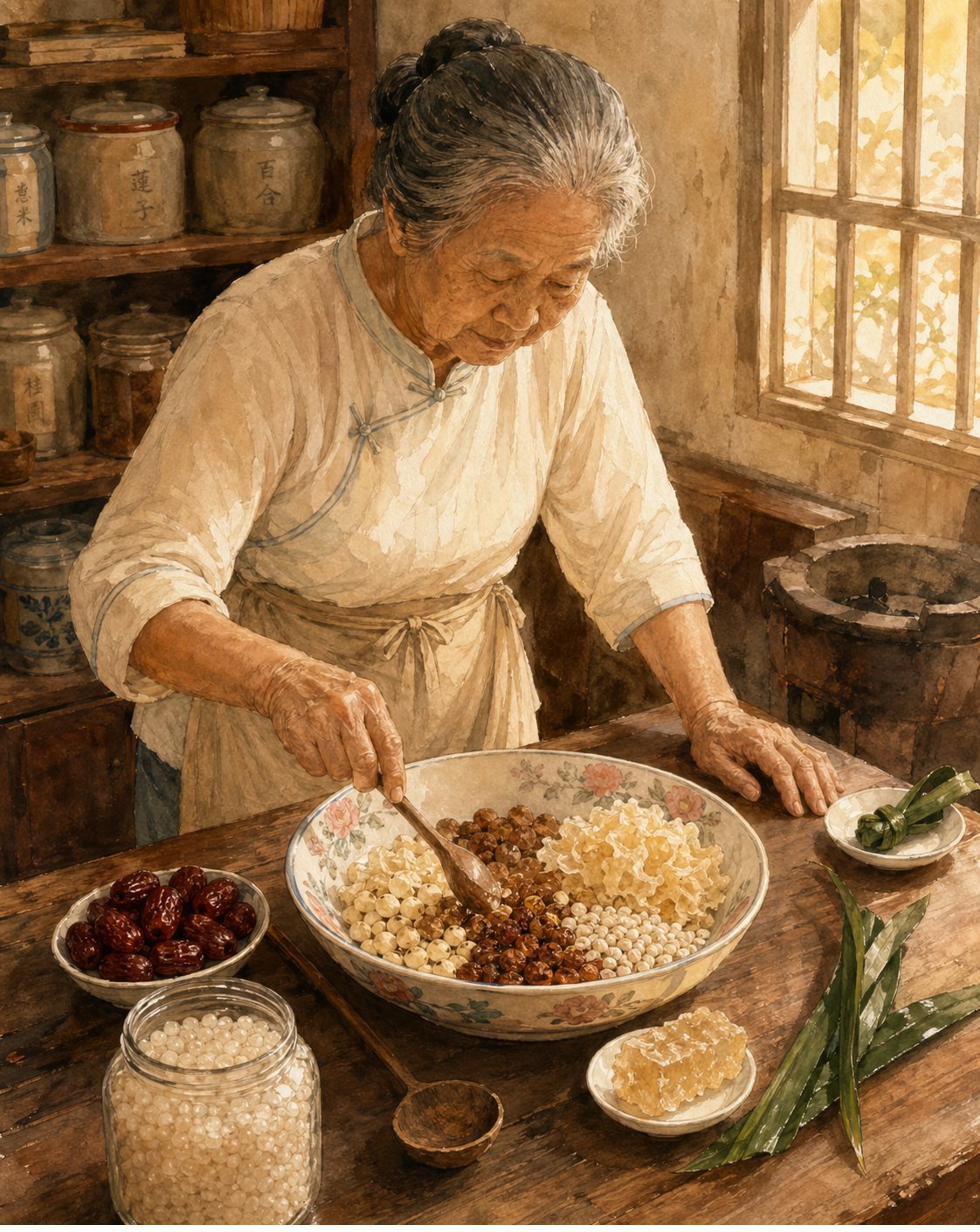
Cheng Tng
Clear amber broth carrying nine heritage textures — white fungus, longan, lotus seeds, pearl barley, ginkgo, red dates, pang da hai, sago, persimmon — perfumed with pandan and lifted by rock sugar. The dish my mother made first.
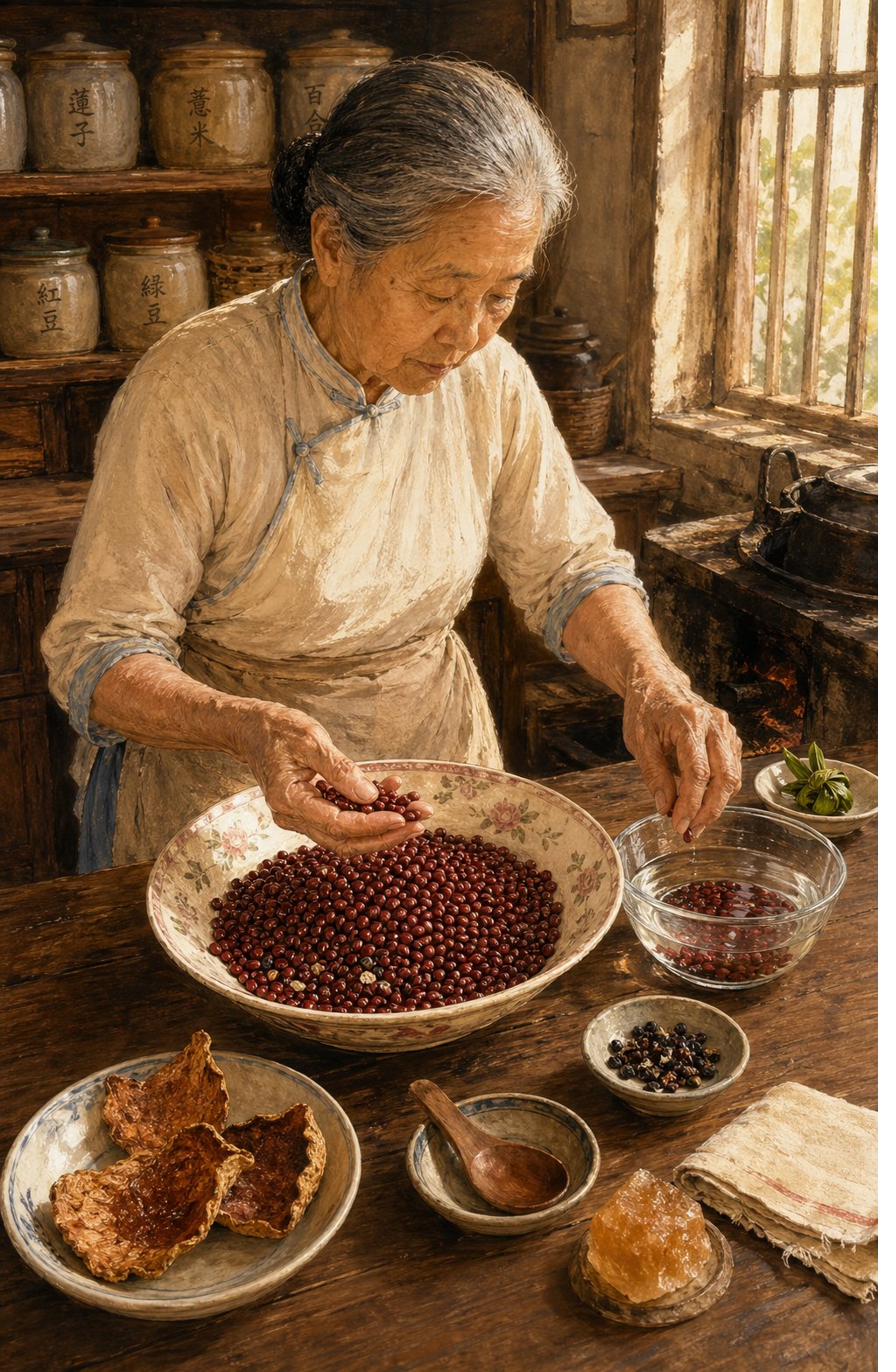
Hong Dou Sha
Cantonese red bean sweet soup with aged chenpi and lotus seeds. Sugar after bean-bloom, never before. The half-mash that gives the broth its sha consistency. The bowl that closes the banquet.
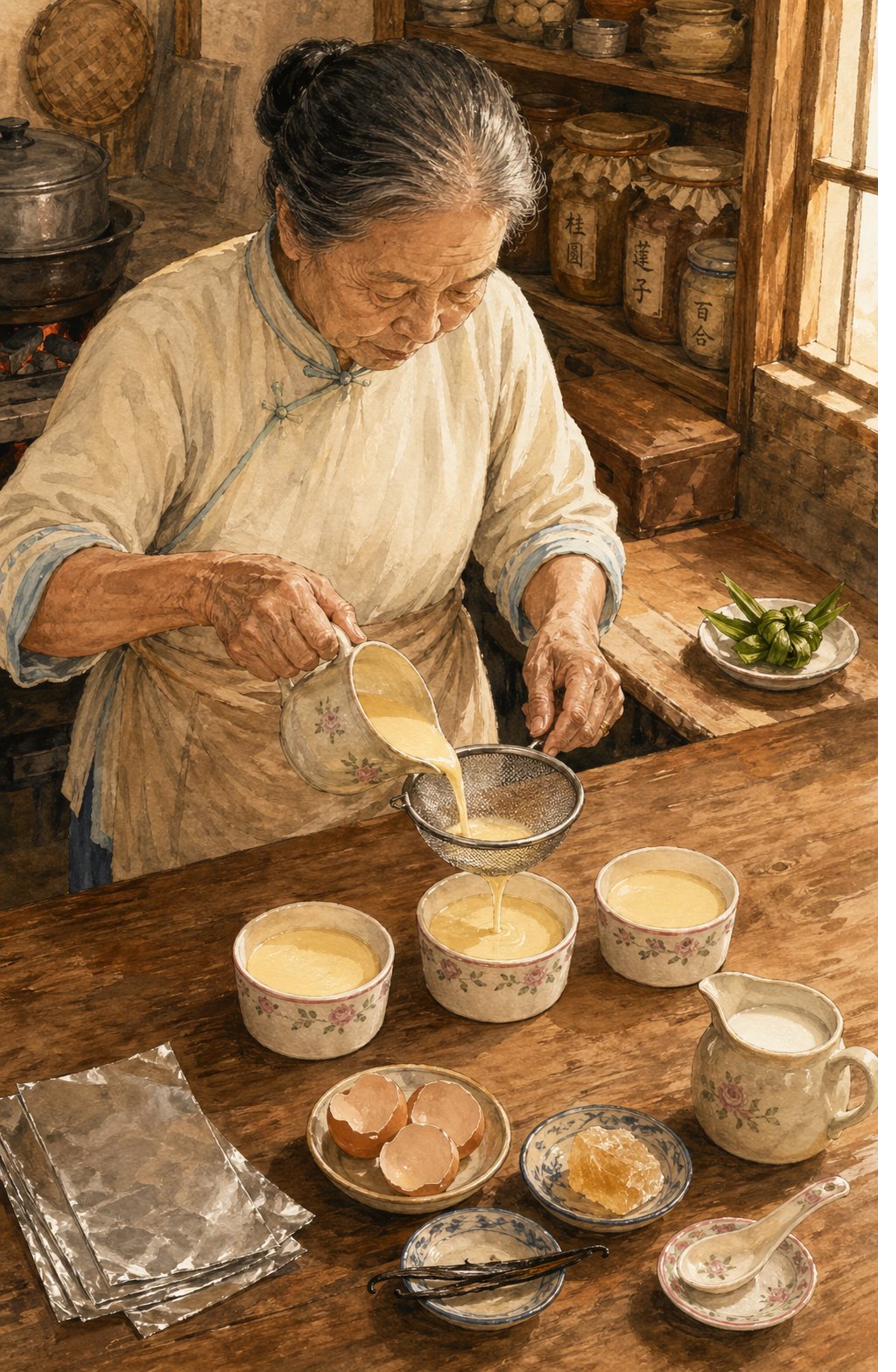
Steamed Egg Pudding
Cantonese silken steamed egg, Hong Kong dessert-house style. Four rules: gentle whisk, triple strain, foil cover each ramekin, medium-then-rest. The careful is the whole dish.
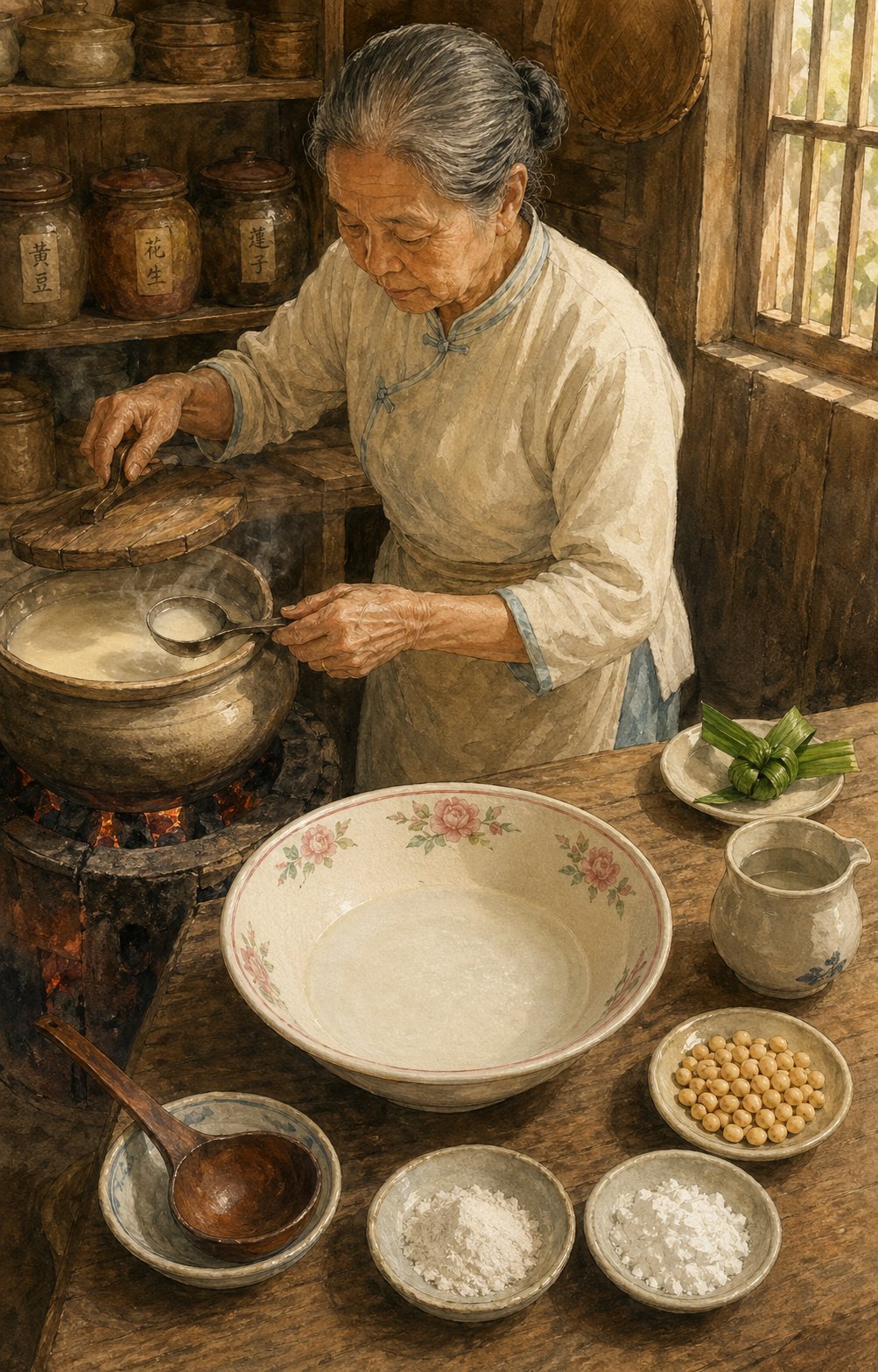
Tau Hwey
Pan-dialect Singapore silken soybean pudding — set with heritage gypsum, skimmed in thin sheets with a flat wooden ladle, served warm with ginger or gula-melaka syrup. The first sliver was always mine.
Bubur Cha Cha
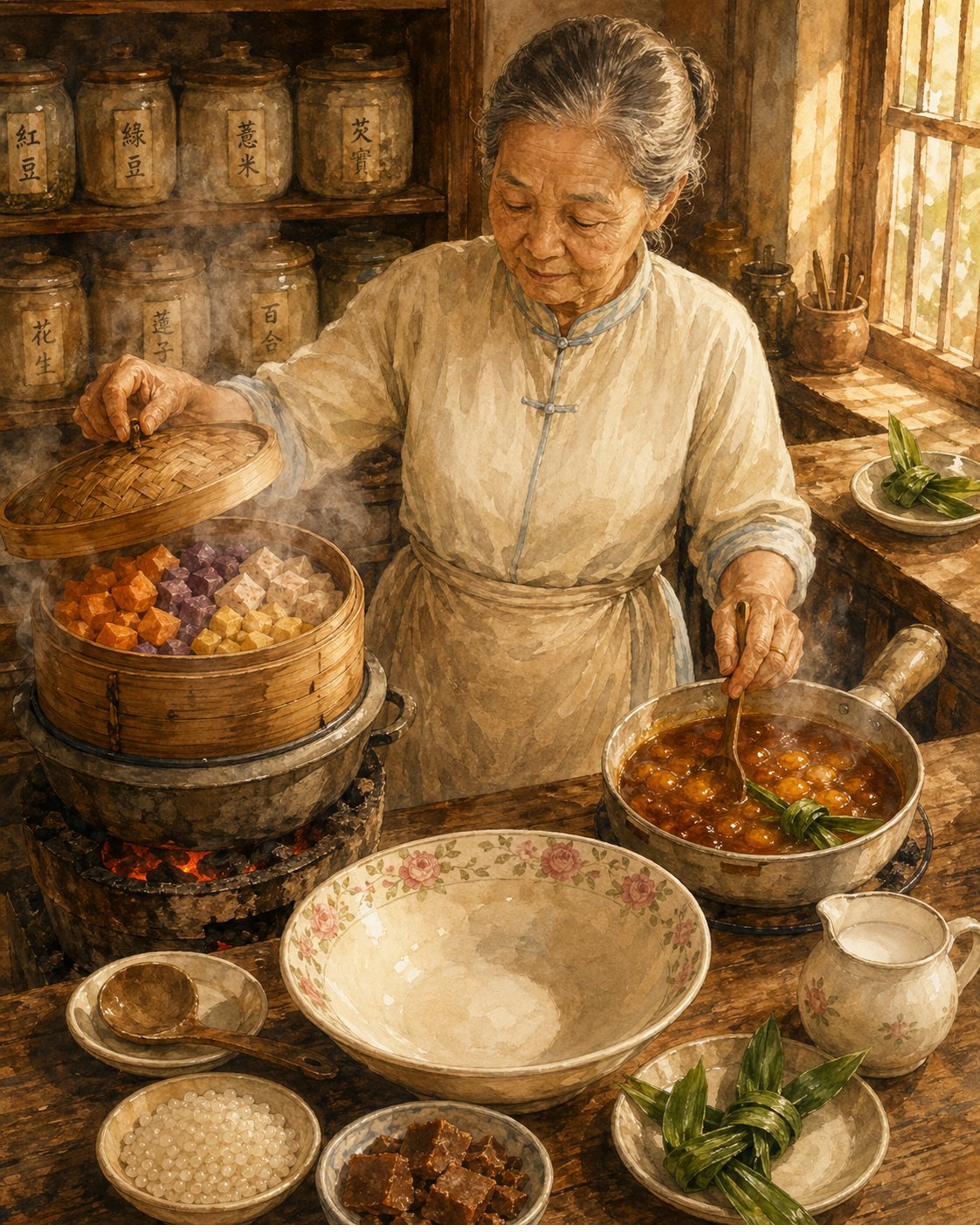
Heritage Peranakan coconut-milk sweet soup with the four-colour triad-of-tubers, sago, and gula-melaka poured at service. The marbled swirl. The book's closing dessert. The bowl that distributed abundance to the neighbours every Chap Goh Mei.