Five Recipes
Hock Ko's Home Table
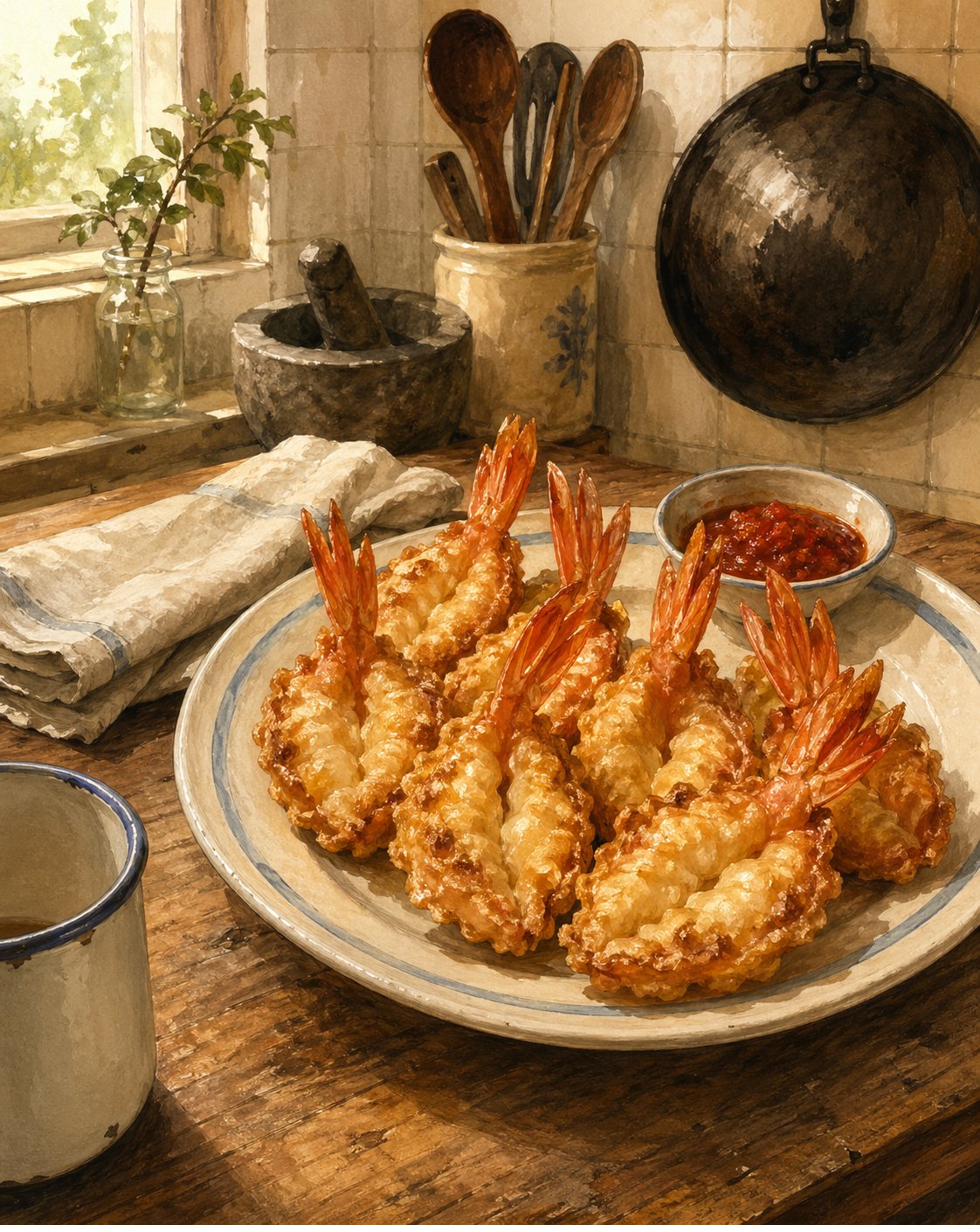
Pong Pong Prawns
Heritage Cantonese-banquet phoenix-tail prawns adapted for the Singapore home kitchen. Body butterflied and battered; tail-fan held proud and dry. The dish my daughter takes to school in her tiffin. The bonus table opens here.
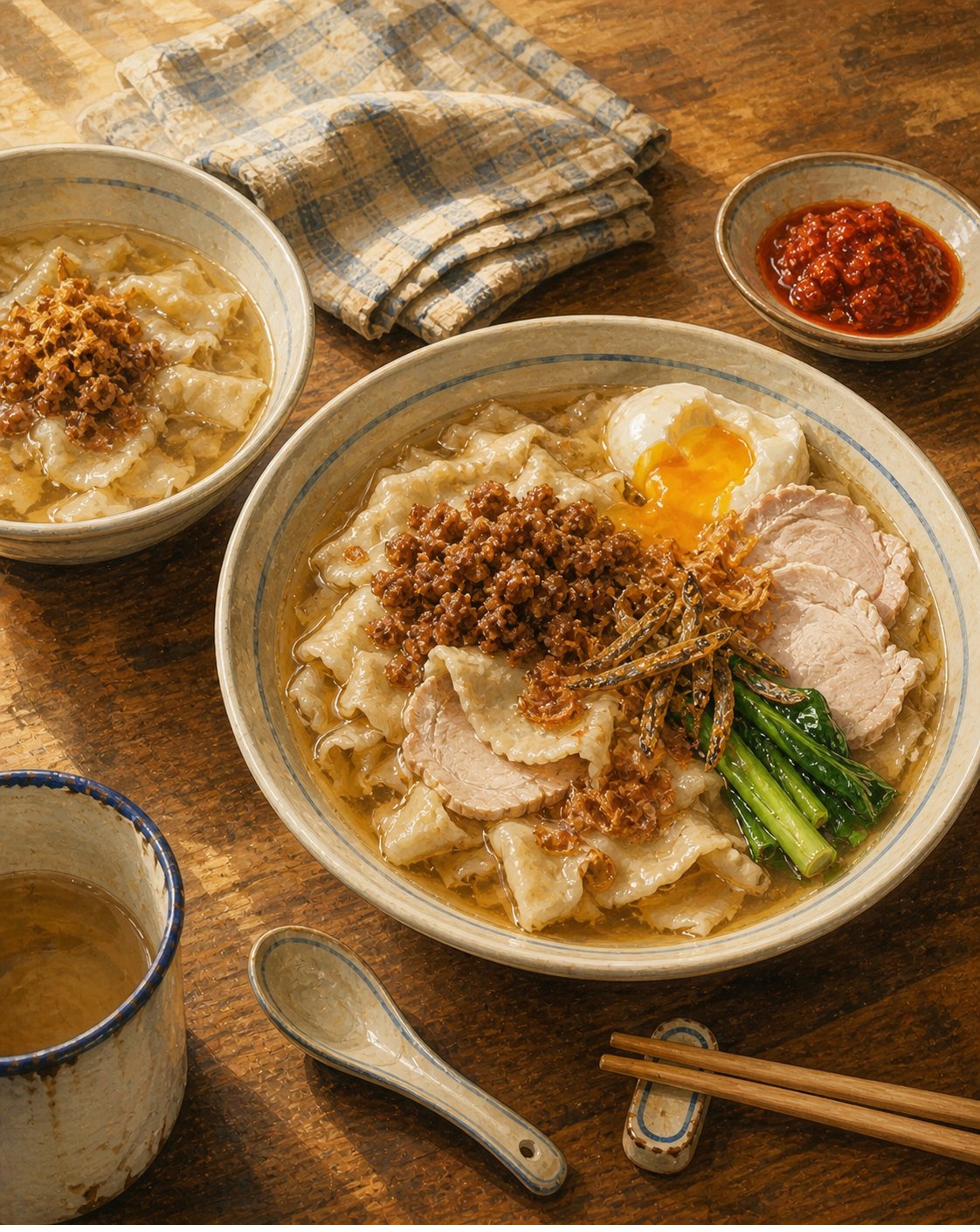
Mee Hoon Kueh
Hand-torn wheat-flour-cake noodles in clear pale-amber anchovy-and-pork-bone broth. The weeknight bowl. The dough rests while the shallots fry. The children think the tearing is a game. The working day stops following you home.
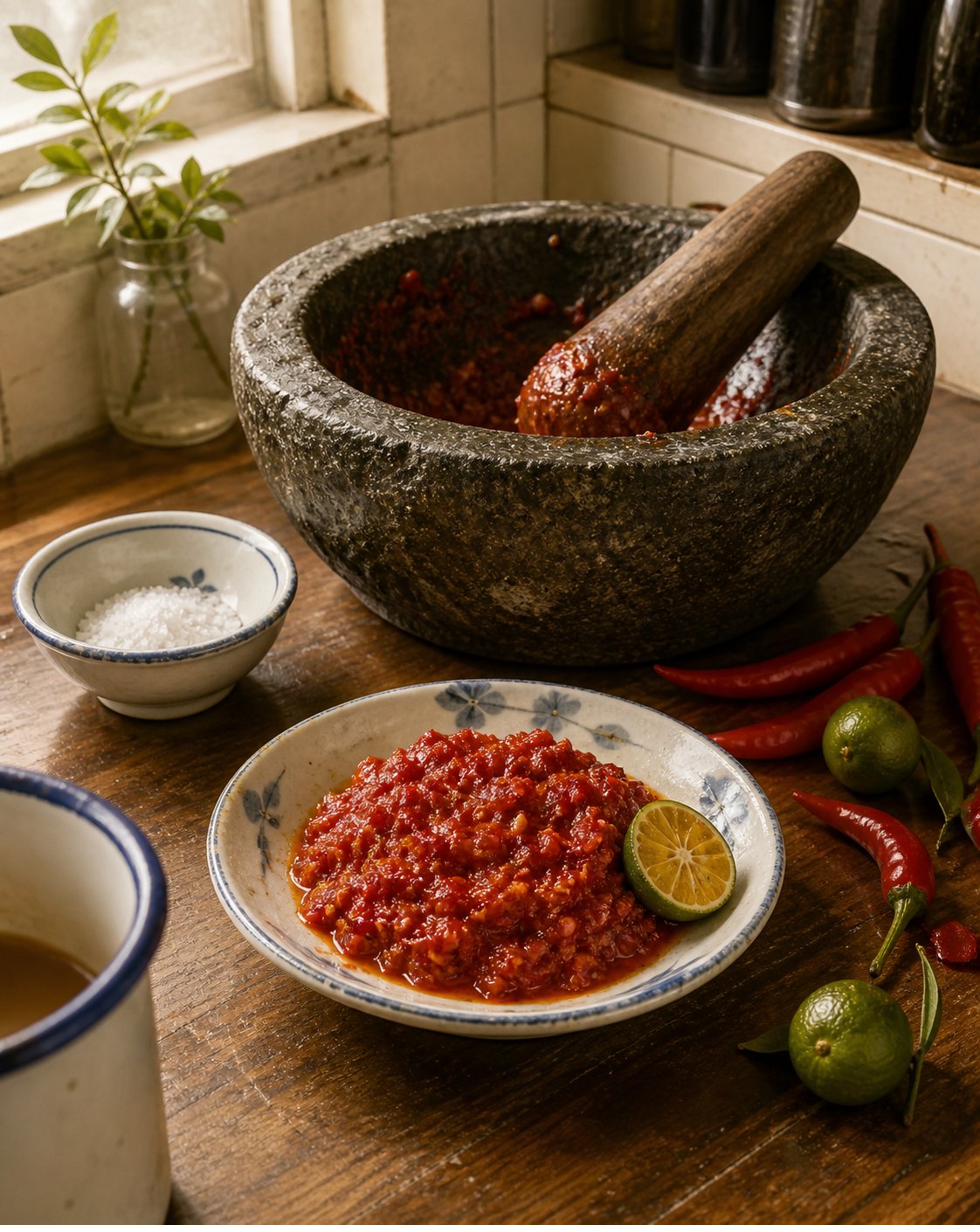
Sambal Belacan
The toasted-shrimp-paste-and-chilli sambal that anchors half the cookbook. Eight minutes at the mortar at six in the morning. The source paste — for rempahs, for kangkung belacan, for buah keluak, for pongteh — and for the bright-red dab beside the breakfast plate.
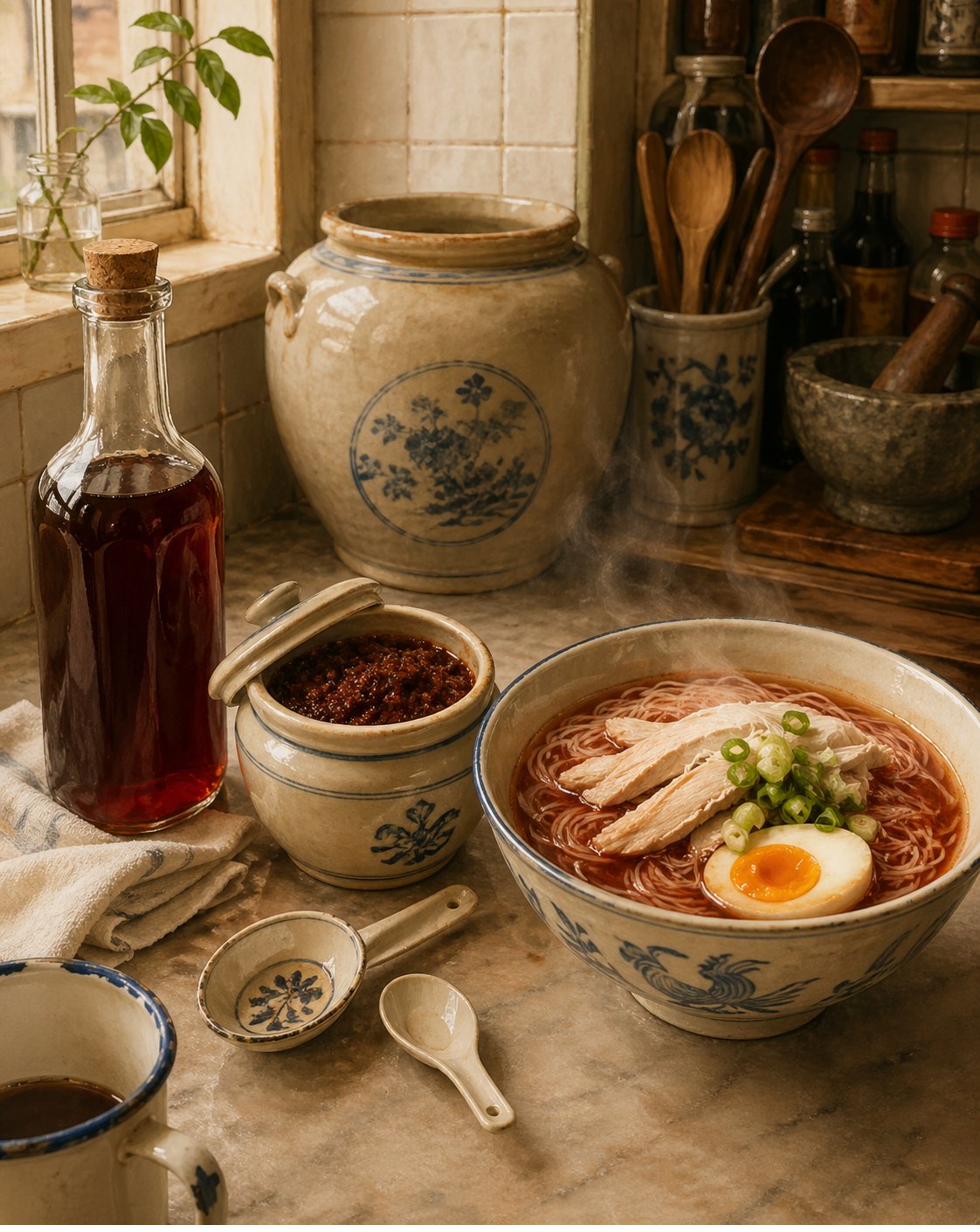
Ang Chao Wine
Forty-five days. A bowl of glutinous rice, a packet of red yeast rice, a sealed jar — and a year of Foochow cooking from a single morning of setup. Ruby ang jiu in bottles; brick-red lees in a small jar. Both keep for years.
White Bee Hoon
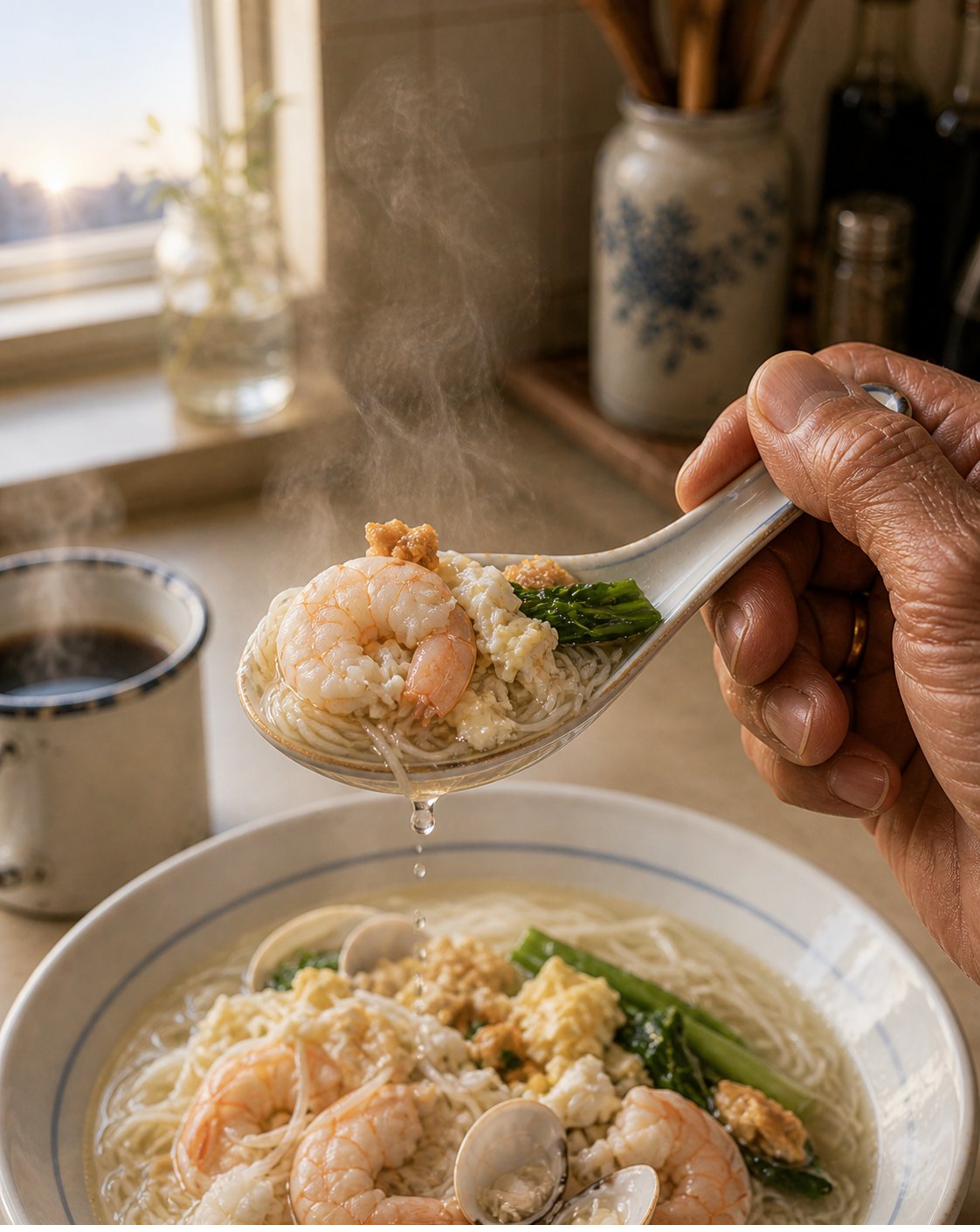
The dawn breakfast. Heritage Sembawang seafood rice vermicelli in slow-simmered stock. The book's final dish — served from the cook to the reader, eater's-perspective. Two bowls, the workbench-table, the day not yet started.