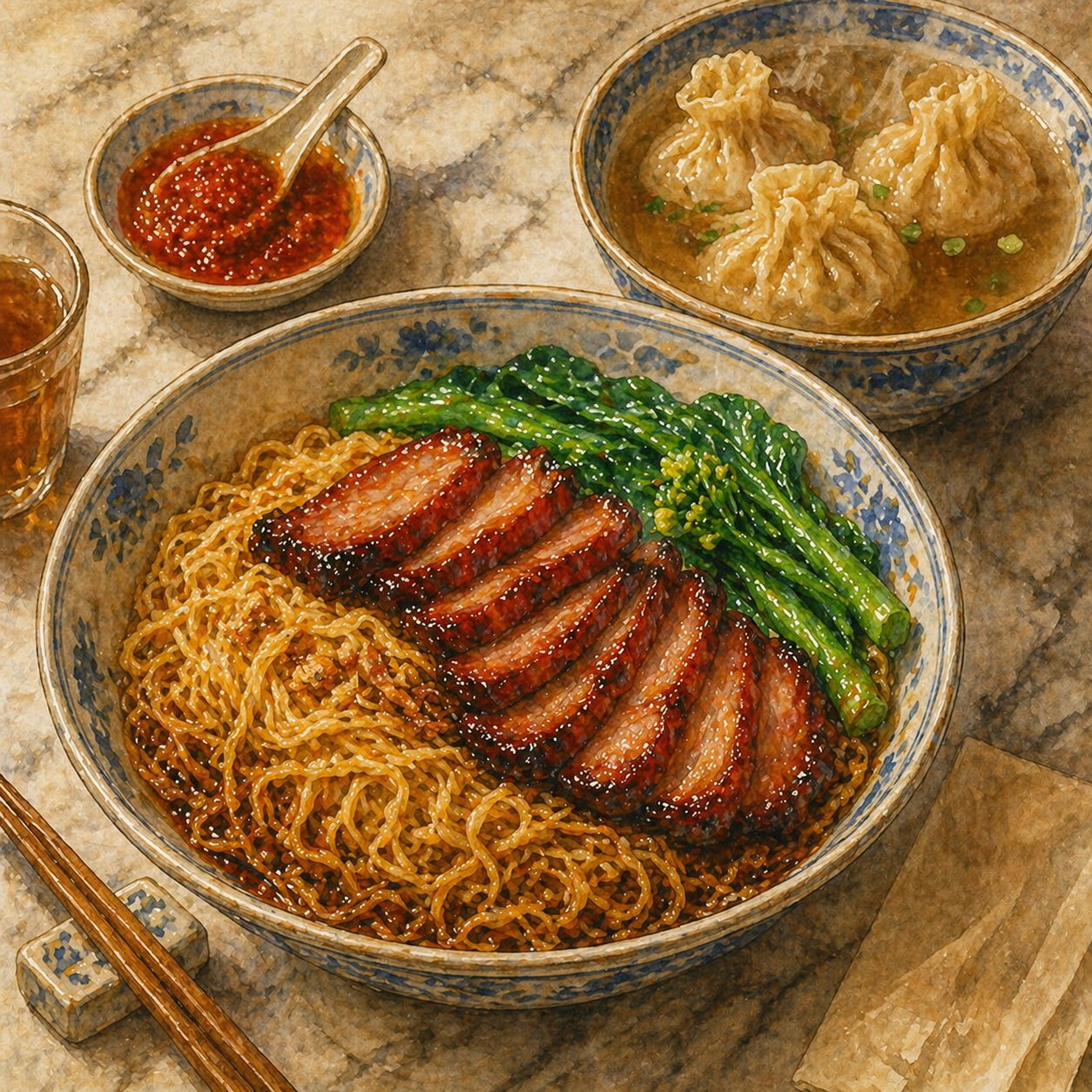
Char Siew Wantan Mee
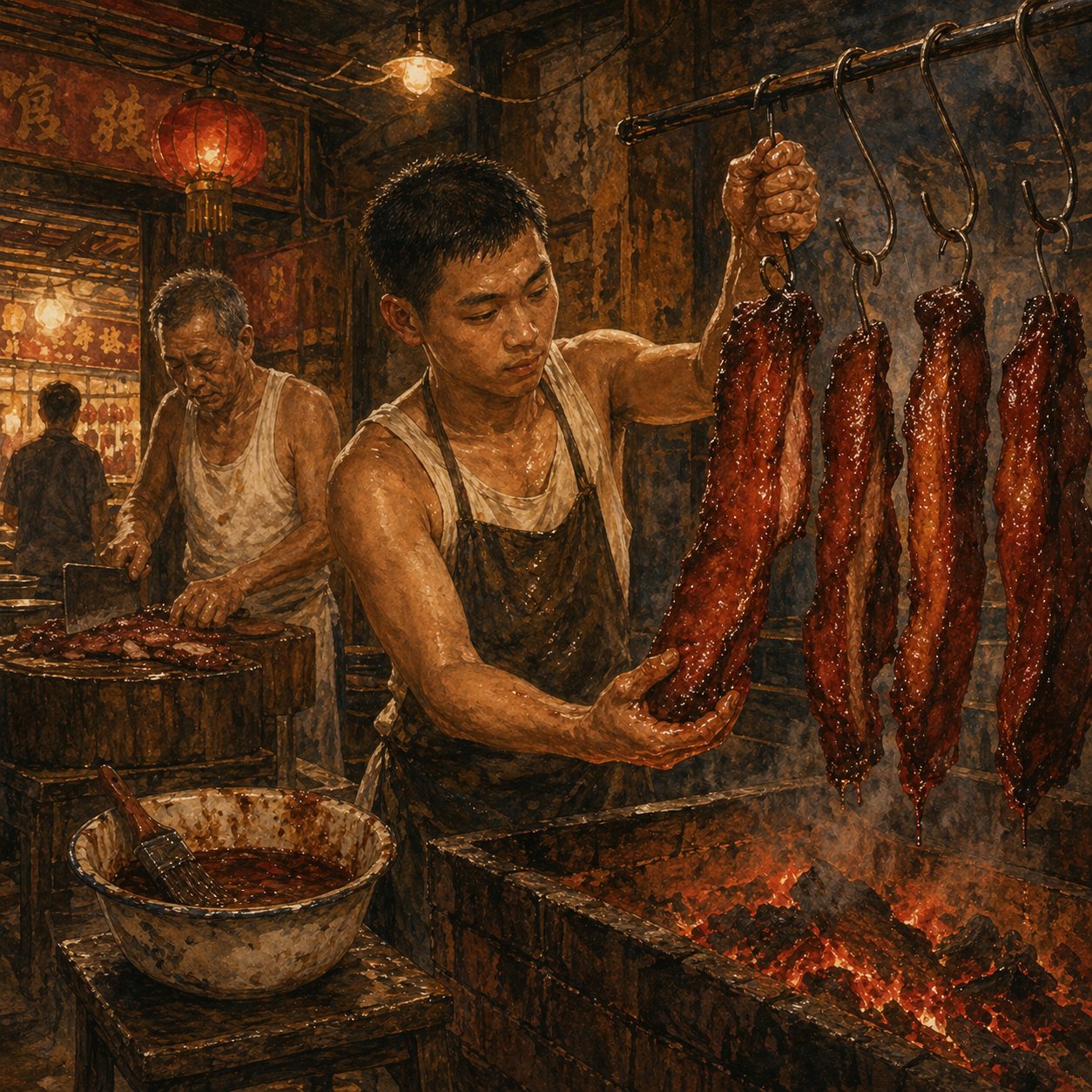
This is where I started. This is the dish that taught me everything.
Char siew — cha-shao in Mandarin, meaning "fork-roast" because the pork was traditionally skewered on long forks over open fire — is the heart of Cantonese roast meat tradition. The Cantonese people brought this craft to Singapore in the early 1900s, setting up shop along Sago Lane, Pagoda Street, and Smith Street in Chinatown. Sai Sook's stall, where I apprenticed, opened in 1958 and closed when he passed in 1991.
The dish has two souls: char siew (the roast pork) and wantan mee (wonton noodles + dumplings). Singapore's version is its own creature — a balance between Hong Kong's char siew (sweeter, redder, more glaze) and Malaysian wantan mee (with dark soy noodle sauce, served dry with soup on the side).
The proper Singapore wantan mee comes either:
- Dry (with chilli + dark soy sauce tossed in) — the heritage version most stalls offer
- Soup (in clear broth) — less common but classic
I will give you the dry version because it is the dominant Singapore style. The wonton soup is served on the side.
🛒Ingredients
Char siew (overnight marinade), wantan filling, soup stock, the per-bowl tossing sauce. Most of the time is patience, not work.
For the Char Siew ~800 g cooked
| Pork shoulder / scotch fillet / pork collar | 1 kg | In 4–5 cm thick strips. Not pork tenderloin — needs marbling. Cantonese masters call this cut mei tou rou (梅头肉, plum-top meat). |
Marinade
| Hoisin sauce | 4 tbsp | |
| Light soy sauce | 2 tbsp | |
| Dark soy sauce | 2 tsp | For colour. |
| Oyster sauce | 1 tbsp | |
| Shaoxing wine | 2 tbsp | |
| Mei Kuei Lu Chiew (rose wine) | 1 tbsp | Traditional — adds floral note. Substitute: omit, or extra Shaoxing. |
| Honey | 2 tbsp | In marinade only — more added later for glaze. |
| White sugar | 2 tbsp | |
| Sesame oil | 1 tbsp | |
| Five-spice powder | 1 tsp | |
| Ground white pepper | ½ tsp | |
| Salt | ½ tsp | |
| Garlic | 5 cloves | Finely minced. |
| nam yu (red fermented bean curd) | 1 cube + 1 tsp liquid | Traditional Cantonese — adds red colour and umami. Substitute: 1 tsp paprika + 1 tsp miso. Skip food colouring — it's chemical. |
For the Glaze
| Maltose | 3 tbsp | Traditional — gives the lacquer sheen. Substitute: honey works but is sweeter. |
| Honey | 2 tbsp | |
| Reserved marinade | 3 tbsp | Boiled. |
| Hot water | 2 tbsp |
For the Wantan Mee per serving
| Fresh thin egg noodles (wonton noodles) | 100 g | |
| Choy sum or kai lan | 80 g | Blanched. |
| Pork wantans | 4 | Recipe below. |
| Sliced char siew | 60–80 g | |
| Fried shallot oil | 1 tsp | |
| Pork lard oil | 1 tsp | Optional. |
Wantan Mee Tossing Sauce per bowl
| Dark soy sauce | 1 tsp | |
| Light soy sauce | 1 tsp | |
| Sesame oil | ½ tsp | |
| Chinese black vinegar | ½ tsp | |
| Shallot oil | 1 tsp |
Wantan Filling ~24 wantans
| Minced pork (shoulder, 70/30 lean/fat) | 300 g | |
| Fresh prawns, finely chopped | 100 g | |
| Light soy sauce | 1 tbsp | |
| Shaoxing wine | 1 tsp | |
| Sesame oil | 1 tsp | |
| White pepper | ½ tsp | |
| Sugar | ½ tsp | |
| Spring onion, finely chopped | 2 tbsp | |
| Egg white | 1 | |
| Cornflour | 1 tsp | |
| Wantan wrappers (yellow, square) | 24 | From any wet market. |
Wantan Soup ~1.5 L · enough for 4
| Chicken bones | 800 g | |
| Pork bones | 200 g | |
| Dried sole fish (ti po) | 30 g | Toasted. |
| ikan bilis (dried anchovies) | 30 g | |
| Garlic | 1 bulb | |
| Water | 2 L | |
| Salt, white pepper | to taste |
🌶️Shifu's Lift
choose one path — see "Shifu's Secret" chapter for the philosophy- Old-school path: ¼ tsp MSG in marinade
- Modern hawker path: ½ tsp chicken stock powder
- Heritage purist path: Already covered with red fermented bean curd + maltose
👨🍳Method
Six stages across two days. The marinade and the glaze are the soul.
Marinate the Char Siew (Day Before)
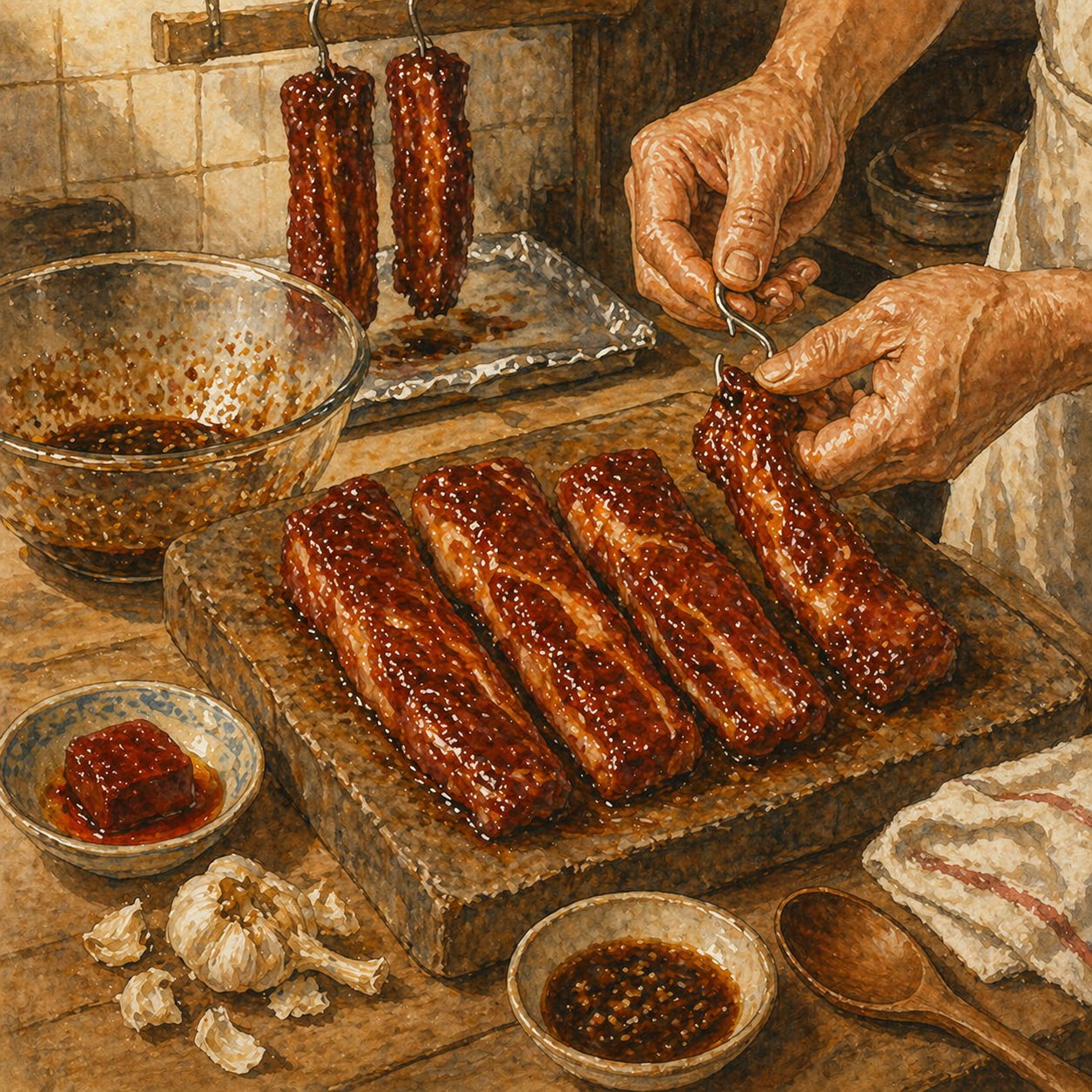
Trim pork into long strips about 4–5 cm thick, 15–20 cm long. Do not trim the fat — the fat caps render down and make the char siew juicy.
Combine all marinade ingredients in a bowl and whisk smooth. Reserve 4 tbsp for glaze. Place pork in a zip-lock bag, pour in remaining marinade, massage. Refrigerate at least 12 hours, ideally 24 hours.
Build the Wantan Filling
Combine minced pork with all filling seasonings. Mix in one direction for 5 minutes — same technique as ngoh hiang. Add chopped prawns and spring onion last; gentle fold to incorporate. Cover and rest 30 minutes in the fridge.
Wrap the Wantans
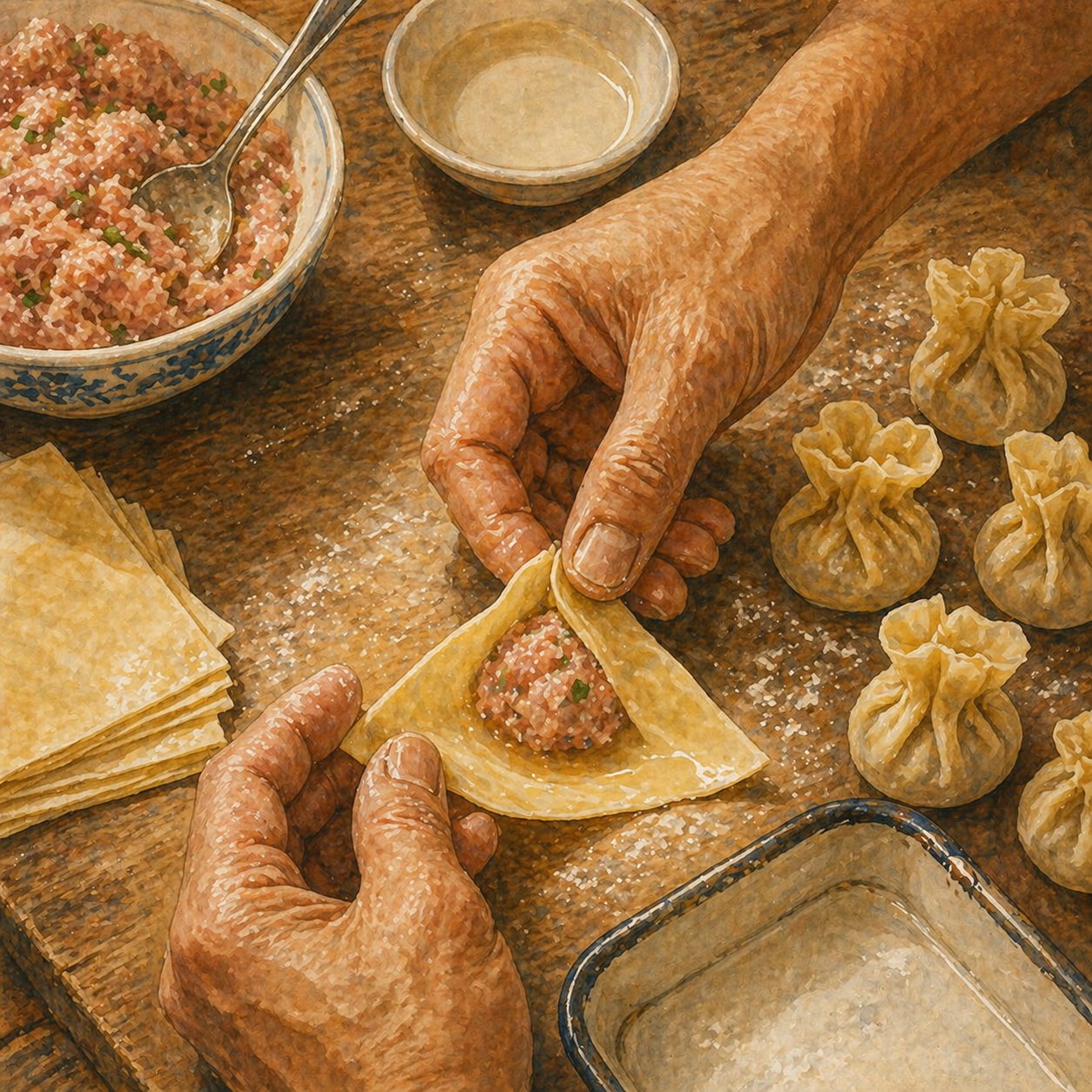
Place 1 tsp of filling in the centre of each wantan wrapper. Wet two adjacent edges with water. Fold diagonally to form a triangle, pressing out air. Bring the two outer corners together, sealing with a dab of water. Set on a tray dusted with cornflour.
Roast the Char Siew
Take pork out of fridge 1 hour before roasting to come to room temperature. Preheat oven to 220°C / 425°F with fan if possible.
Line a roasting pan with foil. Place a wire rack on top. Pour 2 cups of water into the pan (catches drippings, prevents smoke).
Lay pork on the rack. Reserve marinade in a small saucepan.
Roast at 220°C / 425°F:
- First 15 minutes at this temperature
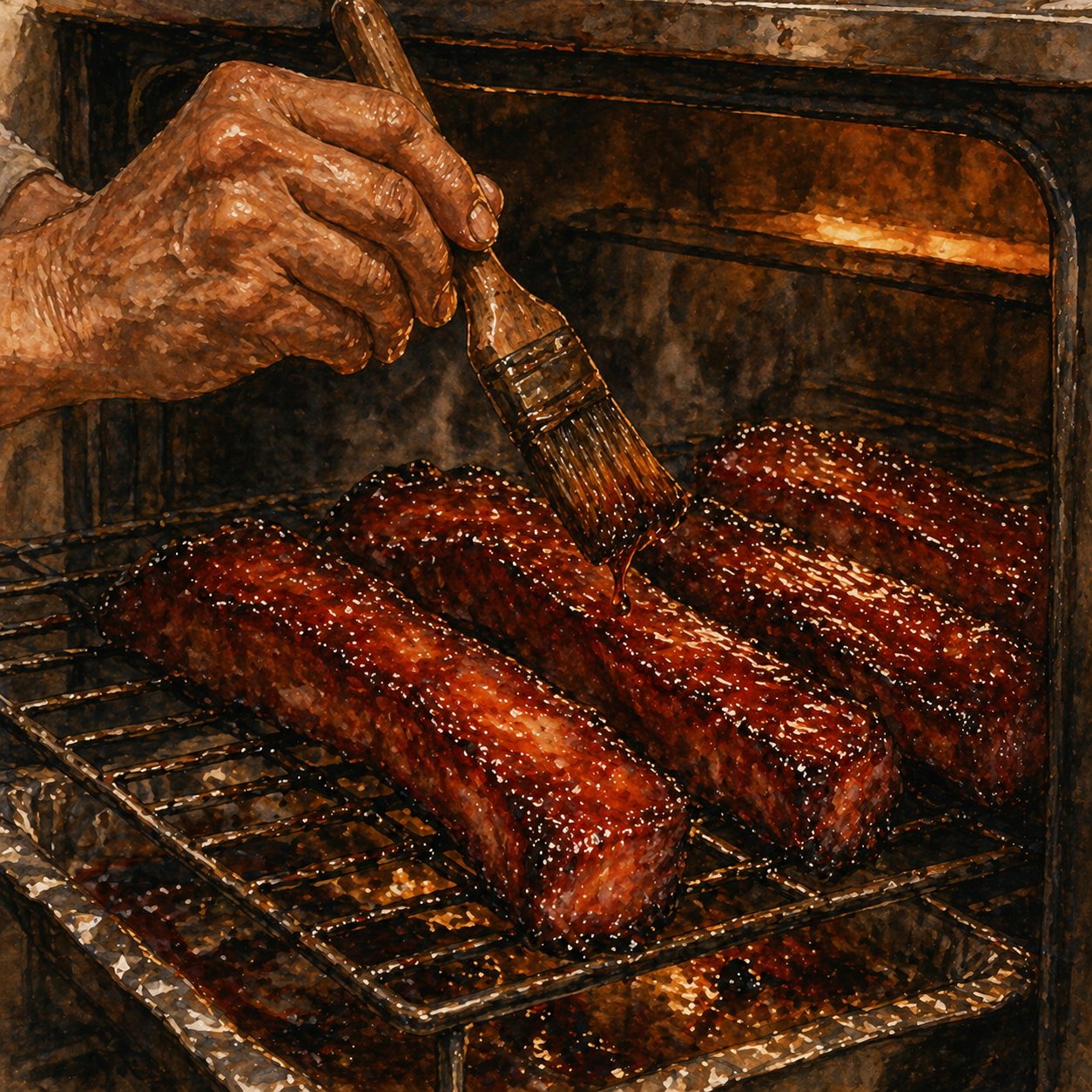
- Take out, flip, brush with marinade. Roast another 10 minutes.
- Take out, flip, brush again. Roast another 10 minutes.
Now the glaze stage: Bring reserved marinade to a boil in saucepan for 2 minutes. Mix with maltose + honey + 2 tbsp hot water to create the glaze.
- Brush glaze on top side of pork. Return to oven, increase temperature to 240°C / 460°F.
- Roast 5 minutes. Brush glaze again, flip, brush other side.
- Final 3 minutes at 240°C — watch carefully for the lacquer to form. Some char on edges is good. Burn is bad.
Total roasting: about 45–50 minutes for this thickness.
Rest meat 10 minutes before slicing. Slice against the grain into 5 mm pieces.
Cook the Wantans, Noodles, Soup
Bring the wantan soup stock to a gentle simmer. Drop wantans in — they're cooked when they float and the wrapper is translucent (3–4 minutes).
In a separate large pot of boiling water, blanch egg noodles 30–45 seconds maximum. Drain hard. Toss in cold tap water for 5 seconds, then drain again — this stops cooking and gives the springy bite hawkers prize.
Assemble
In each serving bowl, mix the tossing sauce ingredients. Add hot noodles. Toss vigorously with chopsticks for 10 seconds.
Top with: blanched choy sum, sliced char siew, drizzle of pork lard oil. Serve with a small bowl of soup containing 4 wantans on the side.
🎯The Three Tips
Heritage. Master's. Mistake.
🏛 Heritage Note
The Bamboo Pole Noodle
The proper Singapore wantan mee tradition uses a long bamboo pole pressed by the cook's body weight to make the noodle dough — kook mee (壓麵, pressed noodle) technique. The bamboo gives the noodles their signature qq (Q-textured, springy-bouncy) bite. Almost no stall in Singapore still does this — the few that survive (like Eng's Wantan Noodle, Koka Noodles, Kok Kee) buy from specific noodle factories that still use traditional methods.
For young hawkers: the noodle is half your business. Find one good supplier — do not switch.
👨🍳 Master's Tip
The Three Stages of Glaze
The signature lacquered char siew sheen comes from glazing at the right moment, three times:
- First glaze (after 15 min): pork is hot, marinade gets absorbed
- Second glaze (after 25 min): pork starts caramelising, sugars begin to set
- Final glaze (last 3 min at high heat): the lacquer forms — sugar polymerises into that glossy mahogany shell
Skip any one of these stages and your char siew looks dull and tastes flat. This is what separates restaurant char siew from home-cook char siew.
The maltose in the glaze is non-negotiable for true Cantonese siu mei (烧味, roast-meat) character. Honey alone is too sweet and lacks the proper viscosity.
⚠ Common Mistake
Dry, Tough Char Siew
The single biggest mistake: using lean pork. Pork tenderloin or lean loin = dry, fibrous, sad char siew. Pork shoulder / pork collar / scotch fillet = juicy, tender, the way it should be.
The second mistake: roasting at low temperature. Cantonese char siew needs high heat to caramelise the marinade. 180°C will give you grey, sad pork. 220°C minimum, 240°C for the final glaze.
The third mistake: slicing immediately. Always rest the meat 10 minutes before cutting — the juices redistribute. Slice too early and your cutting board is a swimming pool.
📈 Scaling for Hawker Service
For a wantan mee stall doing 80–150 bowls a day
- Char siew batch: 8–10 kg pork roasted twice daily — once before opening, once at 1pm to refresh stock for dinner.
- Wantan production: 300–500 wantans wrapped daily, by hand, in the morning. Refrigerated; cooked to order.
- Noodle relationship: Build a daily standing order with one trusted noodle factory. Refuse stale.
- Cost (Singapore 2026): Per bowl ~SGD 2.20 (char siew 1.20 + noodles 0.30 + wantans 0.30 + sauce/aromatics 0.40). Sells SGD 5–9 standard, SGD 10–14 with extra char siew. Margin: 65–75%.
Char siew is the dish where everything has to be right. The cut, the marinade, the heat, the glaze, the rest, the slice. Get one wrong and you taste it. That is why Sai Sook made me practice for two years before he let me chop the meat for paying customers.